Meet Rene Camarillo | Weaver, Textile and Garment Producer
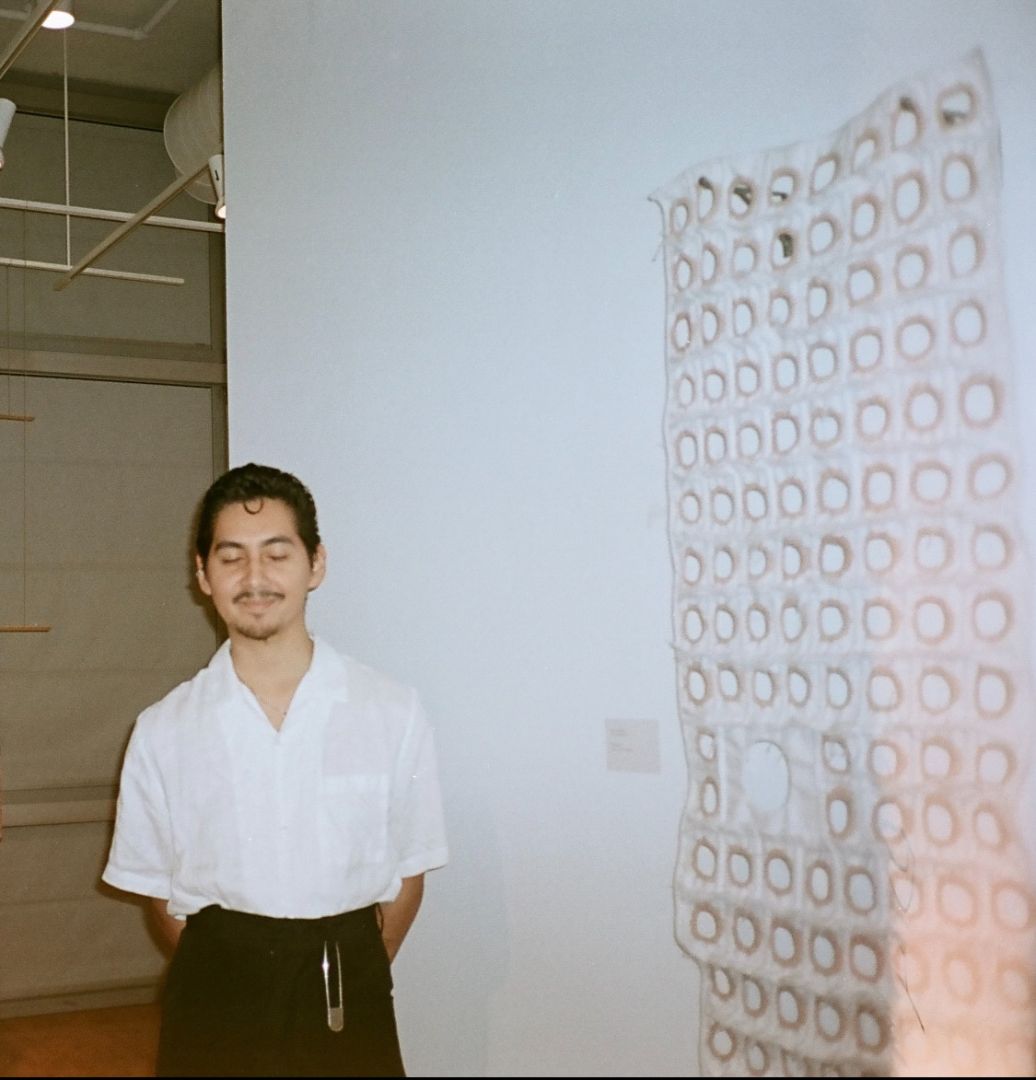


We had the good fortune of connecting with Rene Camarillo and we’ve shared our conversation below.
Hi Rene, what makes you happy? Why?
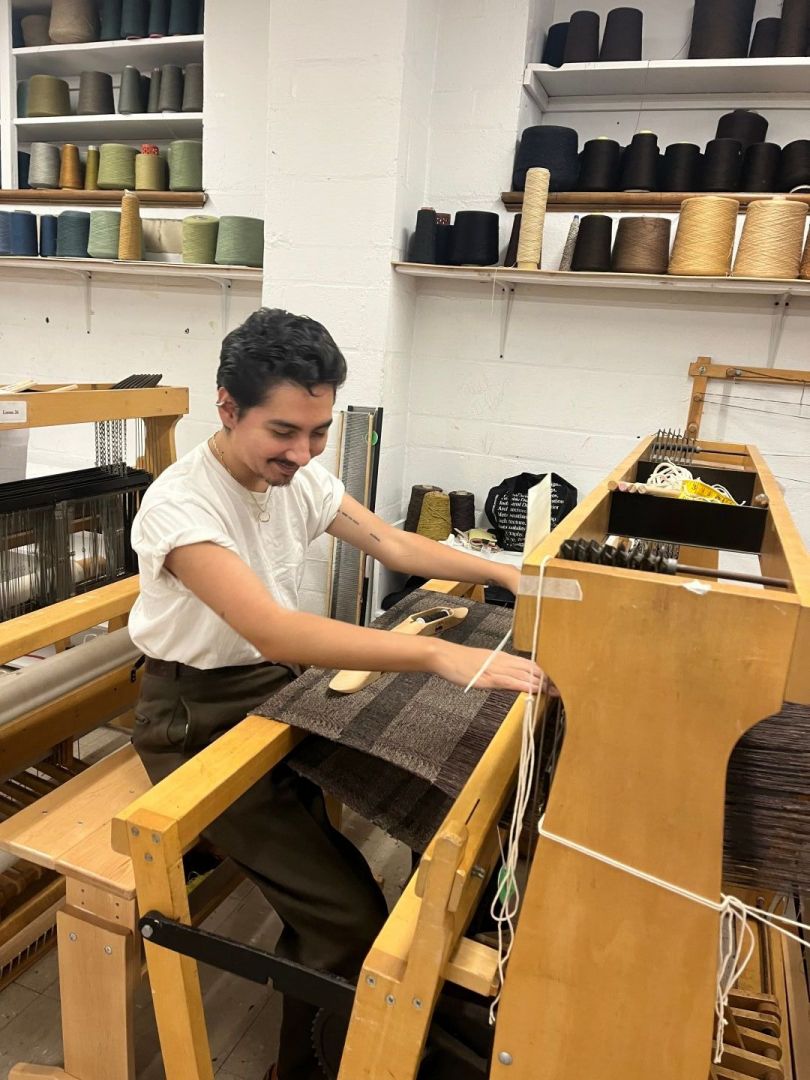
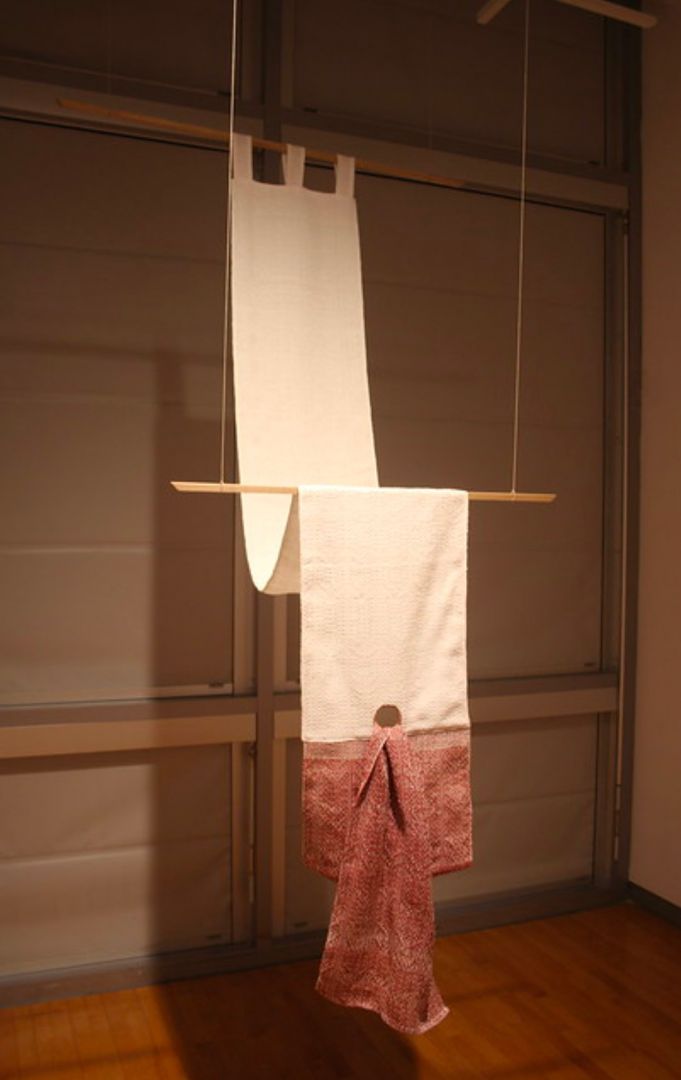
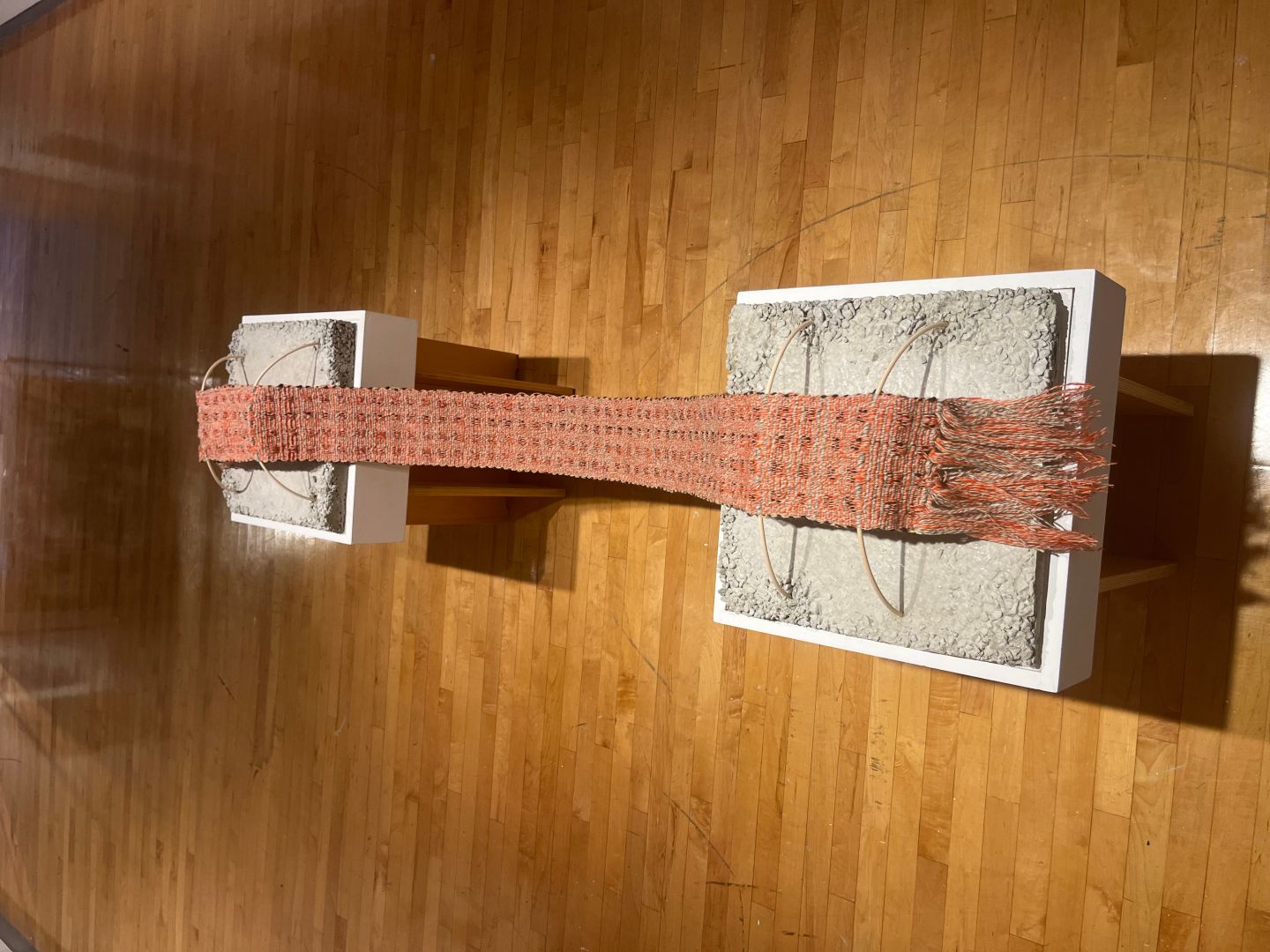
These days, I find that the absence of a lot makes me happy. The absence of restrictions, the absence of guidelines. The absence of suffocation from Los Angeles. The divorce from rituals makes me happy, as well as truth and honesty. Most importantly (and most currently), weaving and studying textiles is making me happy. I am currently learning how to weave on an 8 shaft floor loom at the Rhode Island School of Design. I really do not want much in life. I don’t care about landing a top paying job after graduation. I really don’t mind that I still don’t have my drivers license, and I don’t know if I will ever own a home; but weaving and sewing truly make me feel well and happy. I love devoting my body and labor to the production of textile work. I am proud to own garments hanging in my closet that I drafted on paper and sewn myself. I think this self-reliant craft at a domestic level is slowly disappearing from the world.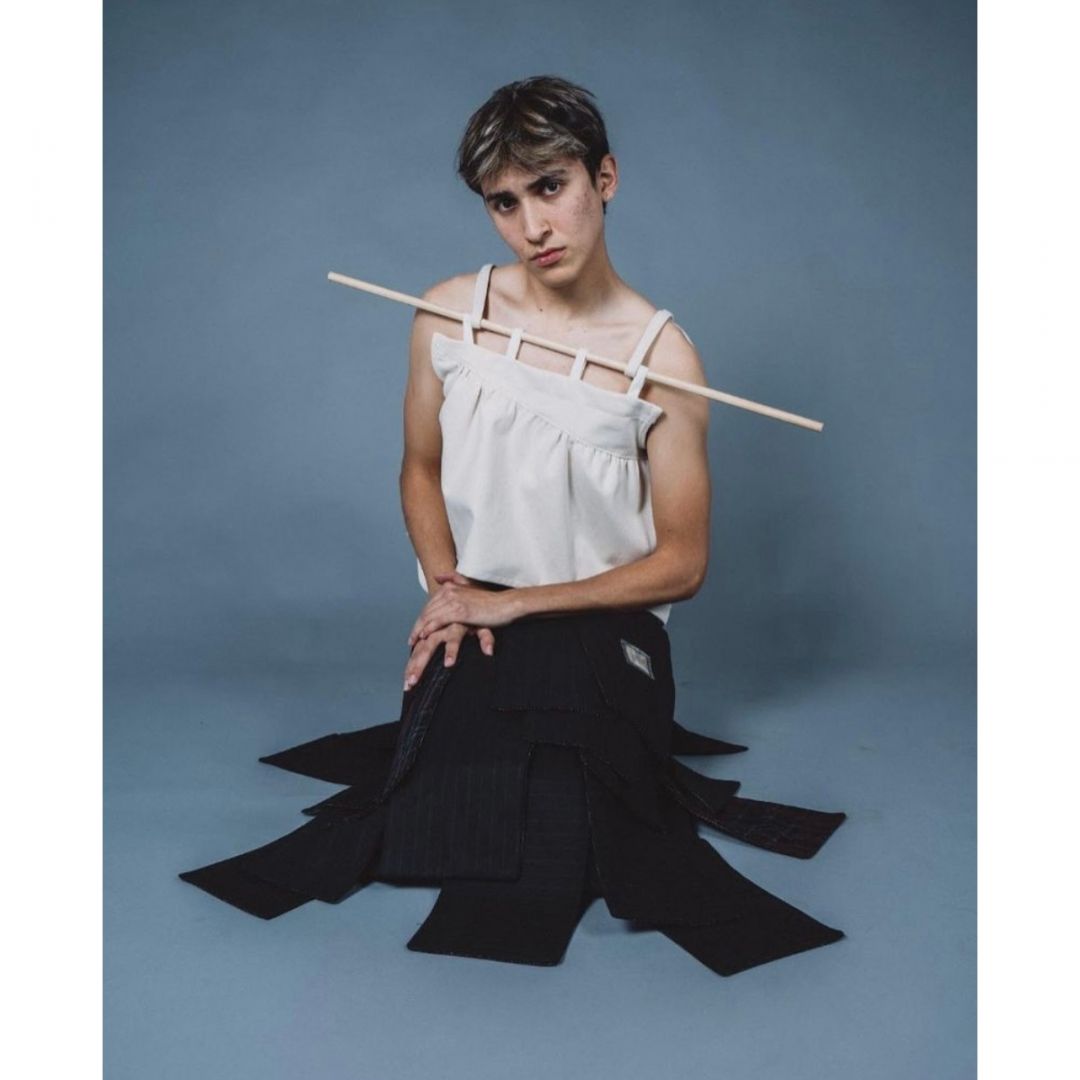
Let’s talk shop? Tell us more about your career, what can you share with our community?
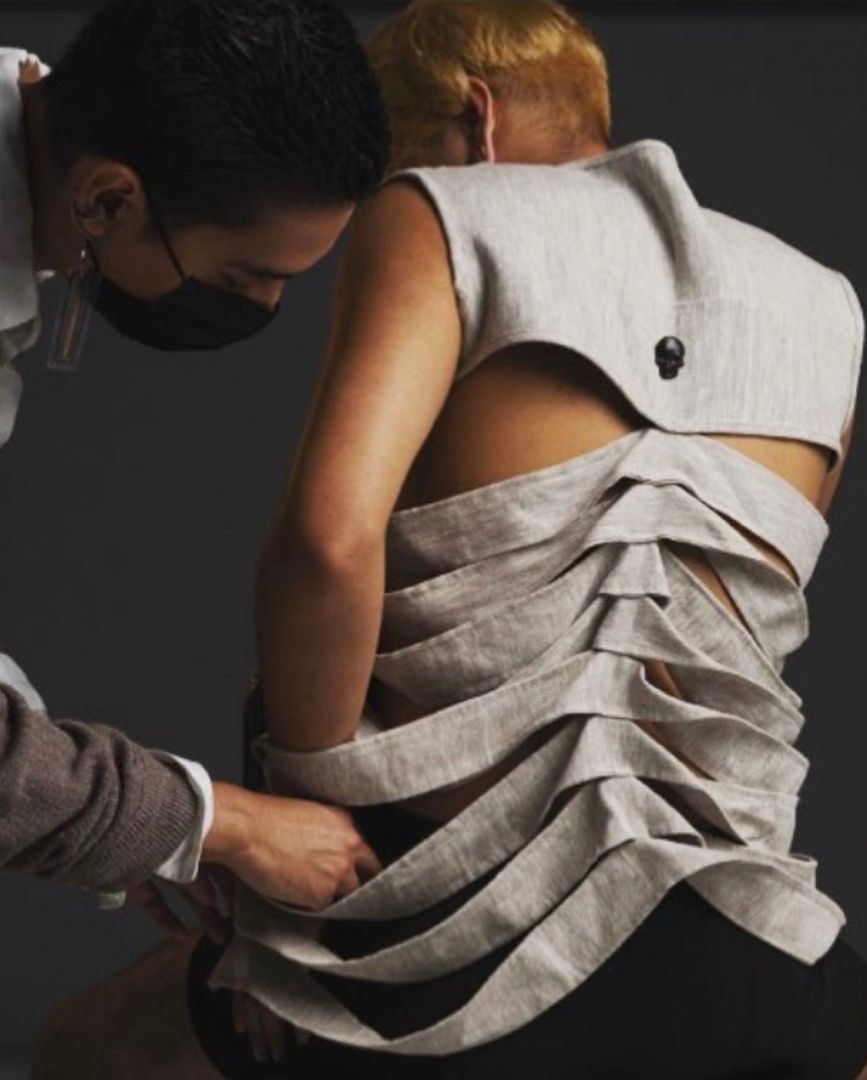
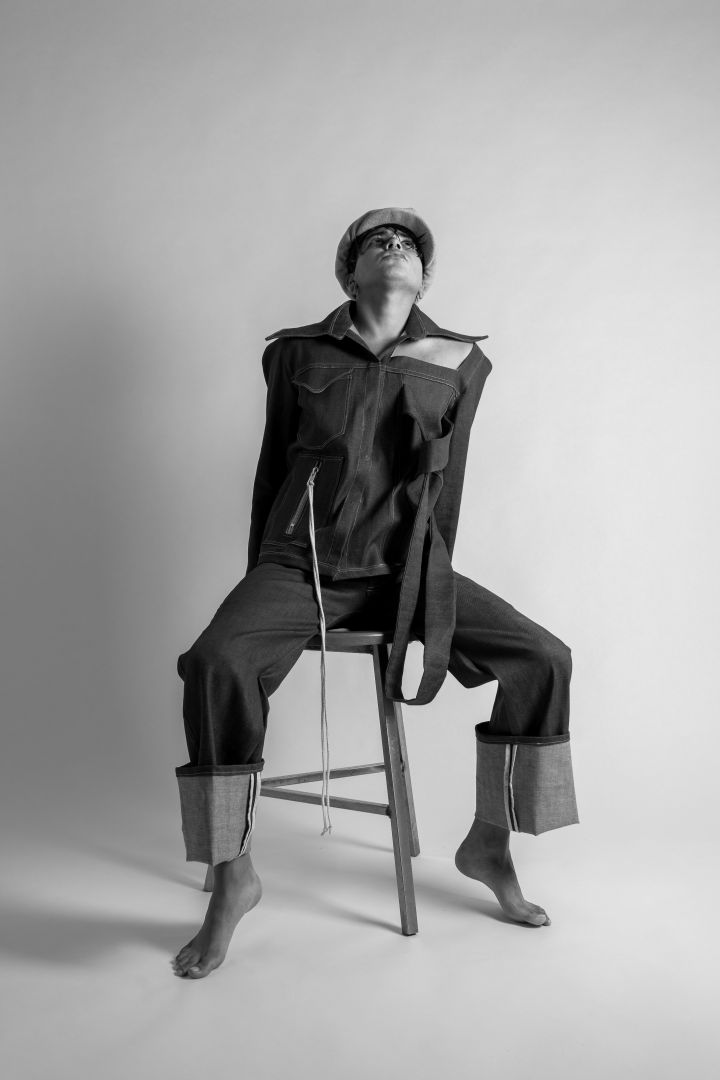
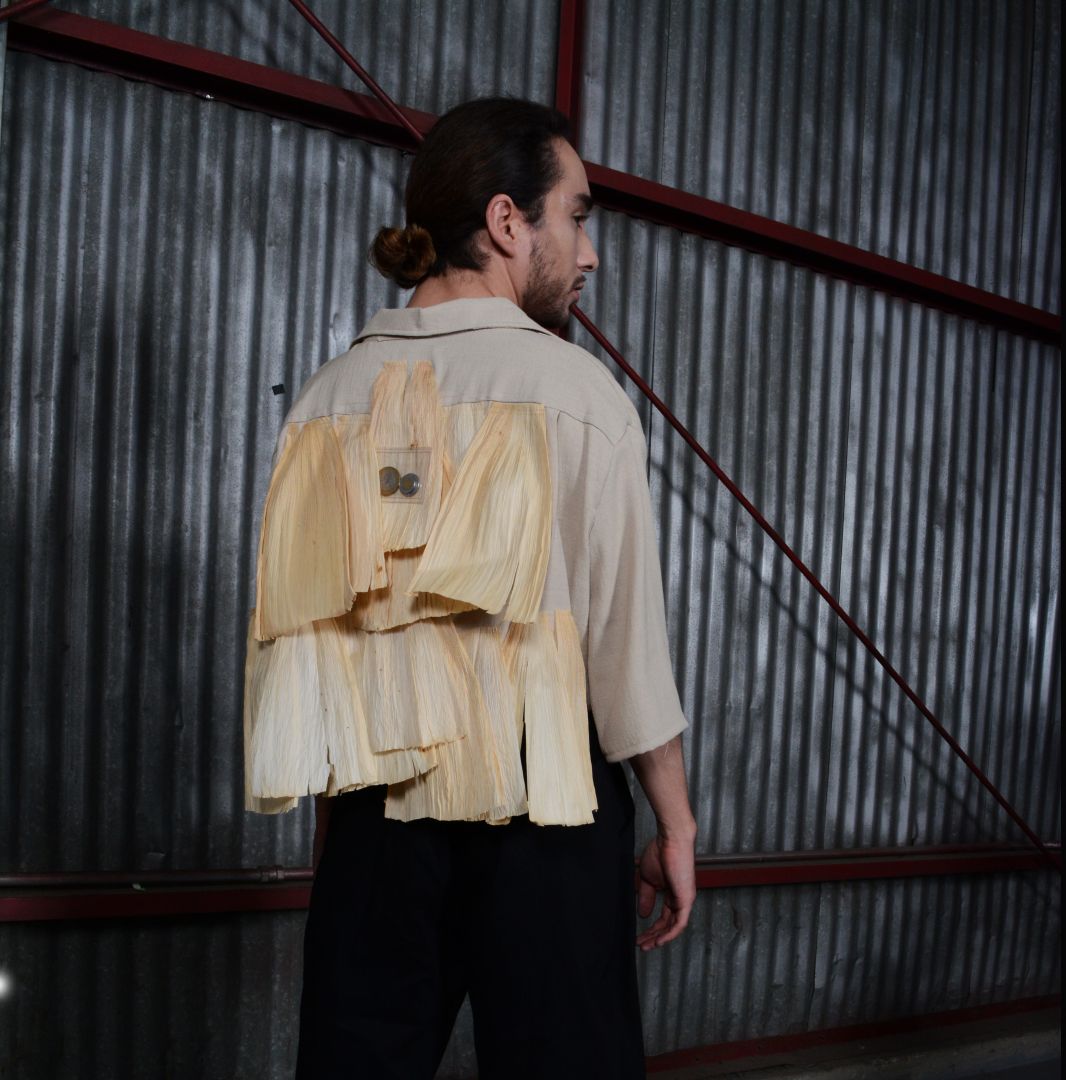
Well, my full name is Rene James Camarillo. I am an East Los Angeles born and raised creator who produces textiles and handcrafted apparel with themes of immigrant realities, neglected labor, and critique on the social engagement of fast fashion industry practices. Through my work, I aim to investigate “privilege pluralism”, a concept in which I emphasize intersectionality and the blatant distance between consumer and producer for American society. With intention to highlight the disruption of capitalism and the mass commodification of immigrant labor, I continue to examine the tapestry of East Los Angeles diaspora and produce storytelling artworks which are inspired by my own personal upbringing and realities of underprivileged lives. My conceptual framework is confidently entangled with violence, trauma, and what I curiously describe as “rituals, unseen”. With storytelling collections and wearable art that investigate the prescribed narrative of the Latinx existence, I began to develop my small design label, destacarse. where I hand weave cloth, textile pieces, hand pattern, and construct abstract garments with both integrity and curiosity.
The work I produce is always formed from an intimate place in time. These days, I am working towards my Masters Degree in Textiles at the Rhode Island School of Design (RISD). But before my feet kissed Providence, Rhode Island, they knew East Los Angeles all too well. I think back then, I produced craft work and started sewing because it really helped me cope and survive in such a complex environment. I began sewing in high school, when I was drenched in angst and was a somewhat mute teenager. I began sewing small apparel collections, and in my sophomore year of high school, I organized a community runway show held in an unpolished basketball gym at barrio Action Youth and Family Center. It was a humble beginning to what later unfolded. After this event, I began to produce more work. More potent collections, grander runway shows held in spaces in the corners of DownTown Los Angeles and in front of a few hundred people at times. It was after showing my first collection titled, “Sinner Man”, an audience member came up to me after the show and told me that I was more than a designer, she said I was a “storyteller”. This moment cemented my navigation towards creating objects for the rest of my life. Oh, and by the way. I would never call myself an “Artist”. I simply make objects. garments and woven textiles. That 2017 collection was the first collection with the “destacarse.” label sewn into my handmade garments.
In Los Angeles, all the bad stuff still lingers. One morning I woke up and scrolled on social media only to find some posts and conversations about a few of my childhood classmates who were killed by gang violence. People that sat in the same classrooms as me. For me this isn’t uncommon. In Los Angeles, the people in my communities are getting destroyed by so many entities. Coming from communities that are made up of predominantly working class immigrants, I quickly noticed early in life how socioeconomic realities work. Back in Los Angeles before graduate school, I was working myself to the bone as a senior designer for a startup company. I even had some experience working as an apparel product developer for a grammy award winning singer. All these roles sound nice on paper, but I was being squeezed like a lime for all my talents to be profited from. The commodification of labor is what I see in social patterns. We see this all the time (or at least, I do), Brown immigrants working in the kitchens of restaurants. On agricultural fields harvesting food. In factories making garments. Constructing more residential housing for construction companies. On the streets selling flowers. In order for the other side to become rich, they need to pay employees impossible wages. That’s why you can find shirts on racks for $5.99. That’s why garment workers can often never afford the luxury goods they produce themselves for such companies. That’s why some of the designers in companies I worked for didn’t understand how to sew or map out a pattern; because the underprivileged are the real artisans who understand the craft work, and without us, their ideas and thoughts cannot be materialized. We work ourselves to death, and for the privileged to take advantage of us. I come from a culture who grinds. But, here I am. In some ways, doing the opposite. Studying colors and patterns and playing with fibers. Enrolled in classes on the East coast with students who were fed with a silver spoon. Others I really don’t relate to. The cool kids who wear Margiela Tabi shoes roughly, visit Italy every summer with lovers who they don’t really love, and only upload professionally documented images on their oversaturated social media accounts. Whose parents own businesses, and all breathe this heavy bourgeoisie breath. They have all studied abroad, they all have their privileged circle, a catapult to rocket them into a job after graduation, and they all have a safety net. There is no relatability in them, and in my opinion, no relatable reality in them. I Sometimes feel like I don’t belong here at such a refined school. I used to work in a dusty sweat shop and got paid by piece instead of by hour. Five cents for every spaghetti strap I sewn, and three cents for every label I sewn into garments. I used to learn in one of the worst school districts in America. I used to watch people close to me crumble and wither away by drugs. I watched neighbors destroy other neighbors, then themselves. Because of my upbringing and experiences, my eyes have never been clouded by Naiveté. I like to believe I see people and the world exactly as they are.
When I applied to grad school, I applied to only three schools. I ended up getting two full rides and the third was an 80% tuition coverage. I truly hope it was because of my skill and portfolio, and nothing else. I am grateful to be given the opportunity to learn more about textiles. These moments are all ephemeral to me. They have arrived in a perfect moment in my life, and they will soon pass. This means I need to constantly remind myself to do my best, and absorb as much as I possibly can before I blink and it’s all over. Before I blink and end up back in Los Angeles trying to figure out how to better my community.
With all that I said, I think after graduation, I would like to continue to expand my label, destacarse. I want to be able to mass produce seasonal pieces and continue to weave textiles for special garments. I would like to have a small studio where guests and customers can witness gallery work and be able to purchase some goods as well. The work that I have been producing, both textile and garments have always been attached to East Los Angeles. The notorious and misunderstood Zoot Suit Riots, bullet holes, barbed wire, The Bracero Program, cholo imagery, Chicano visibility, blood and soft distress. All of this is very important for me to continue to investigate because it is parallel to my DNA in my upbringing and cultural diaspora. Most importantly, I have been working on starting a non profit, and I have also formed an Artist Coalition who is currently organizing a show at this very moment. I am part of a developing community garden organization who focuses on food distribution to my communities back in Los Angeles and while at RISD, I am preparing to apply for the Fulbright and Jet program to maybe one day study Textiles and Japanese Denim production methods in Okayama, Japan.
I really don’t find myself to be talented. I think I have aptitudes for being really creative and developing intimate conceptual frameworks. As a creative, and now as a graduate student, I force myself to always stay true to my work ethic and I find that my presence in spaces is often unaligned with everyone else. I admit that I am hard on myself, and even when applying to graduate schools, many of the letters of recommendations that I received had lines that said “Rene’s biggest weakness is not asking for help, even when he needs it”. I was actually quite surprised to realize that others recognize who I am and my traits as a creator, pretty well. I am totally disciplined and I want to produce the best work I can. Being caught in the grip of a crowd, you’ll find my arms folded uncomfortably. Even after my runway shows I tend to escape the after show “buzz” and praise. I don’t want the attention, instead I want to make compelling work that causes conversation, so that I don’t have to do all the talking. keep me out of it.
I feel like something big is taking shape. All of my dedication and investment towards studying and doing something I love might be working out. I am eager to see what happens after I graduate. These days I don’t need to cross my fingers. I know I have something. I am not sure if it is talent, or ambition, or it could even be delusion. I worked endlessly to get to where I am, and I still have that young blood in my veins. So, what to do with all this future?
Any places to eat or things to do that you can share with our readers? If they have a friend visiting town, what are some spots they could take them to?
Our day would be quite simple. First thing is first, we are definitely getting breakfast at one of my favorite small business restaurants at Los Tres Cochinitos in Lincoln Heights. This small business fits about 10 people (so I know it’s never going to be loud which is a plus). The food is delicious and beyond comfort food. I’m going to order the Enchiladas and crush a dry red chili over it as I always do, and you might want to consider ordering their popular Menudo. Then after breakfast we are taking a bus to Little Tokyo to grab a Matcha Banana Latte, and a dozen custard Kobo Kumas from Okayama Kobo Bakery and Cafe. It is also very hidden, but they have lots of baked goods and hand crafted beverages to select from. Once we finish licking our fingers, we are heading to El Sereno and hiking (yes hiking, we have to burn those calories) a few small trails up in the “Elephant Hills” or what my family has always called, “The Heavens”. Lastly we will have dinner at one of my favorite restaurants, called Tenempal, in Boyle heights. Another small mom and pop business but their food is literally top notch quality and flavor. Since we are already in Boyle Heights, we are walking to grab a book at this really cool store called “Other Books, Comics and Zines”.
Please consider checking these places out!
Who else deserves some credit and recognition?
This motivation and this developing story is dedicated to those who think of me, still. The work that I continue to produce is always for my family and community. Thank you to my mother and father. Thank you to Fernanda Sanchez, Pete Galindo, Rosa Limon, Paola Melena Ibarra, Julie and Jojo of Operation Street Kidz (OSK), Mo Kelman, and Corey Pemberton of Crafting The Future. 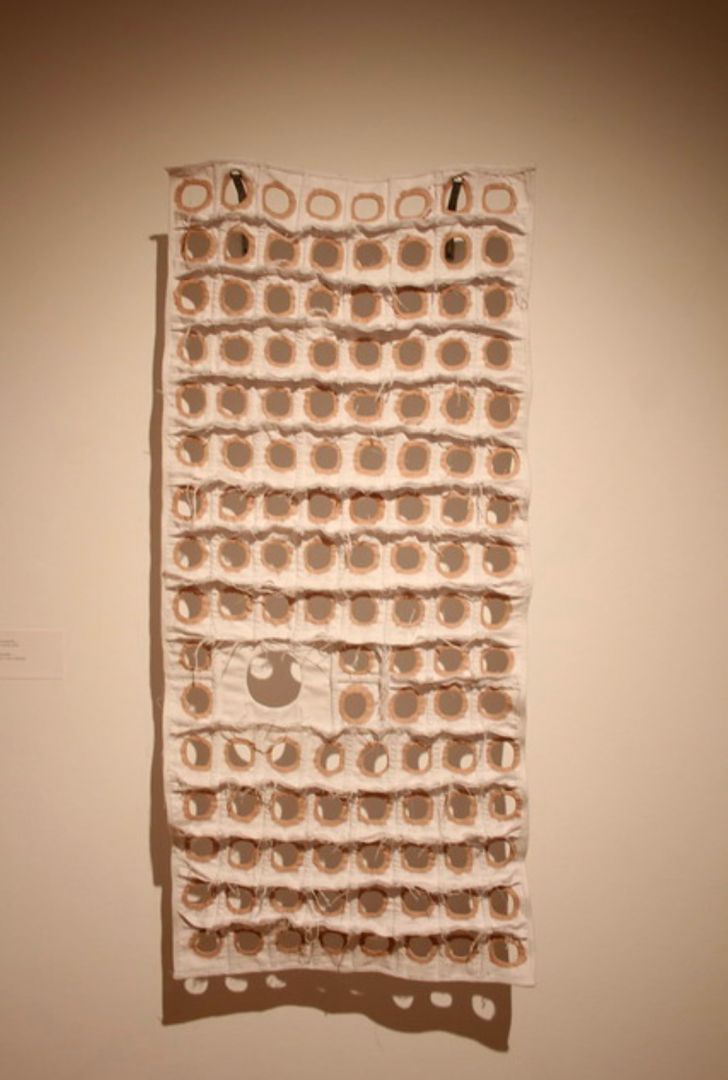
Website: https://destacarse.shop/
Instagram: https://www.instagram.com/destacarse.designs/
Linkedin: https://www.linkedin.com/in/rene-camarillo-481b09224/
Image Credits
Photography Credit: Paulina Bereza, Dora Kim, Casey Orozco, Jennifer Martin