

We had the good fortune of connecting with Emmanuel Aggrey Tieku and we’ve shared our conversation below.
Hi Emmanuel Aggrey, what led you to pursuing a creative path professionally?
Right at an early age I was curious about the world around me and still am. The idea of self discovery was new and exciting to me, but more importantly was this hunger to know more about people just like me and the world I was living in. I was always lost in nature, listening for sounds in the open field….I went into art because I wanted to listen, learn and lend. After engineering school, the world had become my canvas and it presented so many possibilities for a new perspective and I think that was one of the key reasons why I wanted to do art- to combine my knowledge of engineering with the fluidity of being in the creative space to reshape dialogue. I wanted to contribute to my society in a way that was familiar while using unfamiliar means. I believe art has the potency of being, the power to change minds and shape culture, but most significantly, I believe it gives you the opportunity to look intently, listen, learn and lend to society.
Can you open up a bit about your work and career? We’re big fans and we’d love for our community to learn more about your work.
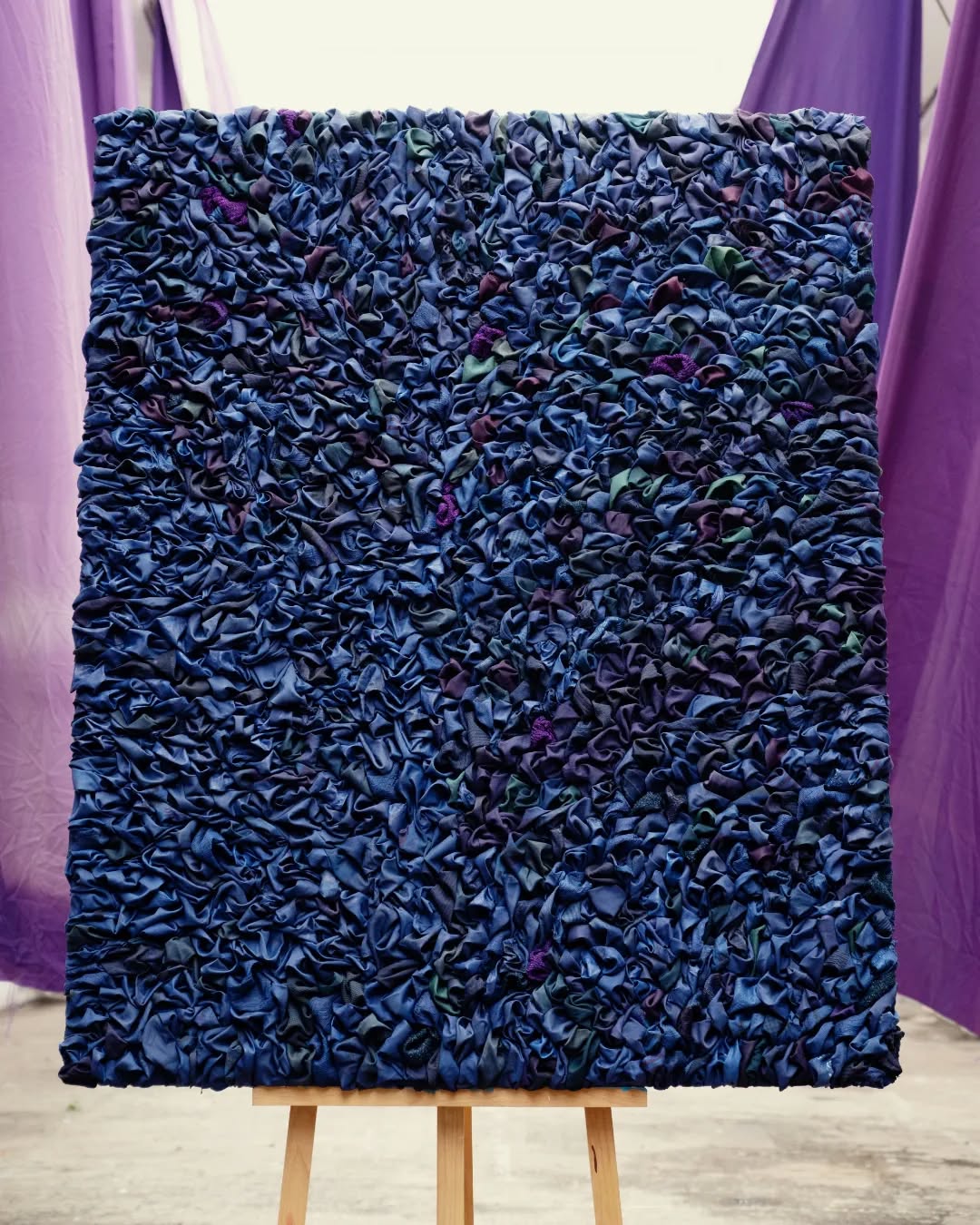
I have always been fascinated by textile. As a child, I spent a lot of time with my grandmother who was a collector of textile because she was royalty. Observing the lustrous congruence of textile with the culture of the people made me aware of the influences of this material in shaping the trajectory of a society, especially their core beliefs which are borne out of their identity. During my study in the University as a Civil Engineer, my research led me to explore various techniques in creatively exploring textile waste, especially in the construction industry. Mainly for me as an artist, this was an opportunity to not just merge Engineering with Art, though Engineering IS ART, since it primarily employs the manipulation of material, but also to explore the historical elements embedded within the material at the end of it’s life cycle and re-think a new future for it. The concept of discarded second-hand clothing is, that which has been worn by someone and cast away or donated, is given to another and I wanted to explore that life it hosted within it’s vulnerable spaces. What cultures did the former owners belong to? What life did they live? Were they victims of an abuse? Why did they give this particular clothing away? Did it remind them of a lost loved one or a horrible event or even a happy one? To think a material could host an entire life of an individual, capture their essence, entrap within it the very soul of the person and serve as a silent object of documentation truly fascinates me. There is no separation between the person and what they wear.
Ghana receives about 15 million garments weekly and of this only 30 – 40% is sold. The remaining garments are thrown away as waste to make room for the next shipment. These garments often end up in landfills, creating artificial mountains and filling beaches like a textile graveyard. The garments made in china and Bangladesh under horrible working conditions are then shipped to USA, EUROPE, CANADA AND AUSTRALIA and are distributed globally. The ecological and environmental footprint of fast fashion has gained prominence, rising to be the World’s largest pollutant after Oil. As an engineer, I am moved to find solutions that are both cutting edge and still help humanity. I source my fabric primarily from Kantamanto Market in Accra(the second largest thrift market in the world), landfills and beaches, and occasionally from other fashion designers and through a pre-treatment process, sorting according to texture, colour, type of material, weight, and other creative factors. In a series of processes including dyeing, bleaching, layering, coating, strengthening, carving, spraying and re-layering, I convert the textile into bold, textured works of abstraction that are both alive and moving.
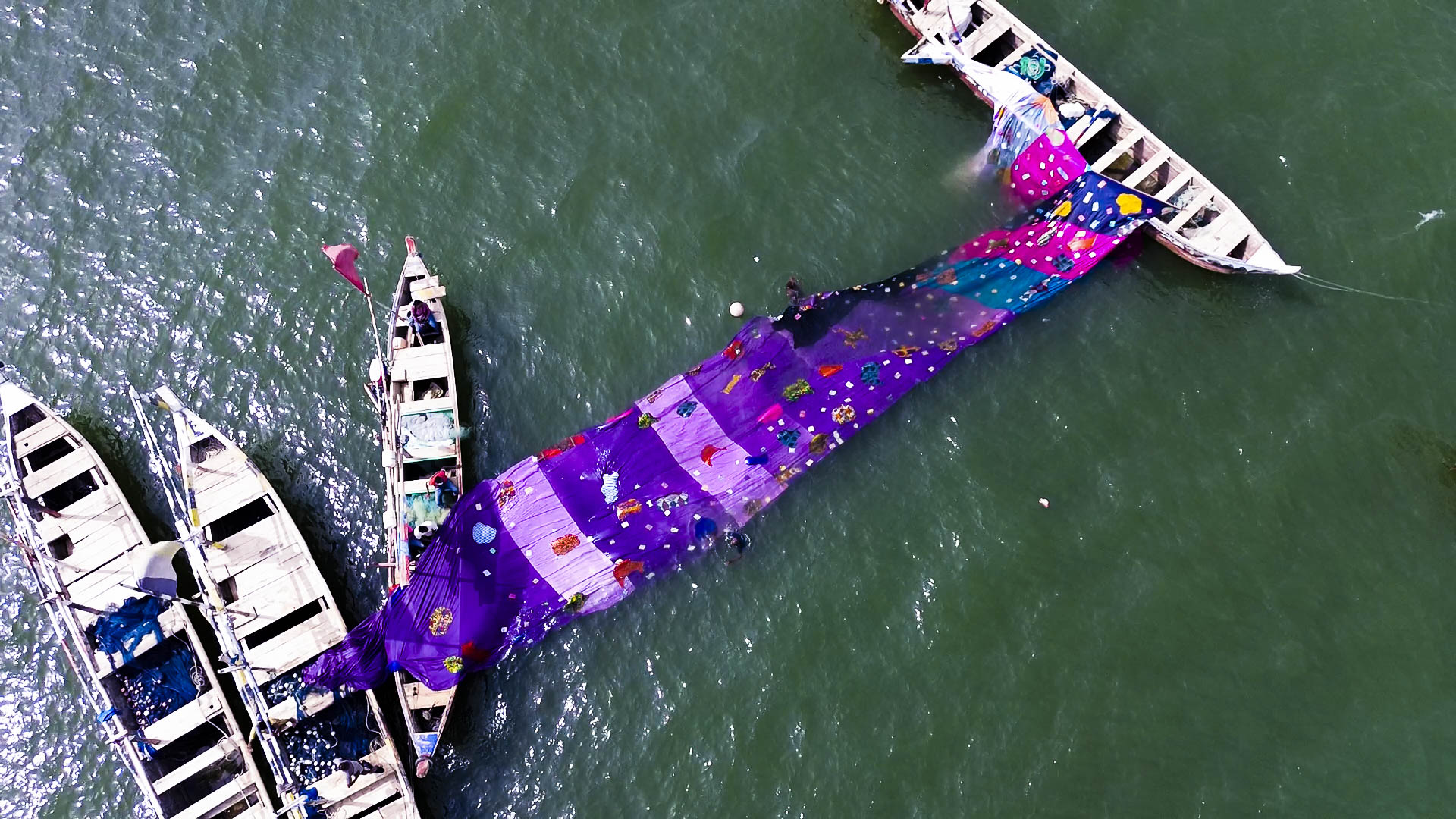
In 2023, I started my lifetime project “HOW TO HEAL A BROKEN WORLD” – a 45 year traveling project of textile archiving and material innovation. The project is meant to travel around the world, collecting people’s clothes as material memories and a reflection of our humanity, stitching strangers together in one installation and rethinking our collective responsibility towards the human race and the planet. People write on these clothes, send messages to others around the world, or even tell how their day went on these clothes. It is also an opportunity to open up conversations about the past-present-future as the installation drapes on monuments in cities, open spaces and institutions, inviting us to reflect on what it means to cherish the brevity of life. So far my team and I have documented cities like Munich, Augustusburg, Paris, Accra, Chemnitz and will be in Basel and Milan early 2026. Think of it like this: the textile and worn-out fabric we collect and creatively transform in a city becomes a living archive of that city, a reflection of its soul and the diversity of it’s people in who and what they choose to be and how they wanna live, but then it also challenges our own image of ourselves against the image of the world we want our children and their children to live in.
Any places to eat or things to do that you can share with our readers? If they have a friend visiting town, what are some spots they could take them to?
Definitely a lot of fun to be had in Accra when you get here!
In terms of food- there’s the Mix Restaurant, Bush Canteen, Tee Baa, Alhaji’s wife’s waakye, +233 Jazz Bar and Grill, and the streets of Osu….list goes on.
Art- go see Gallery 1957, The Mix Gallery, Nubuke Foundation, Citizen Projects, Berj Gallery, Si Hene Foundation, Dikan Center
You can travel to Sekondi Takoradi in the south western part of Ghana. I think it’s worth it! Beautiful beaches, amazing culture.
The Shoutout series is all about recognizing that our success and where we are in life is at least somewhat thanks to the efforts, support, mentorship, love and encouragement of others. So is there someone that you want to dedicate your shoutout to?
Wow…there are so many names. I have been privileged to receive support from the very beginning from my family who believed in my gifts and encouraged me to use them. My primary school teacher Mr. R. C. Obeng was my first mentor. He was an artist in his own right. Shout out to Paul Ninson, founder of Dikan Center, Larry Ossei Mensah, Ellipse Art Projects, Ata Binta – founder of The Mix Design Hub in Accra, ToChoose Gallery, Harry Amarfio, my brother Michael Gah, Artgence, Atelier Phuong, Brandon Pitts, Francesco Bellina and Jerome Da Ros. These people have played a pivotal role in shaping and contributing to my art career.
Website: https://www.howtohealabrokenworld.com
Instagram: https://www.instagram.com/studiosashman
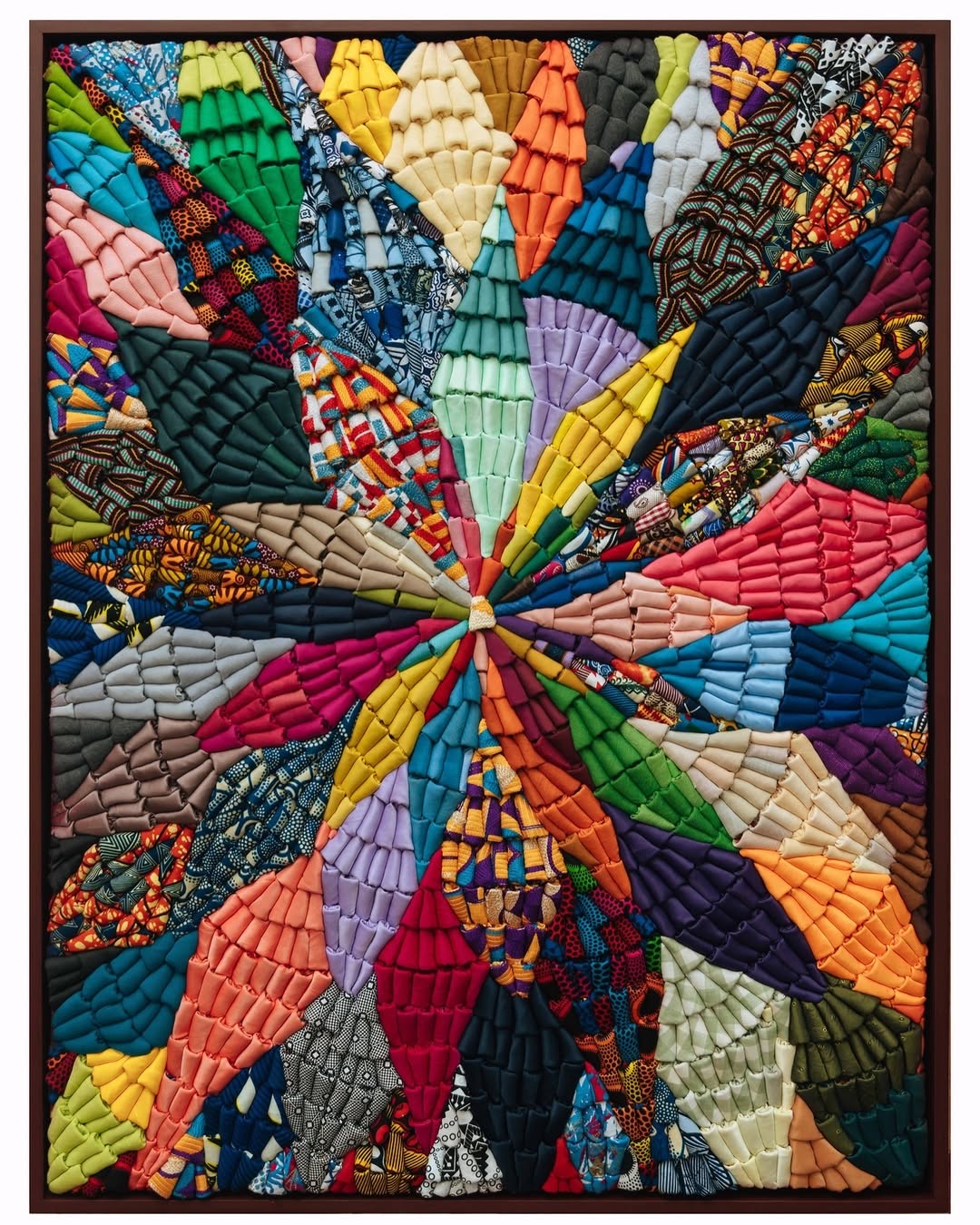
Image Credits
Image credits: Ellipse Art Projects, ToChoose Gallery, Kwadwo Buenortey Okor, Ato Abbiw, Emmanuel Aggrey Tieku, Francis Dotse
Nominate Someone: ShoutoutLA is built on recommendations and shoutouts from the community; it’s how we uncover hidden gems, so if you or someone you know deserves recognition please let us know here.


