Meet Douglas Spaltro | screenwriter/director
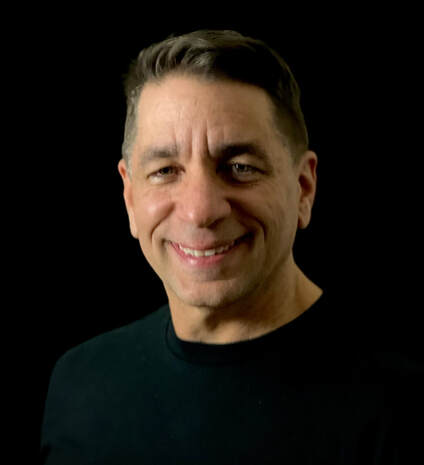


We had the good fortune of connecting with Douglas Spaltro and we’ve shared our conversation below.
Hi Douglas, why did you decide to pursue a creative path?
I’ve always been a writer in some form—music, lyrics, poetry, prose—and I was equally drawn to performing. As a kid in the early ’70s, I was convinced we’d move from Maine to California so I could star in the next Disney film. That dream fizzled when my dad, with classic bluntness, told me I had “a face for radio.” (Thanks, Dad.)
During my 20-year career in the U.S. Air Force, the creative itch never fully went away. I managed to land small background roles in Mozart and the Whale with Josh Hartnett, and Taking Chance with Kevin Bacon. Being on those sets reignited something, and I started thinking more seriously about film and television.
After retiring from the Air Force in 2007, I found myself working in the Middle East as a defense contractor. That’s where I decided to write my first feature film. I had no screenwriting software, no formal training—just Microsoft Word and stubbornness. The script was, predictably, awful—but the spark was real.
Back in the States, juggling a 75-hour workweek in defense aeronautics, I pursued a BFA in Creative Writing for Entertainment and graduated in 2014. Since then, I’ve been writing steadily.
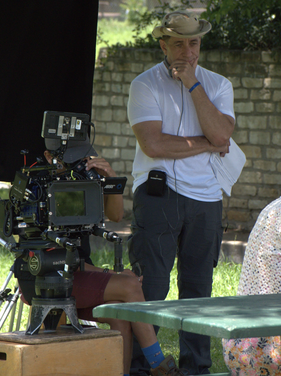
Let’s talk shop? Tell us more about your career, what can you share with our community?
Art is easy, I suppose—only in the sense that it flows naturally. But that flow? It’s often painful. Like dreams where you find yourself back in high school wearing only underwear and combat boots. Just me?
What I’ve learned is that telling stories means peeling back layers—of character, of meaning, of self. That’s the part that hurts. But it’s also where the truth lives.
I feel like I inherited the best parts of my parents, figuratively of course: a tender, compassionate heart, a wicked sense of humor, and a relentless work ethic. My stories almost always revolve around family—whatever shape that takes—and what we’re willing (or not willing) to do for one another, no matter how messy or dysfunctional. I think breaking storytelling down to that core human element—the desire to connect—makes it relatable across the board.
What sets me apart? I think it’s the emotional honesty. I want to tell stories that feel real—that make you laugh, cry, and maybe shoot a snot-rocket if I’m doing my job right. That’s kind of my brand: very human, very raw, a little uncomfortable, but ultimately sincere.
What I’m most proud of is diving into the deep end—choosing to make my own films. Competitions are great, but they’re a gamble. Will the first reader actually read the script, or are they folding laundry and scrolling TikTok? I wanted to take back some control and bring my stories to life on my terms.
In 2020, I did just that with APPLE, my debut short. It’s about two 10-year-olds—the last two people on Earth—and whether they can find common ground. It’s really about the failure of communication and how polarized we’ve become. Spoiler: it’s not a happy ending.
Then in 2023, I wrote, directed, and executive produced MILLY & MILO, a story about a trans woman Vietnam veteran who seeks out an old Army friend she’s always loved. It’s about identity, connection, and again—how divided we are. But at its core, it’s a love story: Be who you are. Love who you want.
Getting to this point hasn’t been easy. I’ve had a few champions along the way, but mostly I’ve funded my own work—scripts, festivals, production—because my crowdfunding campaigns flopped. (Turns out, I’m really bad at asking for money.)
One big lesson? I no longer compromise my vision. I’ve done that before. Never again. Long story. Maybe another time.
At the end of the day, I just want to tell stories that remind people they’re not alone—that joy and heartbreak often show up holding hands. If I can make you feel something real, then I’ve done what I came here to do.
If you had a friend visiting you, what are some of the local spots you’d want to take them around to?
Okay, hear me out: LAX.
I know, I know—people usually say beaches, taco joints, or rooftop bars. But honestly, there’s nothing like sitting in the international terminal at LAX with a cup of bad coffee and watching the entire world pass through. You’ve got couples saying teary goodbyes, families sprinting to gates, first-time flyers clinging to their passports like life vests, and business travelers who’ve clearly already mentally checked into the Marriott. It’s human drama in real time—free theater with incredible diversity, accents, fashion, and every kind of story you can imagine. If you’re a writer, it’s like creative fuel on tap. Fun, fun, fun.
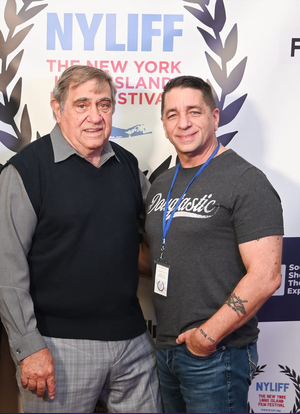
The Shoutout series is all about recognizing that our success and where we are in life is at least somewhat thanks to the efforts, support, mentorship, love and encouragement of others. So is there someone that you want to dedicate your shoutout to?
Absolutely—but fair warning, it’s a long list.
First and foremost, Professor Garrick Dowhen at Full Sail University. He was my writing mentor—brilliant, brutally honest, and exactly what I needed. He never sugarcoated anything, and that kind of tough love helped shape me as a writer. Even after I graduated, he took the time to give me notes on a script that changed the trajectory of how I approached storytelling. That kind of mentorship is rare—and it stuck.
Then there’s Bill True, Head of Dramatic Writing at the esteemed Scottsdale School of Film+Theatre, from 2015 to 2024. I met him at the Austin Film Festival in 2018 and have seen him every year since, alongside my good friend and writing bud, David Carter. Bill led a feature rewriting class that gave me new tools for breaking down and rebuilding a script. His approach to fixing a broken story was a game-changer.
Steve Blame—screenwriter and former MTV personality—is another brilliant storyteller I met through Shore Scripts. He placed 2nd, I placed 4th, and that kicked off a creative friendship. Steve has a keen sense of character and emotional authenticity. His notes were like spotlights in the dark—illuminating what I couldn’t see and helping me refine the soul of my scripts.
I also want to shout out Sven Anarki, a fellow Mainer turned California transplant. We met at a BlueCat writing workshop run by Gordy Hoffman. Sven’s instincts are uncanny. He doesn’t just read your script—he feels it. His passion and precision push me to elevate every draft. Through Sven, I met Chris Pittas at the Austin Film Festival—a powerhouse writer, filmmaker, and script doctor. Chris has this intense energy and a relentless drive to help make your story bulletproof. He taught me to write more fearlessly, to dig deeper, and to not be afraid of the mess that leads to great work.
And finally, my siblings—James and Victoria. They’ve read everything: nine feature scripts, four pilots, six shorts. They give honest, unfiltered feedback. If something doesn’t work, they don’t hesitate to say it. That kind of support, especially from family, means everything.
So yeah—big thanks to all of you. Your impact has been real, lasting, and deeply appreciated.
Website: https://www.dougspaltro.com
Linkedin: https://www.linkedin.com/in/douglas-spaltro-21474512b/
Youtube: https://www.youtube.com/@douglasspaltro2697