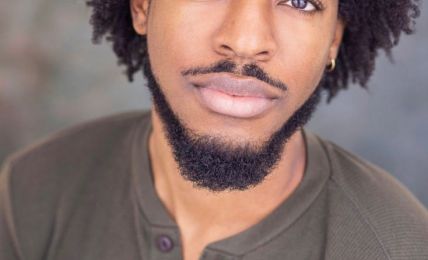
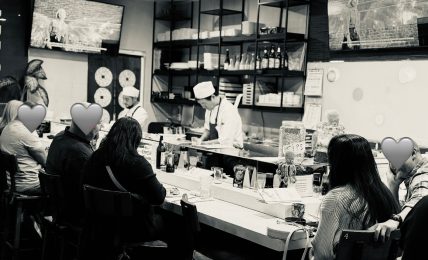
Meet Gankyō (Kirk) Nakamura (Kanesaka) | Assistant Professor of Japanese and Asian Studies, Japanese dancer and instructor, Kimekomi doll artist and instructor, first non-Japanese to become a professional Kabuki actor
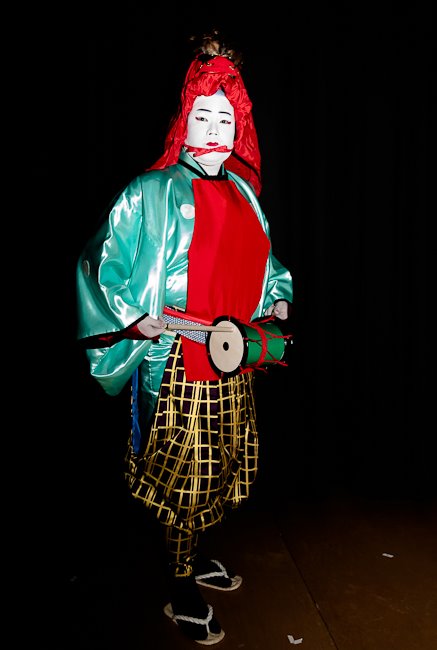


We had the good fortune of connecting with Gankyō (Kirk) Nakamura (Kanesaka) and we’ve shared our conversation below.
Hi Gankyō (Kirk), let’s start by talking about what inspires you?
I am a Nisei, or second-generation born Japanese-American (actually Nisei-han, or second-generation and a half). My grandmother was born on Maui and one of her wishes was for her grandchildren to learn some aspect of their Japanese culture. My older sister began learning Japanese classical dance (Nihon Buyō), and when I was three, my mother dropped my sister off for practice and then took my older brother and myself to run errands. At that time, my future dance teacher told my mother, “Why don’t you just leave the little one here. Someone will look after him.” My mother thought, this is great! Free babysitting. Apparently, and I do not remember, but my teacher asked me if I wanted to dance too. I guess I nodded my head. As I grew older, my grandmother constantly reminded me that if I do not educate myself now in order to teach the future generations about their culture, what good is it for me to have learned all these years. My grandmother’s wish, to be able to continue passing down our culture to the future generations, has inspired me to continue learning and teaching. Later, I encountered my kabuki master, the late National Living Treasure, Sakata Tōjūrō. He had a motto that is roughly translated as “Forever young, forever learning.” He, like my grandmother, reminded me to always keep learning, that the arts is something one can never truly master. Both my grandmother and my master influenced me to also complete my Ph.D in Japanese literature, where I am now an Assistant Professor of Japanese and Asian Studies at California State University San Bernardino. Thus, I can continue educating myself while not only teaching the arts to my dance students, but also about Japanese culture to a broader audience on campus.

Alright, so let’s move onto what keeps you busy professionally?
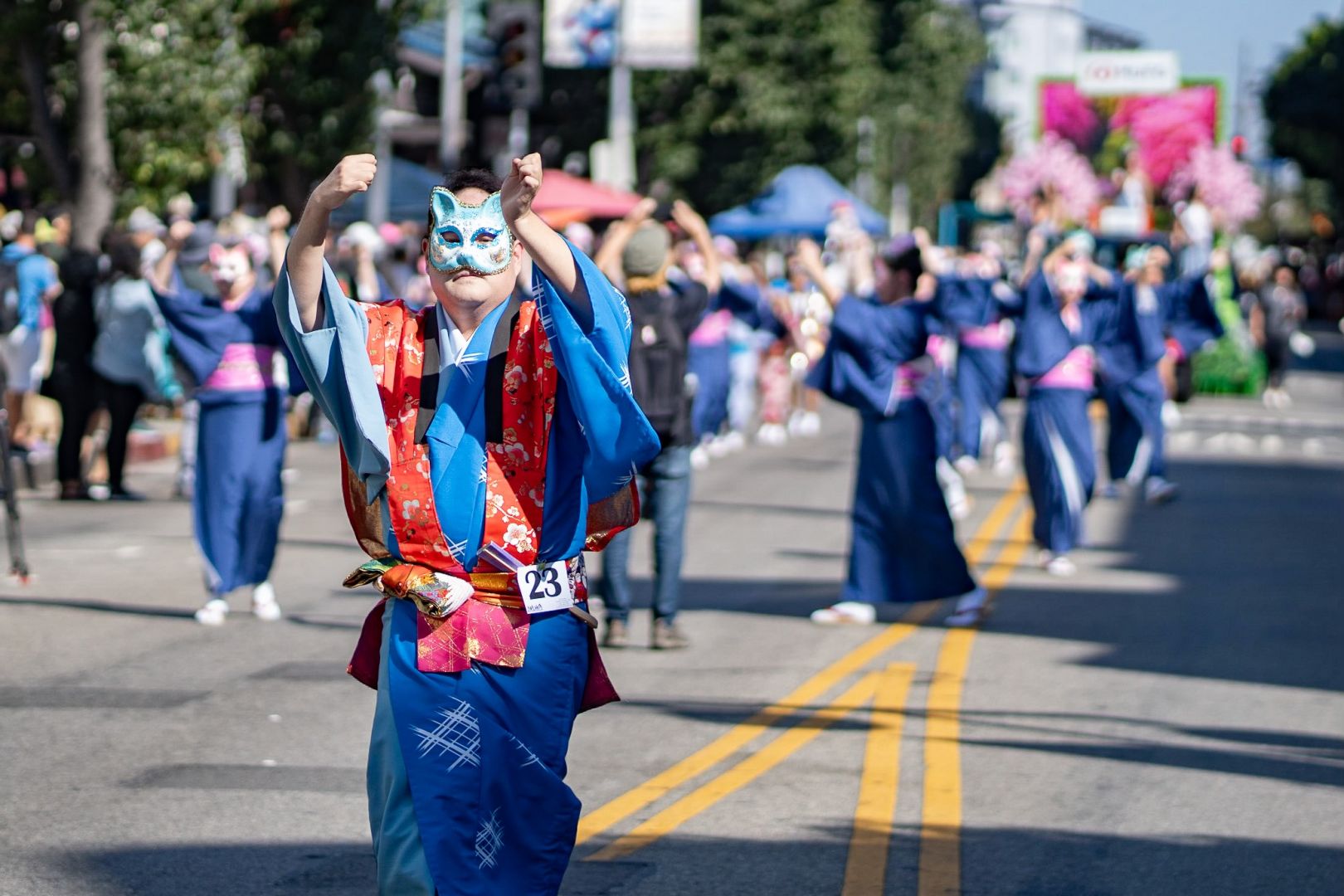
Japanese classical dance (Nihon Buyō) originates from Kabuki odori, or Kabuki dance. Japanese classical dance repertory draws heavily upon the Kabuki theater, while drawing new inspirations from our contemporary times. I was the first non-Japanese citizen to become a professional Kabuki actor since the founding of the theater in the early seventeenth century. Because of this, my style of Japanese classical dance draws upon the kabuki theater directly where we combine acting within the dances itself. This is unique as no other Japanese classical dancer in the United States have been trained to do so. My journey has not always been a smooth one. Growing up as Japanese-American, I often encountered discrimination being told to go back to where I came from, I’m not welcomed here, I killed her son in the Vietnam War (I was 7 when an elderly woman came up to me screaming this in a craft store), and so forth. Even in high school, I remember sitting in front of the music building waiting for my mother to pick me up when two caucasians came up telling my caucasian friend to beat it. I am thankful to my friend to standing his ground refusing to leave, as I can only imagine what the outcome could have been if he did leave. When I entered the Kabuki theater, I also encountered the same type of discrimination, but from Japanese. I wasn’t Japanese, I was Japanese-American. One time, as I entered the green room, a Japanese person yelled, “Foreigner, we don’t want you. Go home!” I am not sure how my master, Sakata Tōjūrō had heard of the incident, as I kept it to myself, but I remember later in the day, I went to help him get ready for his performance, and he told me, “Don’t worry about what other’s say. You be yourself and you act/perform how you feel fit.” Again, I am not sure how he found out, I am only assuming that he had heard it from one of the employees manning the door. He never address the situation directly, but his words have impacted the way I approach my art. My master was about preserving the art form, stressing understanding the basics and fundamentals, while also pushing the art into new directions. We can only push the boundaries by experimenting, and whether it is successful or not, only time can tell. This past August 2023, I became the first male choreographer for the Nisei Week Grand Parade in the festival’s 81 year history. For one of the folk dance numbers, I decided to break from tradition and create a piece that tells a story, the same logic we can find in Kabuki dances and Japanese classical dances. It was my wish to inspire the younger generations to study hard, learn the fundamentals, and then experiment-but most of all, enjoy what you do! Have fun! 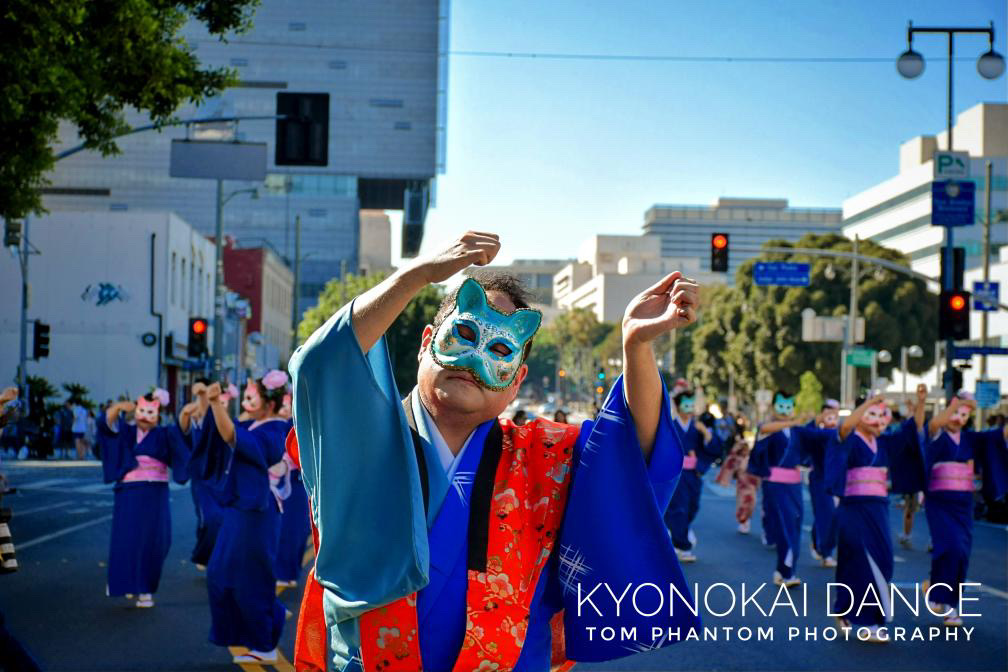
Any places to eat or things to do that you can share with our readers? If they have a friend visiting town, what are some spots they could take them to?
Living in Southern California, this is a tough question! If I had to plan an excursion, I would have to include my beautiful campus, California State University San Bernardino. My fantastic colleague, Dr. María Garcia-Puente once took me on a tour of the campus. She told me, this can be one of the best “cheap dates”! Our campus has a fantastic museum with a rolling exhibit as well as a permeant exhibit of ancient artifacts from Egypt. In our new Student Union Building, we have bowling alley along with a pub, and at night, we have a fantastic observatory! In addition, various programs are always holding events on campus, including my Japanese Studies Program where we just held our Japanese Distinguished Speaker Event featuring 2024 World Karate Champion Sakura Kokumai. The next day, I would take my friend on an eating and walking tour of Little Tokyo (Downtown Los Angeles). In the entire United States, there are only three Japantowns remaining, Los Angeles, San Jose, and San Francisco. Little Tokyo offers a variety of great eats as well as museums and shops! If my best friend was visiting during the Nisei Week Festival in August, it would even be a livelier experience with all the cultural exhibits, performances, and gathering of people from different communities all coming together to celebrate the rich history of the Japanese-Americans.
The Shoutout series is all about recognizing that our success and where we are in life is at least somewhat thanks to the efforts, support, mentorship, love and encouragement of others. So is there someone that you want to dedicate your shoutout to?
First off, for academia, I would not be where I am today without my mentors, Dr. Torquil Duthie, Dr. Satoko Shimazaki, Dr. William Bodiford, and Dr. Seiji Lippit. During my time as a graduate student at University of California Los Angeles, they had fostered, instilled, and allowed me to grow as an academic scholar. Without their mentorship, I know I would not be where I am today as a faculty member at Cal State University San Bernardino. In addition, my academic mentors in Japan, Dr. Takashi Nakajima, Dr. Hideo Furuido, and Dr. Ryūichi Kodama, who all has taken me under their wings to continual challenge the way I approach early modern (1603-1868) texts, illustrations, and plays.
Second, for the world of kabuki and Japanese classical dance, all of the fantastic instructors who have instilled their knowledge and techniques that has been passed down for centuries. There are too many instructors to list here, but I am greatly indebted to my late masters, Sakata Tōjūrō and Bandō Mitsugorō X. In addition, my teacher Bandō Ai and Fujima Toyohirō.
Lastly, I know without the support of my family, my parents, siblings and students, I cannot be where I am today. My parents, no matter what, has also supported my wild ideas, telling me that if I wanted to pursue something, do it with the intentions of giving it my 200%, not 100%. Behind the scenes, my sister has always pushed and supported my endeavors, including driving a huge U-haul truck 6 hours away filled with dance stage props for an upcoming show. Lastly, my students, both dance and doll students. Their constant love, support, and smiling faces can turn a stressed out day into sunshine and warmth.
Website: www.kyonokai.org
Instagram: kyonokai
Image Credits
John Corney, Mark Shigenaga, Tom Phantom Photography