Meet Jiayu Zhu


We had the good fortune of connecting with Jiayu Zhu and we’ve shared our conversation below.
Hi Jiayu, why did you pursue a creative career?
I’ve always been interested in artistic or creative design since I was a kid. Though I went to college for a mathematics degree in NYU, I found myself much more interested and productive in art classes and architectural and landscape classes. I found creative process an excellent way for me to observe the environment- natural or artificial and express my understanding and experience.
During the classes, I’m impressed and inspired by the possibilities that students from all academic background had produced and began to reconsider pursuing a creative career as a long term plan. My several school projects, fortunately got the chance to be in exhibition and that boost my confidence of
After graduating from NYU(SH), I went to UC Berkeley for an M.Arch degree. I was in the the three year track designed for non-architectural background students, where I met friends and classmates who were carpenters and sculptors, and who previously work in Goldman Sachs and chemistry labs. Again, the diverse backgrounds of classmates around added on the confidence for me, who hasn’t been professionally trained at art school, to express myself through art artistic and creative work.
Now I consider myself in a semi-creative career, I’m an architectural designer in who also worked on art work and home-deco design. I’m very grateful that I have the ability and access to reimagine and reshape the urban environment, producing construction drawing sets for social housing and impressive residential skyscrapers. My creative career as an freelance artist allows me to combine my own academic backgrounds, document my thoughts through illustration, and bring the beauty of mathematics into modern art creation.
Let’s talk shop? Tell us more about your career, what can you share with our community?
My art is an honest representation of my personal experience, education backgrounds in mathematics and architecture, and aesthetic preferences. I’m very interested in combing art creation with shapes and concepts generated from mathematics in the physical representation rather than digital representation, bringing more contemporary and abstract to the traditional art form. I’m an architectural designer who are mostly specialized in multifamily residential projects and producing construction drawings, therefore my artwork may have a strong sense of space. My background in mathematics also provides me abundant visual knowledge of abstraction form generated from accurate functions.
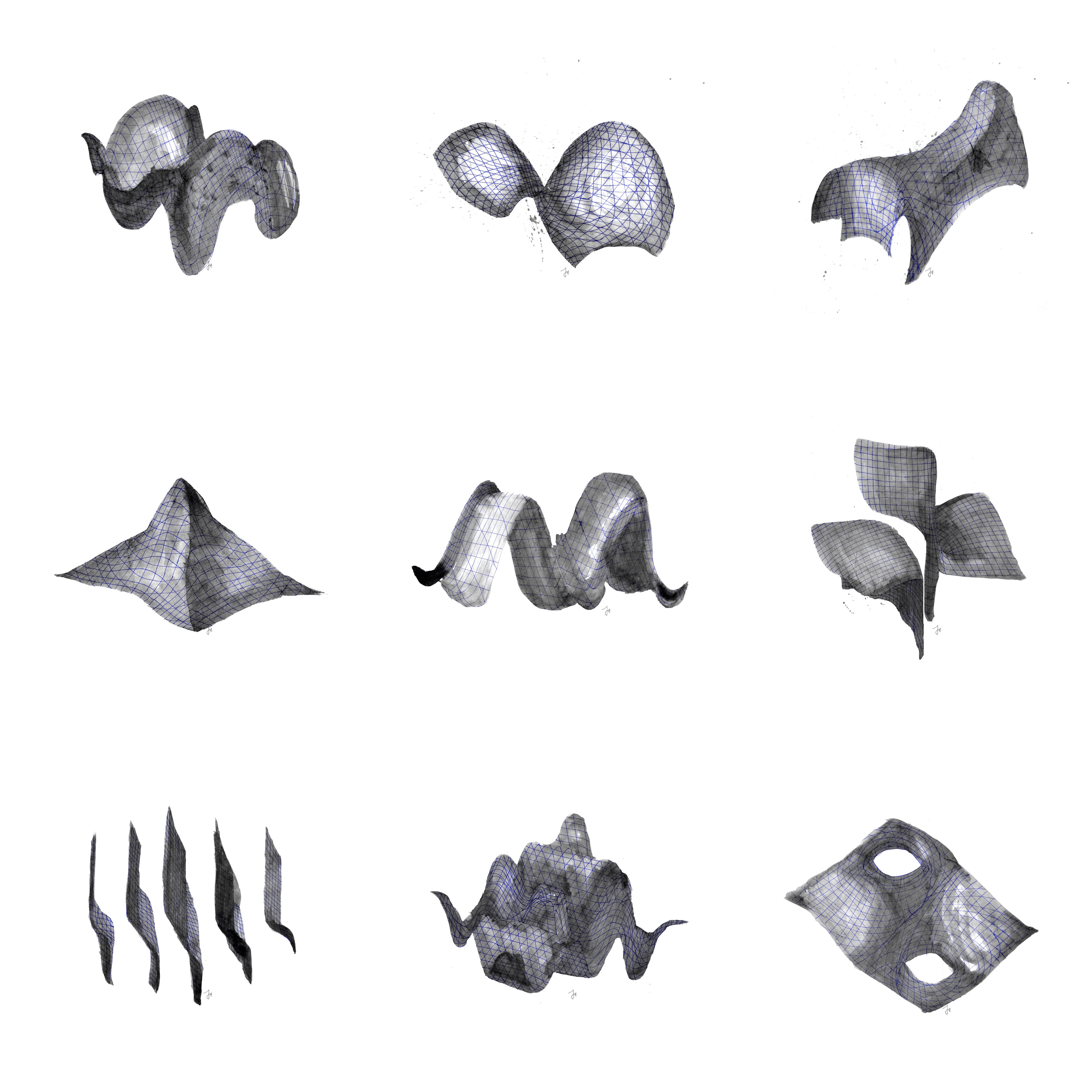
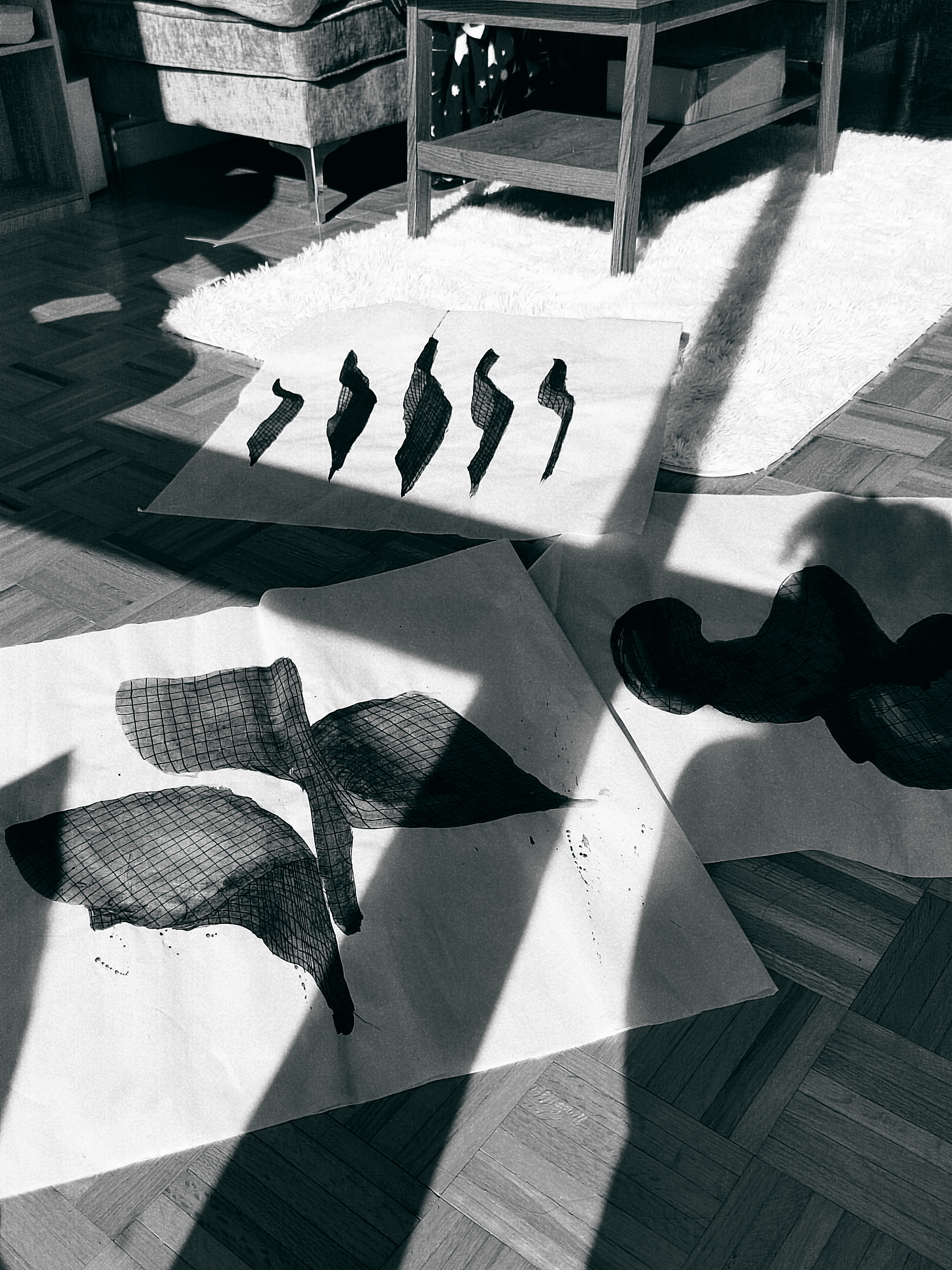
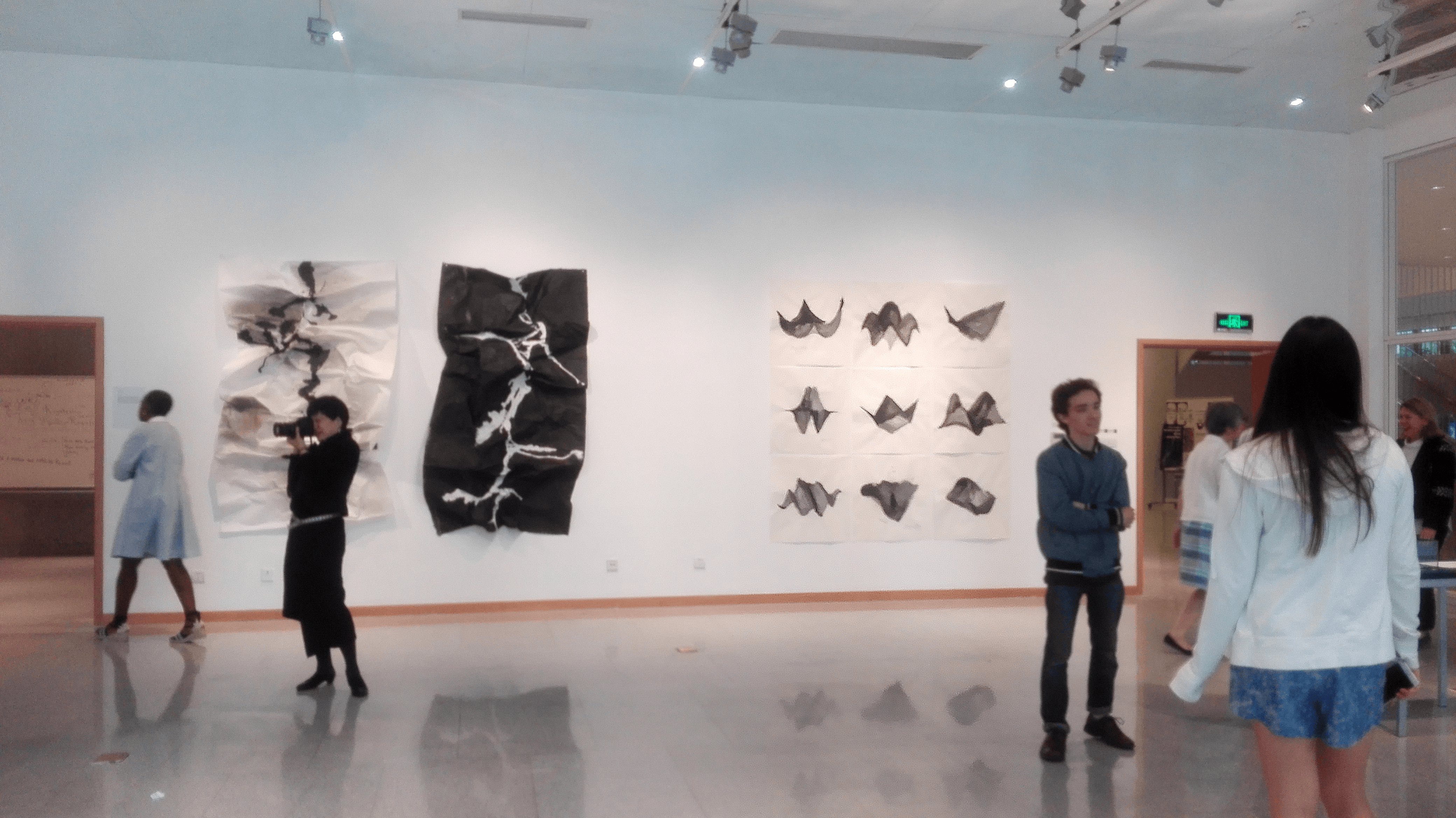
For example, in my collection of Multi-landscape, The Original design inspiration of this series comes from the mandatory mathematics course multivariable calculus, which involves the graph recognition part of partial differential equations. This work has gone through several iterations. The first as ink on
rice paper, with blueprint free hand lines as the background, and the second iteration as a digital and spatial reimagination.
As a student majoring in mathematics, while struggling to understand graphs using partial differential equations in Matlab, I was also attracted by the abstract space between pat-
terns and thus began to imagine the concept of “multi variables” in the mathematical and spatial dimensions. The blue manuscript in the painting implies the tortured order and rigor of mathematical logic while the traditional ink brushstrokes give the graphics a chaotic sense of space. It lays the foundation for further diversified spatial imagination. Rationally, these two-dimensional schematic diagrams cannot represent the true form of PDE, but percept these abstract “screenshots” , integrated with traditional Chinese ink painting techniques, can create the illusion of space with the contrast of ink.
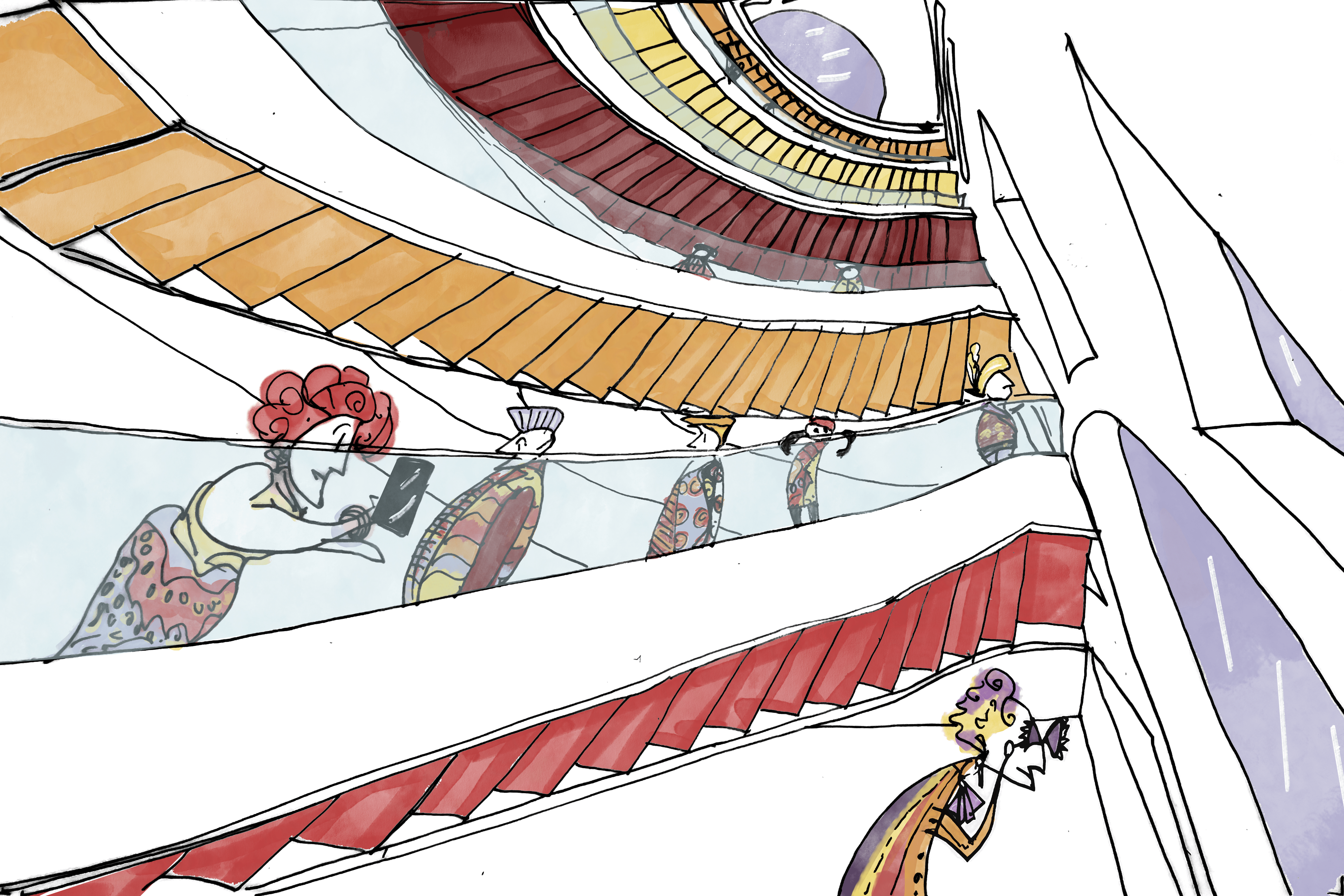
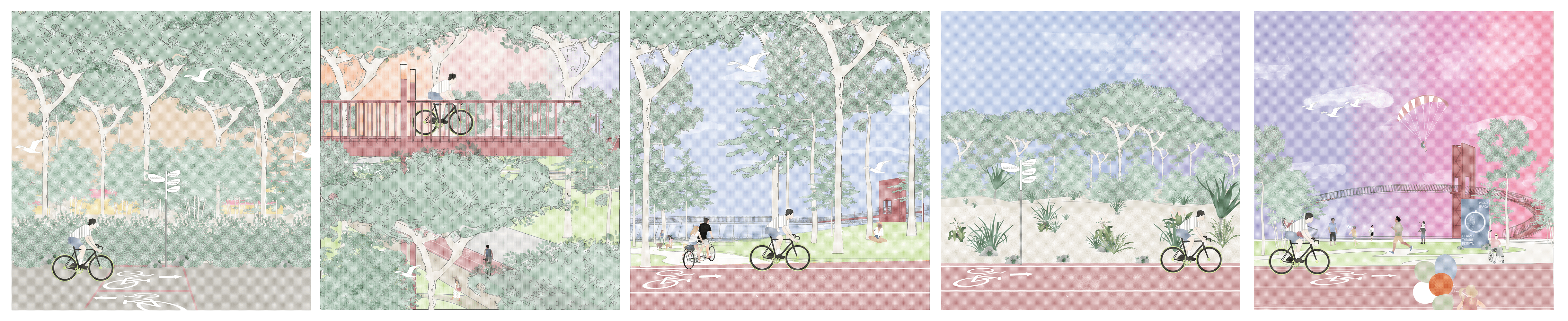
The urban scape and Landscape collections were generated with a second round of iteration. With diverse content added, the collection have multilayers of scenes, backgrounds, and human
and natural activities, becoming the combination of imagination of virtuality and reality.
As I’m still exploring the possibility as a professional artist, it remains relatively hard for me to tell whether it’s easy or not. The biggest challenge I’m facing now is how to market and publish my work without getting myself too much trouble in copyright issue. Though I’d like to sell and produce my work as the most original and traditional format( painting for example), I think the digital and extended design collection is what I’m aiming for next.

Let’s say your best friend was visiting the area and you wanted to show them the best time ever. Where would you take them? Give us a little itinerary – say it was a week long trip, where would you eat, drink, visit, hang out, etc.
The Huntington Library in San Marino is my go-to spot wherever I’m in LA. As an architecture graduate, I’ll start the day by having a tour near Greene and Greene’s project in Pasadena, appreciating the arts and crafts movement and oriental influence of the Gamble House. Then we’ll have a brunch at Old Town Pasadena. Later in the noon, we’ll drive 10 minutes to the Huntington Library, touring from the art collections to the gardens. Huntington has the probably the most authentic Chinese garden design through the West Coast, or even the continent. The Huntington Library is an incredible education resource for botanic lovers and landscape enthusiastic, containing French formal garden, Chinese garden, Japanese garden, tropical garden, English landscape garden, conservatories, and multiple museums.
The Shoutout series is all about recognizing that our success and where we are in life is at least somewhat thanks to the efforts, support, mentorship, love and encouragement of others. So is there someone that you want to dedicate your shoutout to?
Barbara Edelstein and JJ Zhang, who were my instructors on Chinese Painting. Maya Kramer, who was my class instructor for drawing class.
Saul Steinberg, and Peter de Sève my favorite illustrators whose work are full of urban observations with some sarcastic humor.
The 99% Invisible City: A Field Guide to the Hidden World of Everyday Design by Roman Mars (Author), Kurt Kohlstedt (Author)