We had the good fortune of connecting with Marina SaMont and we’ve shared our conversation below.
Hi Marina, do you have some perspective or insight you can share with us on the question of when someone should give up versus when they should keep going?
For me, the answer is always in the work itself. When a piece still has something to say—when it keeps pulling me back emotionally or intellectually—I know I have to keep going. I give up only when the process feels empty, when the dialogue between the painting and myself is gone. As long as there is tension, doubt, curiosity or even discomfort, that’s usually a sign that I should continue. The act of giving up is not failure; it’s recognizing when a path has stopped being meaningful.
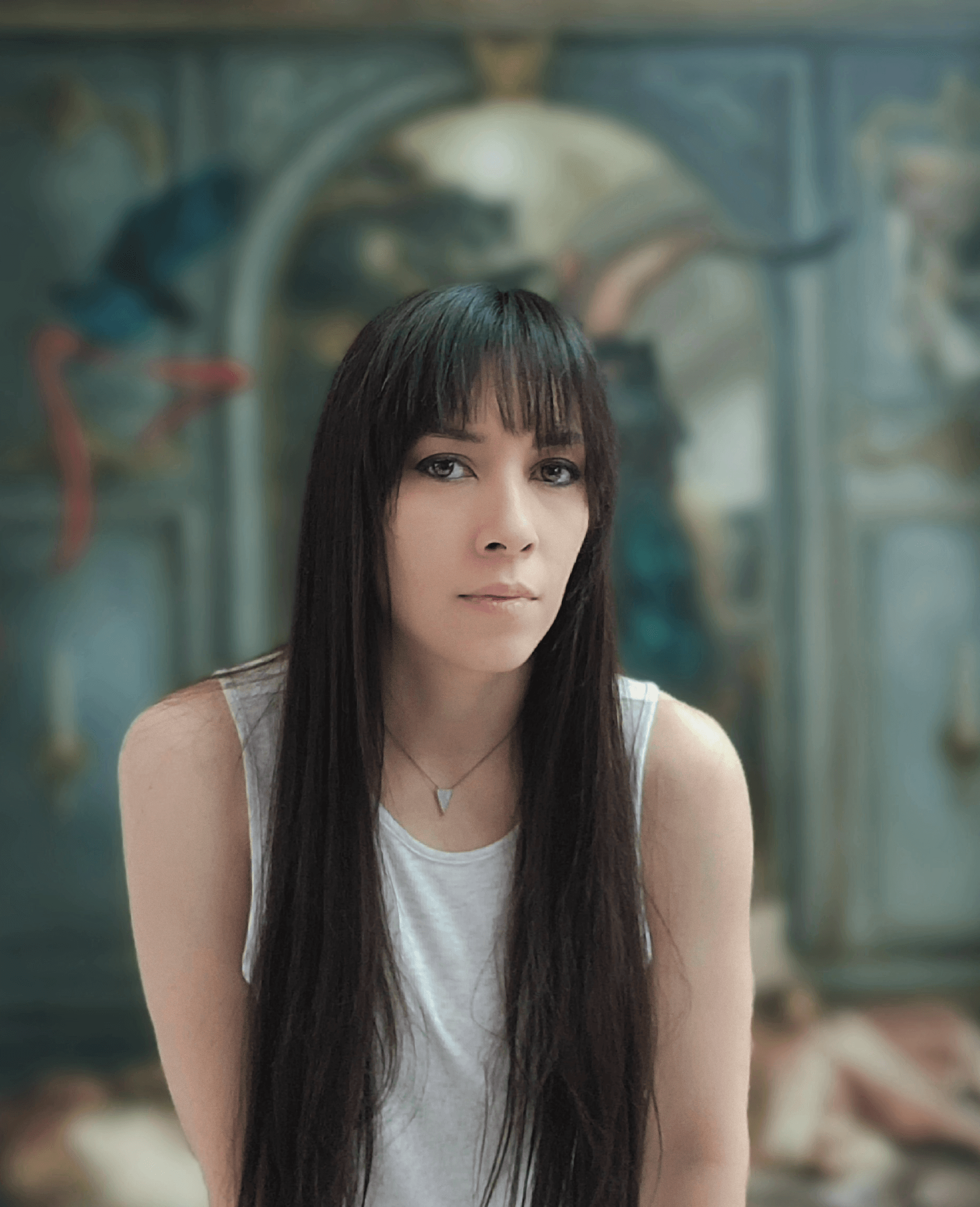
Can you open up a bit about your work and career? We’re big fans and we’d love for our community to learn more about your work.
My work combines classical painting techniques with psychological symbolism. I use a traditional visual language—oil on linen, layered processes, hand-prepared canvases—to explore themes tied to the subconscious: dreams, memory, desire, fear, and the abject. What sets my work apart is the tension between refinement and rawness, between what feels intimate and what feels unsettling. My paintings often act as mirrors of the subconscious, revealing emotions we recognize but rarely speak about.
The path to developing my artistic voice was not easy. In my early training, my first teachers refused to let me study the human figure simply because it involved drawing from nude models. That censorship stayed with me—not as a wound, but as a catalyst. It forced me to learn anatomy on my own, later finding mentors who understood the importance of the figure and of unrestricted artistic exploration. Reclaiming the body as a central symbol in my work became a very intentional part of my practice.
Professionally, I have always balanced two disciplines: software engineering and painting. Both worlds feed each other. The structure, logic, and problem-solving of engineering coexist with the emotional, symbolic, and instinctive nature of my art. It hasn’t always been easy to give both fields the time and depth they require, but that duality has shaped the way I think and create.
The biggest lesson I’ve learned is that obstacles—whether external rules or internal doubt—can reveal what truly matters. What I want the world to know about my work and my story is simple: my art is deeply intentional. It is not decorative; it unfolds as dreamlike scenarios—spaces built through poetry, memory, and symbolism. Each painting is a negotiation between beauty and disturbance, between the visible and the hidden. And every part of my journey, including the limitations I had to overcome, has shaped the artist I am today.
If you had a friend visiting you, what are some of the local spots you’d want to take them around to?
If a close friend visited, I’d take them to the places in Monterrey that genuinely inspire me—cafés, museums, and galleries where you can enjoy art in a calm, meaningful way. We’d visit MARCO and the Centro de las Artes in Parque Fundidora, both of which consistently offer strong and thoughtful exhibitions. In San Pedro, I’d show them the galleries that best represent the city’s contemporary art scene: Colector, Peana, ETRA, and Drexel Gallery. Each one brings a different perspective and atmosphere.
Between exhibitions, we’d stop for coffee or breakfast at the places I enjoy the most—Cobalto, Tres45, Morning Coffee, Kaomi, and Cuarto Creciente. All of them have a calm, welcoming vibe perfect for good conversation. For food, I’d choose comfortable, consistent restaurants like Campomar, La Felix, or La Buena Barra, where you can enjoy a nice meal without rushing.
For me, the best way to experience the city is through good art, good coffee, and spaces where you can actually talk and connect. That’s the Monterrey I would share with anyone visiting.
Who else deserves some credit and recognition?
My journey has been shaped by many people, often in quiet ways. I owe a huge part of my growth to the mentors who challenged my technique and pushed me to think deeper about the psychological dimension of my work. I’m also incredibly grateful to the artists and teachers who shared their knowledge with generosity—each of them left a trace in how I paint and how I think.
At the same time, I also recognize the impact of the teachers who didn’t believe in me, or who placed unnecessary obstacles in front of my learning—especially those who refused to teach certain techniques. Their limitations pushed me to seek my own path, to study independently, and to become even more committed to mastering the craft. In a way, their doubt became part of my discipline.
But beyond formal mentorship, I owe just as much to the people who supported me emotionally: my family, friends, and the collectors who believed in my work long before I fully believed in myself. Their encouragement created the space for me to take risks, experiment, and trust my instincts. Art is not made in isolation, and I carry a piece of each of them in everything I create.
Website: https://www.marinasamont.com
Instagram: https://www.instagram.com/marinasamont
Nominate Someone: ShoutoutLA is built on recommendations and shoutouts from the community; it’s how we uncover hidden gems, so if you or someone you know deserves recognition please let us know here.