Meet Chandra Ingram | Author and Journalist
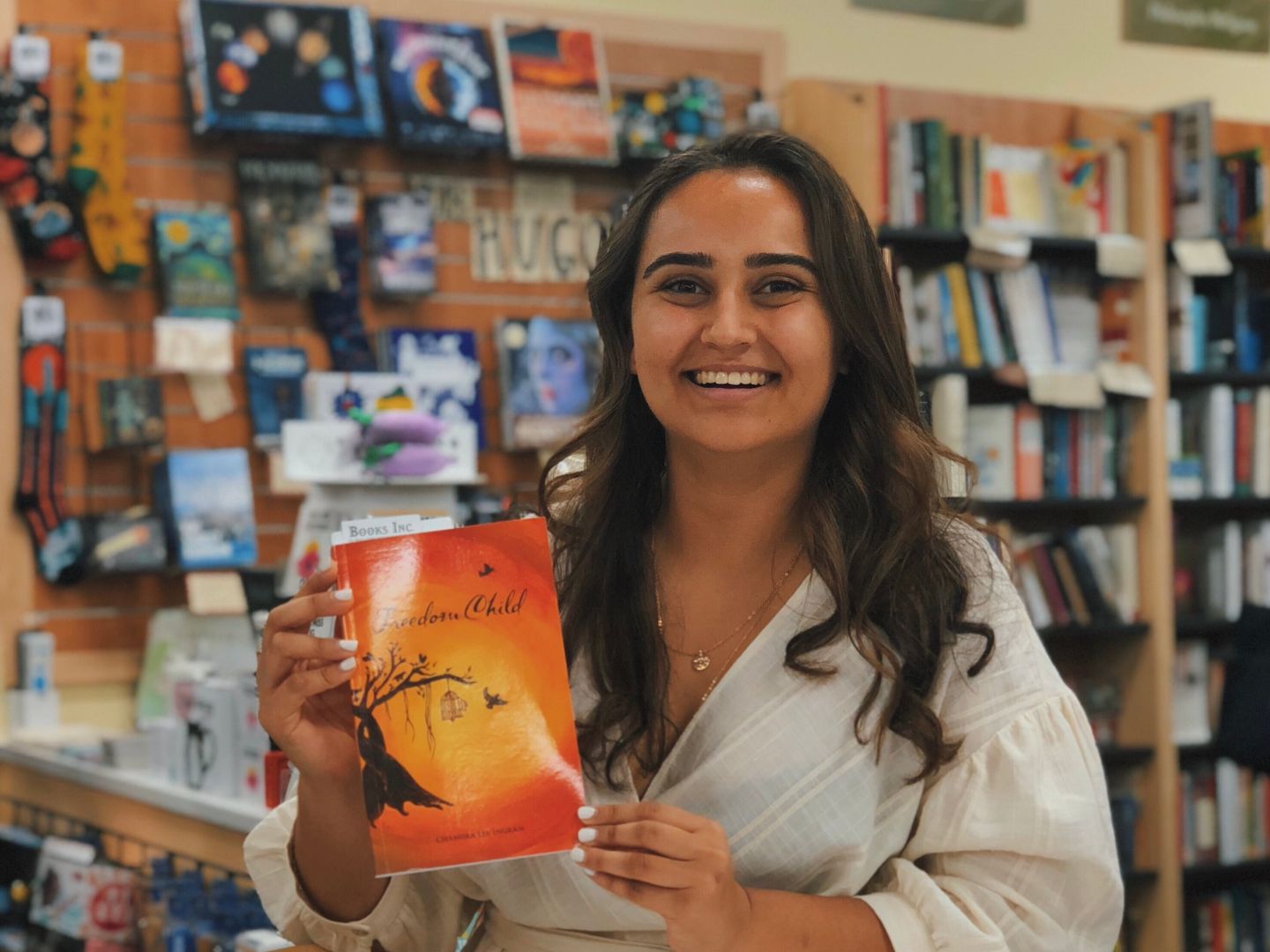


We had the good fortune of connecting with Chandra Ingram and we’ve shared our conversation below.
Hi Chandra, what role has risk played in your life or career?
“Chandra, Run!”
The brick factory spun in circles, as dust plunged into the humid air, and I choked on its debris. Drenched in relentless sweat, I sprinted for my life across unstable cobblestones molded by the slaves I had met, escaping mere moments before the slave owners’ back up arrived. His chilling threats echoed in the near distance, as I jumped into my temporary refuge: the swerving van coming to my rescue.
Instead of paralyzing fear, I felt a curious and growing excitement. I clenched my iPad, filled with the 65 intimate interviews of current and former slaves, and felt a keen sense of empowerment and purpose. These slave masters could chase and threaten me, but they couldn’t kill my determination.
Despite the dangers, I continued my investigative research to discover the root causes of modern slavery. After penetrating India’s agricultural fields, brick factories and remote quarries, I next cleverly deceived my way into a silk factory to meet a reclusive young girl.
Gayatri worked 7 days a week for 15 hours a day in a silk factory and is constantly beaten and abused by the owners. She stood there, gazing back at me with mutual curiosity. Her obscure burka shrouded half of her face, but it was no barrier to her radiating beauty. Our different tongues prevented direct communication, but her spoken eyes portrayed her trepidation and slanted hope. Slowly removing her abaya, Gayatri revealed her scars borne from the beatings severe to the point of causing significant memory loss. Enslaved in inhumane working conditions since she was nine years old, selling her labor to repay an interminable debt, today she was fifteen, the same age as me, yet living a polar opposite life.
Returning home to California, I felt suddenly powerless against the colossal injustice—the disparity between my life and Gayatri’s. How could I, a fifteen-year-old girl, help end slavery?
As such a young girl, writing about such a contentious issue, I needed to establish my story’s credibility. I had to take risks. My story was based on the day to day realities of millions of children. I had one chance to share their story and I wanted to do them justice. So I begged my mom to take me back to India that summer. After heckling a number of organizations, of which the majority refused to work with a fifteen-year-old girl, finally one agreed to help us.
I began writing my novels when I was twelve years old. I encountered many challenges being so young. It seemed everyone doubted my ability to tell the truth or to write a compelling story. But even more than that, it was hard to find organizations to help me. With such a dangerous issue, I was deemed a liability. After months of outreach, finally an organization named Jeevika offered to help me. It was a really important lesson for me that I would carry with me throughout my career as a journalist. You can reach out to hundreds of sources and only get a handful or even one to agree to talk to you. But if you’re persistent enough you’ll get that one yes and all the no’s won’t matter anymore.
Despite the improbability of me making even a dent in this immense iniquity, I seized the power of my own voice. As long as I had the ability to share their stories and spread awareness of their revolting reality, I would. I returned home with a new ambition, more tenacious than ever, to fight for freedom.
My emotions spilled over into the lines of my two novels, Freedom Child and Freedom Lost, as I incorporated their true stories into the lives of my fictional characters. It was their bravery that inspired me to write for the thirty million slaves around the world.
Born and raised in the Silicon Valley, California, I grew up surrounded by affluence, security, and education; however, for a portion of my life, I also lived in Bangalore, India. Those three and a half years changed my life and myself more than I knew, as I learned firsthand about the injustice and extreme poverty in many parts of the world and found a passion for ending modern day slave labor. Throughout my writing career, I’ve learned to get my hands dirty. The risks I took to uncover the truth allowed me to give justice to the stories I shared.
Great books disrupt our ability to remain ignorantly comfortable, reminding us that society is flawed and sparking passion to ensure social justice will prevail. Powerful stories, with inspirational and horrific characters, have the power to touch our hearts and turn our minds. This was my goal— to give a voice to the voiceless—for the millions suppressed by invisible chains.


Can you open up a bit about your work and career? We’re big fans and we’d love for our community to learn more about your work.
Looking back at my journey, I still can’t believe I began writing my first book series when I was just twelve years old. I’m proud of the immense dedication I put into this work. I spent over nine years researching, writing, publishing and promoting my series with the sole intention of spreading awareness about a cause that’s close to my heart.
It all began, when my parents told my brother and me that we were moving to Bangalore, India. I was only eight at the time, and I remember not being particularly thrilled to leave in the middle of my little league baseball season. One second I was in Bay Area and the next, I was in a sea of rickshaws, dodging cows as I crossed the road. While living in India we traveled to other impoverished nations such as Thailand, Cambodia, Vietnam, South Africa, Indonesia, Egypt and Nepal, where I witnessed extreme poverty firsthand. These experiences impacted me most upon my return home to California. Here, surrounded by affluence, education and resources, I was struck by the gross disparity between the quality of my life and that of the children in these countries. What shocked me most was that a vast majority of my friends and family were ignorant of the prevalence of slavery in the modern world.
I found an opportunity to increase awareness when my seventh-grade English teacher, Mrs. Halla, gave our class an assignment to start the first few pages of a book. Beginning as a three-page story, Freedom Child soon grew into a novel and then into a two book series, Azadi Series.
One challenge I faced was narrowing down my story. It is really, really hard to pick and choose from so many amazing interviews. In the moment, they all seem important. But I had to focus on my main goal – to inspire people to create change with a moving and touching story. That narrative had to be comprehensive and fathomable. But at the same time, I wanted my story to be brutally honest and heartbreaking. It sounds bad but my goal is to make people cry. I had to find that balance, and make my readers indignant but also give them enough hope to turn the next page. If I shared all the terrible things I learned, no one would read about it. It’s human nature to shut out what makes us uncomfortable, because if we absorbed all the terrible things happening in this world, let’s face it, we would never get out of our beds in the morning. It took a lot of work and brainstorming to find the right stories and to convey my characters in a human light that would move people.
Finally, a challenge I think every journalist faces at some point, is that we don’t belong or it’s not our story to tell. Being a privileged American, I’ve definitely felt this many times and still do. Sometimes journalists are afraid to put themselves out there. Many vulnerable communities have been misrepresented, or taken advantage of and they have little reason to believe that we care or want to help. I know for me, if it weren’t for the kindness and hospitality of the organization Jeevika, I don’t know if those brave men and women in India would have opened up to me.
I think we, as humans, always want to relate to one another and say we understand. But this can be dangerous for most of the time we can’t relate, because we aren’t going through the same things. I didn’t pursue this story because I felt that I, being half-Indian, had some special connection or that I could go into these communities and say I understood.
Rather, I believe that my privilege is first and foremost my voice. And I realized that millions of boys and girls my own age have no way to speak up for themselves and share their stories. They’re muted by the caste system, by political corruption. They are hindered by extreme poverty and a lack of education. But I see them, I hear them, and I want to be a voice for them. I believe their painful, courageous, and inspiring stories will ignite the change this world needs.
As I continue my writing career embark on my next project, I carry these lessons with me. I met a young girl when I was studying journalism at the University of Southern California. A former foster, incarcerated, homeless youth and sex trafficking survivor of Los Angeles, she was placed in the foster care system when she was two and experienced many forms of abuse. Although I didn’t come from the communities she represents, I once again have the opportunity to share her story for her and spread awareness about the myriad issues facing many children and citizens of Los Angeles.
Any places to eat or things to do that you can share with our readers? If they have a friend visiting town, what are some spots they could take them to?
I love to find new places to explore around LA and am always saving new spots my friends post on social media. Some of my go-to spots in LA are Abbott Kinney Boulevard in Venice, Arts District, and any rooftop bar or restaurant in downtown or West Hollywood. I practically live at coffee shops and am always looking for new spots. Some of the places I go to often are Verve or Groundwork, Deus Ex Machina in Venice, and of course my favorite, Philz Coffee. For more of an adventure, I’d take my friends to nearby Six Flags Magic Mountain or shop at Melrose Trading Post, Silverlake Flea Market, or Smorgasburg. First Fridays in Venice is always fun, as food trucks fill up the streets of Abbott and Kinney. I’m always trying to find new bars and places to grab drinks with my friends. Death & Co in Arts District is a great cocktail bar with dim lighting and great vibes. Ace Hotel and Broken Shaker are great rooftops and Tenants of the Trees is my favorite place to go dancing!


Shoutout is all about shouting out others who you feel deserve additional recognition and exposure. Who would you like to shoutout?
As a girl at the age of twelve, twenty-one, and every age in between, I never could have accomplished writing Freedom Child and Freedom lost without the help and generosity of countless people in my life. Freedom Child is indebted to the immense support, encouragement, and constructive criticism from my family, teachers, school administrators, classmates, and editors.
First, I would like to acknowledge my mother who has been my number one supporter and has stuck by my side through all of my outlandish adventures. She was by my side escaping a brick factory from angry landowners and she was by my side editing my mercurial plot ideas and style of writing. I would also like to thank my father for his meticulous attention to detail and vigilant eye when checking my novel for authenticity and credibility. Without my parents, I would be neither the person nor the author I am today.
I am beyond grateful for Jeevika and Kiranbhai for allowing me to come visit them in Karnataka, India and witness their organization in action. I traveled with Jeevika all over Karnataka, visiting the areas where slave labor was occurring and heard incredible stories of hardship and courage. Through Jeevika, I acquired a new appreciation for those who have selflessly dedicated their lives to helping others. Anita Reddy also took me in as her own and believed in my research and me, enabling myself to further understand the root causes of modern slavery and find solutions to eradicate the issue at its core. I would also like to give a special thanks to Balaji, a dear friend, who made this trip and research possible with his exquisite translations and dedication to our cause.
Website: chandiingram.com
Instagram: chandiingram
Linkedin: https://www.linkedin.com/in/chandra-i-72a95bbb
Twitter: chandiingram


