Meet Aleksandr Mikhalevich | Engineer & Inventor | Intelligent Infrastructure Systems
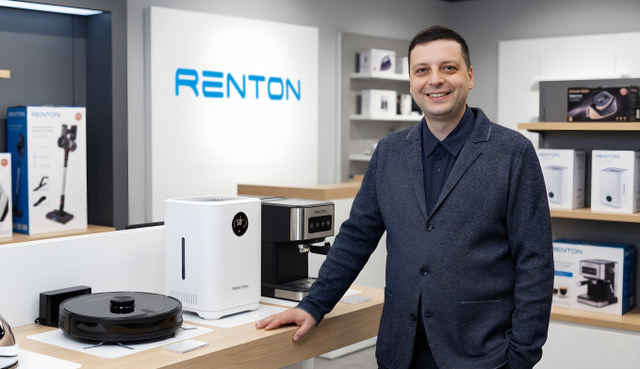


We had the good fortune of connecting with Aleksandr Mikhalevich and we’ve shared our conversation below.
Hi Aleksandr, is your business focused on helping the community? If so, how?
My engineering work focuses on making environments safer and infrastructure more reliable. The measure of success for me is not sales volume, but real-world deployment scale.
In water treatment, the electrochemical systems I developed reduce chemical reagent usage and have been installed at over 3,000 facilities, lowering environmental load and improving operational stability.
In climate control, a single contactless monitoring unit can cover zones up to 20 meters and simultaneously measure 8 parameters — CO₂, VOCs, PM2.5/PM10, humidity, temperature, microbial load, and ionization — with accuracy within ±2% and built-in self‑calibration. This drastically reduces the number of sensors and maintenance efforts.
In education, my methodological frameworks have been used since 2015 at an institute where 29 graduate students completed their research and defended theses on predictive modeling and engineering systems management.
Ultimately: less chemicals in water, fewer sensors in buildings, fewer failures, and more skilled engineers. That is the impact I care about.
What should our readers know about your business?
My professional journey began with a focus on engineering and product development. Early on, I worked on a range of household appliances and technical devices, but I quickly realized that the most meaningful impact comes from solving fundamental problems — air quality, water treatment, and energy efficiency. Over time, I shifted my focus entirely toward developing intelligent infrastructure systems.
What sets my work apart is the integration of multiple technological domains. Instead of treating air purification, water treatment, and energy management as separate challenges, I approach them as interconnected parts of a unified system. For example, the climate control systems I’ve developed combine multi-stage filtration, UV sterilization, ultrasonic humidification, and ionization — all governed by an intelligent control unit that continuously monitors environmental conditions and adjusts automatically. The same logic applies to water treatment: electrochemical systems that reduce chemical usage, robotic purification networks that coordinate across facilities, and predictive monitoring platforms that detect issues before they become failures.
What I’m most proud of is not the technology itself, but its real-world application. Over the years, more than 3,000 electrochemical water treatment units have been deployed across various facilities. In climate control, the systems I’ve worked on are installed in healthcare environments, industrial facilities, and public buildings — places where air and water quality directly affect people’s health and well-being.
The path wasn’t always straightforward. One of the biggest challenges was moving from concept to reliable, long-term operation in real environments. Facilities are not laboratories — conditions vary, maintenance schedules are imperfect, and users have different priorities. I learned that robustness matters more than sophistication. A solution that works perfectly under ideal conditions but fails in the field is not a good solution. Over time, I prioritized simplicity, self-calibration, and minimizing consumables. The systems I develop today are designed to run for years with minimal intervention.
Another important lesson was the value of feedback. The most useful insights came not from my own assumptions, but from the people who operated and maintained these systems — facility managers, engineers, and end users. Their input shaped every iteration and made the technology more practical and reliable.
Looking ahead, my focus remains on advancing intelligent infrastructure platforms that monitor, analyze, and adapt to changing conditions. I believe the future of engineering lies in systems that don’t just perform a function but actively understand their environment and adjust accordingly — whether that means predicting air quality changes, optimizing energy consumption, or detecting water contamination before it becomes a problem.
What I’d like the world to know about my work is simple: it’s about creating practical, durable, and intelligent systems that improve the places where people live and work. Not flashy, not revolutionary — just reliable and effective.
Ответить
Let’s say your best friend was visiting the area and you wanted to show them the best time ever. Where would you take them? Give us a little itinerary – say it was a week long trip, where would you eat, drink, visit, hang out, etc.
Favorite Places in the City
If a friend visited, I wouldn’t take them to typical tourist landmarks. I’d show them the places where the city reveals itself as a living, functioning system.
Day 1: An Engineer’s Walk
I’d start with a walk through the city center — not along the main avenues, but through side streets where you can see both old and new infrastructure. I’d point out how modern systems integrate with the historical fabric: where new utilities have been laid, how public lighting is organized, where air quality sensors are installed. It’s not a tourist tour — it’s an engineer’s perspective on how the city breathes.
Day 2: Water and Energy
I’d take him to a modern water treatment facility or an engineering control center — if access is possible. It’s an unusual experience for most people. Seeing how water enters the city, how it’s purified, and how energy is distributed changes your perception of what usually stays behind the scenes.
Day 3–4: Food and Conversations
In the evening — dinner at a small restaurant that uses local ingredients. Not necessarily expensive, but with attention to quality. A few hours at the table with good company, where you can discuss not just the food but ideas.
Day 5: Culture and Technology
A science museum or a technical center with interactive exhibits showing how the systems we usually overlook actually work. Or a concert in a venue converted from an old industrial building. I like seeing how engineering heritage finds new life.
Day 6–7: A Leisurely Finish
A walk along the waterfront or in a park — where you can see how the city interacts with nature. A good way to digest impressions and simply be present.
What I appreciate about these routes is that they’re not about entertainment — they’re about understanding. A city is a complex system, and the more you understand it, the more you respect it.
Who else deserves some credit and recognition?
I’m grateful to the engineering teams I’ve had the privilege to work with over the years. Infrastructure projects are never solo efforts — they require collaboration across disciplines: chemists, electronics engineers, software developers, and facility operators. Every project taught me something, and I learned as much from my colleagues as from any textbook.
I also owe a debt to the institution where I studied. It gave me a strong foundation in systems thinking and encouraged me to look beyond individual components toward how entire systems interact. Later, some of the methodological approaches I developed were adopted there, which was both humbling and motivating.
I’m thankful to the clients and facility operators who trusted our solutions enough to deploy them in real-world environments. Their feedback — what worked, what didn’t, what could be improved — shaped every iteration of the technologies I’ve developed.
Finally, I appreciate the people who support me personally, whose patience and encouragement allow me to focus on long-term engineering challenges.
None of this would have happened in isolation, and I don’t take that for granted.
Website: https://renton.su
Linkedin: https://ru.linkedin.com/in/aleksandr-mikhalevich-842283378
Image Credits
EVGENY POPOV, SHCHETNIKOV DENIS