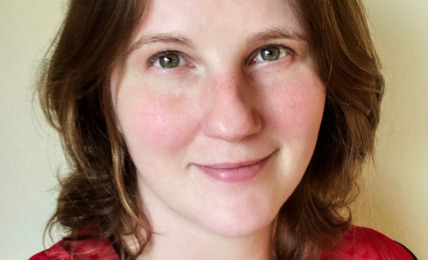
Meet Danilo Montejo | Theme Park Designer


We had the good fortune of connecting with Danilo Montejo and we’ve shared our conversation below.
Hi Danilo, what is the most important factor behind your success?
As I get more experience in life, I’ve realized that what once made me feel out of place was actually the foundation of my career.
I was never wired for the surface-level rhythms of everyday life. Small talk, rigid social structures, unspoken rules they felt limiting. My mind was always somewhere else, imagining how spaces could feel different, how environments could transform the way people experience the world.
I didn’t pursue creativity as a hobby. I pursued it as survival.
When I design themed environments, I’m not just building sets or attractions I’m engineering emotion. I’m shaping how a guest moves through space, how anticipation builds, and how memory is formed. Themed design sits at the intersection of psychology, architecture, storytelling, and sensory orchestration. It is controlled imagination.
Within the parameters of budget, physics, and operational realities, I create worlds that feel limitless. That tension between constraint and fantasy is where innovation lives. That’s my territory.
Theme parks, immersive spaces, and experiential environments are no longer just entertainment. They are modern mythology. They are places where people step outside the noise of daily life and reconnect with wonder. I’ve always been driven to create those portals spaces where rules bend, imagination leads, and emotion becomes tangible.
What once made me feel different became my greatest asset. I don’t escape reality I redesign it.
I’m an alumnus of Art Center College of Design, where I refined both conceptual thinking and technical execution. I began as a freelancer before moving into the advertising industry, creating marketing campaigns, storyboards, and full color renderings for billboards and magazines. I also designed cover artwork for video games, translating narrative into bold, cinematic visuals.
Then I encountered a project that shifted everything. I was hired to create a poster for a ride at Universal Studios. When I visited their creative studio and saw the immersive work they were developing, it was a revelation the scale, the storytelling, the orchestration of space and emotion.
In that moment, it became clear: themed park design wasn’t just an interest. It was my calling.
I realized I didn’t just want to illustrate worlds. I wanted to build them.
From that point forward, I began creating environments for rides and attractions for major entertainment brands, including Disney, Universal Studios, Thinkwell Group, Goddard Group, BRC Imagination Arts, Forrec, Mycotoo, Legacy Entertainment, David Korins Design and Warner Bros. Many of these projects required me to work internationally in Dubai, India, Japan, and various regions across China sometimes for nearly two years at a time.
Each location shaped me differently. But China stands out.
There was one particular project a five month assignment designing a themed amusement park inside a shopping mall. Before arriving, I assumed I would be collaborating with a full creative team. When I landed, I discovered something unexpected.
The “team” consisted primarily of construction crews and administrative staff.
I was the entire creative department.
Art director. Concept designer. Creative manager. Visual developer.
At first, the weight of that realization was overwhelming. There was no buffer. No internal creative review. No layered approval system. Every decision flowed directly from my drawings into execution.
After several weeks, I began to notice something extraordinary. From my workspace, I could see through a window to the other side of the site. I watched as the construction manager held my renderings in his hands, directing crews who were working in shifts nearly twenty hours a day. My sketches lines and color renderings on paper were becoming walls, façades, and structural forms in real time.
I was designing while watching the designs materialize in front of me.
There is something profoundly humbling about seeing imagination convert into physical reality without delay. There was no abstraction. No separation between concept and construction. It was immediate cause and effect.
That experience changed me.
It forced precision. There was no room for vague thinking or conceptual indulgence. If a beam didn’t align, it showed. If a proportion was off, it became architectural fact. I learned to think like both a designer and a builder.
It also taught me leadership without authority. I didn’t speak the same language as many of the crew members, yet design became our shared vocabulary. A rendering could communicate what words could not. A gesture toward a sketch could redirect the energy of an entire team.
In that environment, creativity wasn’t romantic. It was operational. It was logistical. It was relentless.
But it was also exhilarating.
For the first time, I felt the full weight and power of what themed design truly is not illustration, not decoration, but world-building under pressure.
That project solidified something in me: I am at my best when imagination meets reality head on.
One of the most significant designs I am especially proud of is the creation of my own home in my home country, Colombia a project where I designed every corner and every fixture with intention.
Because my wife is deeply spiritual and works as a holistic coach, I wanted the house to embody her presence while remaining in dialogue with the natural landscape that surrounds it. The concept was simple but deliberate: nature should not stop at the walls.
I introduced expansive windows to dissolve the boundary between interior and exterior. A garden space was integrated as a transitional environment rather than an accessory. Tree branches descend from the second floor into the stairwell, creating vertical continuity between levels. Two monumental boulders flank the fireplace, reinforcing the idea that the earth itself moves through the structure rather than existing outside of it.
Architecturally, the house was conceived as a dialogue between structure and landscape. Rather than imposing geometry onto the site, I allowed the natural topography to inform circulation and orientation. Sightlines were carefully choreographed so that each transition between spaces reveals either light, vegetation, or texture. The material palette stone, wood, and glass was intentionally restrained, allowing tactility to carry emotional weight. Volumes subtly expand and compress as one moves through the house, creating a rhythm that mirrors walking through a forest clearing and then into a more intimate grove. Natural light was treated as a building material; its movement throughout the day defines the emotional tone of each space.
Right before COVID reshaped the world, I made the decision to move permanently back to Colombia. That transition marked another architectural shift in my life from constant international travel to designing remotely, collaborating across continents through digital platforms. Today, I continue working globally while rooted in the landscape that originally shaped me.
Art surrounds me, and it does not stop at drawing, painting, or designing. It extends into the way I approach landscape horticulture, dog training, hiking, horseback riding, cooking even intimacy. Each of these practices operates within the same creative framework: sensitivity to rhythm, awareness of space, emotional calibration, and the ability to respond in real time.
Whether shaping a landscape, training an animal, preparing a meal, or designing a themed environment, the process is fundamentally the same. It requires observation before action. It demands patience before control. It asks for structure without rigidity and intention without ego. Creativity, to me, is not a profession it is a system of living.
Themed design simply happens to be the scale at which that system becomes visible.
What I have come to understand over time is that the real work is not about spectacle. It is about resonance. It is about creating environments whether a global attraction, a private home. Wonder. Calm. Anticipation. Connection.
If my career has taught me anything, the most important factor behind my success, is that imagination is most powerful when it meets discipline. Fantasy becomes meaningful when it is built with precision. Emotion becomes lasting when it is engineered with care.
I once felt out of place because I was always redesigning reality in my mind. Today, I understand that impulse was not escape it was architecture.

Let’s talk shop? Tell us more about your career, what can you share with our community?
Throughout my career, I’ve always believed in staying one step ahead of the game.
In themed park design, artists usually have very specific roles within a team you might be a layout artist, a renderer, or focus on one part of the creative process. Early in my career, however, I wanted to do both. I enjoyed designing the layout as much as bringing it to life with color and atmosphere, and having both skills allowed me to maintain greater control over the creative process.
From the beginning, I was always more interested in telling the whole story of a place rather than just drawing a single piece of it. For me, themed entertainment has always been about creating places where imagination becomes something people can physically experience.
Art directors appreciated this because it made the workflow more efficient. Instead of handing a layout from one artist to another for the final rendering, I could carry the vision from the initial concept all the way to the finished image. That ability became one of the things that set me apart.
Then technology began to transform the industry. When Photoshop arrived, it changed the way renderings were produced. Instead of traditional paint and brushes, digital tools became the standard. Photoshop made it much easier to make changes, adjusting colors, lighting, and even the time of day within a scene. But it also introduced a new challenge: maintaining the loose, expressive feeling of traditional brushwork in a digital medium.
Over time, many artists began to look similar because it became easy to rely on digital effects, photo collages, and filters that mimicked painting. Now we are entering another major shift with artificial intelligence, where images can be generated in seconds. AI has changed the market dramatically, especially for rendering work.
Design companies are hiring fewer and fewer artists. To stay active, you have to wear a lot of hats and be knowledgeable about design tools like SketchUp, Photoshop, and real-time engines such as Unreal to visualize worlds in ways we couldn’t imagine twenty years ago.
However, one thing has remained constant throughout every technological shift: the value of design. AI can generate images, but it still struggles to replicate the whimsical human thinking, storytelling, and spatial perspective that are essential in themed entertainment design. Those elements still require a designer’s imagination.

If you had a friend visiting you, what are some of the local spots you’d want to take them around to?
The first place I would take a friend around my area is a small village called Sesquilé, founded in 1600. It’s about an hour and a half from Bogotá (the capital) and 20 minutes from where I live. In front of the church there is an old structure where there is a store/bar called Uncle Tom’s Cabin (I am sure no one in town knows where the name comes from), a place used by local farmers. It’s a mixture of The Old West meets sci fi movie: farmers with their long ponchos down to their knees, dirty with mud, wearing high tech motorcycle boots and helmets. The signature local drink is milk with brandy and fried farmer’s cheese.
Then we go to the “Laguna del Cacique Guatavita” (Lake of the King Guatavita), where the myth of El Dorado comes from. The Muisca king would cover himself in gold dust and sail toward the center of the lagoon, offering gold and precious jewels to the gods. Many pre-Columbian gold pieces have been found in this lake.
From the 1600s to the 1910s, British, French, German, and Spanish explorers tried to cut a notch into the rim of the lake to lower the level of the water to rescue the gold treasures. These attempts were driven by the El Dorado legend, but they failed to yield the expected massive treasure, causing the lake to retain its secrets.
Next we’ll go to the village of New Guatavita, about 45 minutes from the Lake of the king Guatavita. It is a village that was built in 1964 with a modern colonial style design to relocate the inhabitants of the old Guatavita, which was founded in 1593. The old town was flooded to create a reservoir.
Lastly, we go to club “La Marina,” a place right on the water of the reservoir where you can water ski, take sailing trips, kayak, jet ski, and enjoy many other water sports.
We can end our itinerary with a great dinner at my house and a dip in the jacuzzi to relax our bodies, skin, and muscles after a long day of exploration.

The Shoutout series is all about recognizing that our success and where we are in life is at least somewhat thanks to the efforts, support, mentorship, love and encouragement of others. So is there someone that you want to dedicate your shoutout to?
It’s very easy to get so involved in your work that you lose sight of what really matters.
Throughout my life and career, I’ve had to make decisions in the moment sometimes choosing work, sometimes sacrificing time with people I care deeply about. Over time, those moments taught me what truly fuels me and what brings me back to my work with clarity and energy.
For me, that has always been my children.
Children see the world differently. Their minds haven’t yet been shaped by all the rules and expectations that adults carry around. When you’re stuck on a creative problem or even a business decision spending time with them has this incredible way of resetting your thinking. They untangle your mind simply by being themselves.
I have three children: Andrew and Katrina from my first marriage, and Valeria from my second. Being responsible for them has been one of the greatest motivations in my life. It pushes me to succeed, not only for myself but so they can see what dedication, creativity, and perseverance look like in practice. One of the greatest joys I have as a father is helping guide them showing them not only the theory of success, but what it looks like in real life.
I’m also deeply grateful to the two women who have shared this journey with me. My ex-wife Kathy, whom remains my toughest and most honest art critic. And my current wife Maia has helped me stay grounded and present reminding me to appreciate each moment and to recognize that the good things that happen in life are gifts from the universe, not just coincidences.
When I look back, I realize that almost every important decision, every idea, and much of my inspiration comes from my family. They have always been there for me, and I know they always will be just as I will always be there for them.
Website: https://danilostudio.com
Instagram: danilo.montejo
Linkedin: Danilo Montejo
Facebook: Danilo Montejo


Image Credits
Image, Key art Mycotoo: CONCEPT WORK FOR MYCOTOO
Image, David Korins Design: DAVID KORINS DESIGN
Image, Goddart Group: GODDART GROUP
Image, Thinkwell: THINKWELL GROUP