We had the good fortune of connecting with Elizabeth Aurora Petersen and we’ve shared our conversation below.
Hi Elizabeth Aurora, what role has risk played in your life or career?
I’ve never been a “play it safe” type—mostly because safety, as it was defined in my childhood, never felt safe to me. I grew up in an ultra-religious sect in San Diego, in a world where every question had a pre-approved answer and every dream was supposed to fit into a very narrow box. From the time I was little, I was the odd one out—the girl who questioned everything, who pushed back, who refused to nod along just to keep the peace. In a community where conformity was treated like holiness, that made me an exile long before I ever left.
For as long as I can remember, I was waiting for my chance to bolt. I didn’t know where I was going, only that I couldn’t stay. When I discovered film, something inside me clicked into place. It felt like oxygen—like the first language that ever made sense to me. So when I got the chance to attend film school, I didn’t hesitate. That acceptance letter was my escape hatch, the thing that told me I wasn’t crazy for wanting more.
But leaving that bubble came with a cost I couldn’t fully understand at the time. I had been raised incredibly sheltered, without the emotional tools or real-world experience to navigate life outside the walls of my community. Moving to Los Angeles felt like being dropped into a foreign country without a map. A lot of bad things happened. I didn’t have the support structure to process any of it. Whenever I tried to talk to my parents, their response was always the same: “Come home. Quit film school. Give this up.” They wanted me to become what they believed was the ideal path—married young, a church mom, kids in tow. They believed Hollywood was evil, and in fairness, some parts of it do foster dark environments. But their fear wasn’t protection; it was limitation.
So I learned the hard way, alone.
I isolated myself just to survive. I threw myself into filmmaking because it was the only thing that made sense, the only place where the pain and confusion could be turned into something meaningful. Outside of school, I taught myself even more—writing, shooting, editing on my own projects. Every film I made became a step toward understanding the world and my place in it. Every risk I took was a reminder that leaving home had meant choosing myself, even when that choice hurt.
Risk, for me, has never been theoretical. It’s been the defining force of my life. Leaving my hometown, stepping away from my family’s expectations, walking blind into a city I’d been warned against—it was all a gamble. And though I’m grateful every day that I escaped that oppressive upbringing, the trauma of LA is something that still lingers. Freedom isn’t free; it leaves marks.
But the risks I took gave me the life I have now. They gave me my voice, my resilience, and my art. They taught me that growth often happens in the gaps—between fear and action, between what we’re born into and what we choose for ourselves. I wouldn’t trade that for anything.
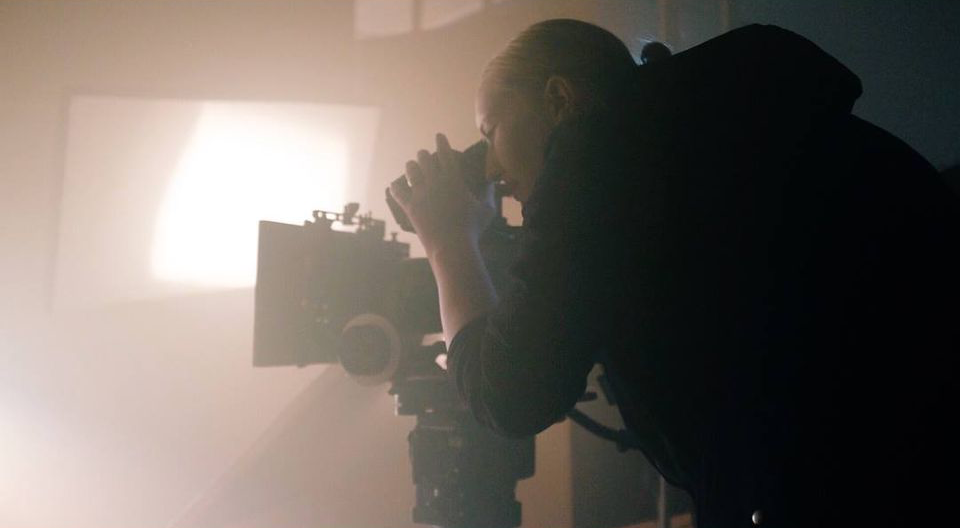
Let’s talk shop? Tell us more about your career, what can you share with our community?
My art is rooted in truth—specifically, the truths people are often taught to hide. Because I grew up in a world where questioning was discouraged and vulnerability was seen as weakness, storytelling became the place where I could finally be honest. That upbringing shaped my artistic voice in a very specific way: I’m drawn to the shadows, to the unspoken, to the tension between what we present and what we actually feel. My work lives in those quiet, uncomfortable spaces where real transformation happens.
What sets me apart is that I’m not interested in prettied-up narratives or moral binaries. I’m interested in people caught between worlds—characters who are navigating trauma, isolation, identity, belief, and the messy process of becoming. I approach filmmaking with a mix of rawness and intentionality; I’m not afraid of discomfort if it leads to something true. Because of where I come from, I see stories not just as entertainment but as survival tools—ways to make sense of the parts of our lives we’re not allowed to speak aloud.
I’m proud of the fact that I built my career from the ground up without a safety net. Nothing about getting here was easy. I didn’t have family support, financial backing, or a blueprint for navigating the film industry. I learned everything the hard way—often alone. I made films by myself outside of school to reinforce what I was learning, to sharpen my instincts, and to prove to myself that I could create something meaningful even in the middle of chaos.
The challenges were constant—navigating new environments without guidance, dealing with trauma while trying to stay focused, standing out in an industry that often values connections over authenticity. But I overcame those obstacles by anchoring myself to the work. If I couldn’t rely on people, I could rely on my art. Every film, every script, every small project became a lifeline. Over time, I built a little community, confidence, and a sense of belonging in an industry that initially felt impossible to break into.
One of the biggest lessons I’ve learned is that your past doesn’t disqualify you—it deepens you. The things that made me feel like an outsider for so long are the same things that give my work its emotional truth. I’ve also learned that resilience is a creative skill; the ability to get back up, to try again, to keep making things even when no one is watching, is what eventually opens doors.
What I want the world to know about me and my work is this: I create from a place of honesty, courage, and lived experience. My brand isn’t about perfection—it’s about depth, empathy, and challenging narratives that need to be challenged. I make films for the people who feel unseen, unheard, or stuck between identities, because I’ve been that person. My story is one of breaking cycles, reclaiming voice, and using art as a way to rewrite what was once written for me.
Ultimately, my hope is that my work encourages others to explore their own truth—even the painful parts—and to recognize that they can build a life beyond the one they were handed.
Any places to eat or things to do that you can share with our readers? If they have a friend visiting town, what are some spots they could take them to?
If my best friend were visiting, I’d take them to the spots in LA that still have real character. My first stop is always HMS Bounty in Koreatown—one of the last places in the city that hasn’t been stripped of its soul. While so many businesses are being renovated into bland, sterile spaces that look like doctor’s offices or generic hotels, HMS Bounty feels like a preserved piece of American culture, wood paneling and all -it’s the kind of place you could find Hunter S. Thompson or Charles Bukowski.
I’d also take them to the Koreatown Galleria food court, which has a special place in my heart. I once brought my grandpa there, and he sat with this huge smile on his face, excited to try all the different foods. It reminded him of his travels through various Asian countries during his years as a professor.
We’d probably wander the vintage stores on Melrose, swing on over to the Rainbow Room, and hit one of the small vintage theaters that screen old films. Those little cinemas are the heartbeat of LA’s film culture.
The Shoutout series is all about recognizing that our success and where we are in life is at least somewhat thanks to the efforts, support, mentorship, love and encouragement of others. So is there someone that you want to dedicate your shoutout to?
My journey has been shaped just as much by the people who stood by me as by the ones who didn’t. For someone who grew up without a traditional support system—and who left home without the safety net most people take for granted—the people who showed up for me along the way became family in the truest sense.
I want to dedicate my shoutout to the mentors, friends, and unexpected allies who believed in me. There were teachers in film school who recognized my hunger and my vision, who treated my background not as a limitation but as a unique lens worth nurturing. They gave me room to experiment, to fail, to grow—and they never tried to put me back into a box.
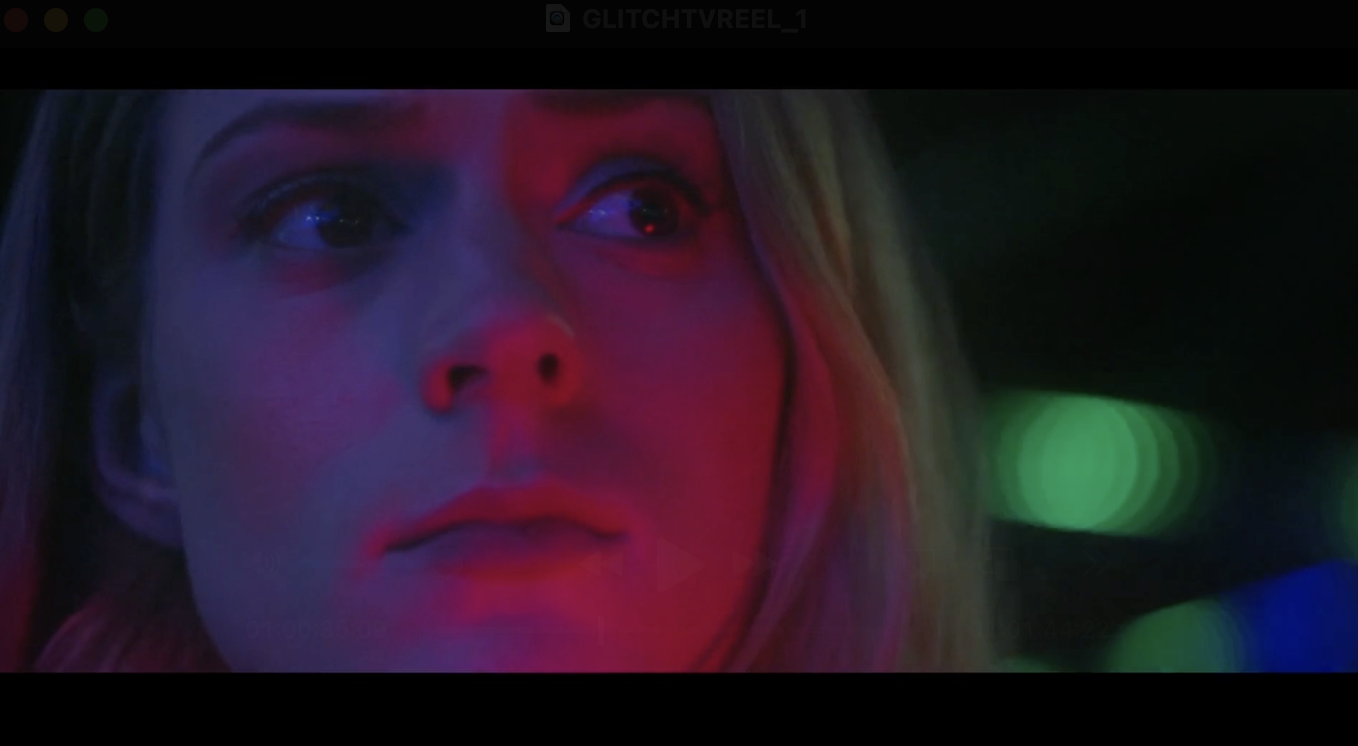
I also want to acknowledge my business partner at GlitchTV, Marc Tarczali, who has been such a supportive collaborator and a genuinely talented artist. It’s rare to find someone you can trust creatively, someone who can both challenge you and champion you, and Marc has been that for me. Working together—producing for each other, helping bring each other’s visions to life—has been one of the most grounding and energizing parts of my career. And I’m so proud of him and excited for his upcoming film Clownspiracy, which is nearly completed. Watching his dedication and artistry has inspired me in more ways than he realizes.
I also owe credit to the filmmakers and writers—many of whom I’ve never met—whose work cracked open the idea of what a life like mine could become. Their films and interviews gave me guidance in moments when I had no one to ask. Books became mentors. Stories became maps. Cinema became the family that taught me how to see the world.
And finally, I want to acknowledge the younger version of myself—the girl who was exiled in her own community, who questioned everything even when she was told not to, who dared to dream beyond her circumstances. She didn’t have encouragement, but she had instinct. She took the first risk that made everything else possible. She deserves credit too.
I didn’t get here alone. I got here because of a handful of people, and a lifetime of stories.
Nominate Someone: ShoutoutLA is built on recommendations and shoutouts from the community; it’s how we uncover hidden gems, so if you or someone you know deserves recognition please let us know here.