

We had the good fortune of connecting with Felix Oppenheimer and we’ve shared our conversation below.
Hi Felix, how does your business help the community?
Technology is no longer just a tool. It has become one of the dominant forces shaping how people think and feel.
A lot of the systems we use every day were designed around attention and growth at all costs. And they worked. But the side effects are obvious now. Polarization. Misinformation. A real mental health crisis, especially among younger people. We’re seeing how small design decisions can scale into cultural consequences.
So for me, the social impact question starts there. We want to build technology that is actually better for people.
That means designing products that respect people’s time and emotional bandwidth. Systems that support clarity instead of outrage. Tools that feel like they’re working with you, not quietly manipulating you.
AI is part of that evolution because it allows more natural interaction, but the core idea is bigger than any one technology. The incentives and the design choices matter.
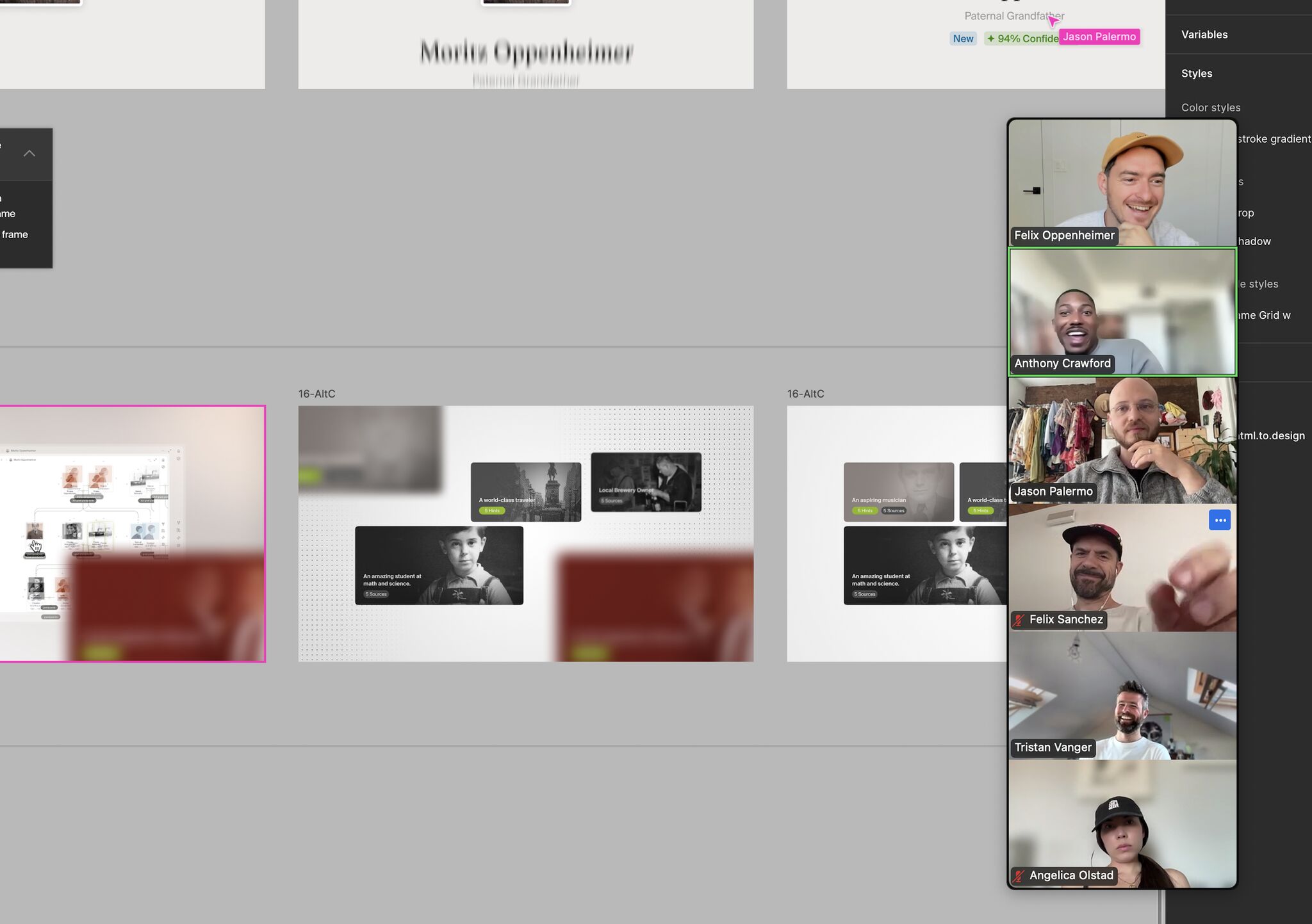
A good example is the work we did with Ancestry. We created AI features that surface stories about people’s families that they may never have been able to discover on their own, drawing from historical records and data that would otherwise feel inaccessible. It then presents it in a natural way, how you would typically discuss your family history.
In a world that feels increasingly fragmented, giving someone a deeper sense of identity and continuity is meaningful. If technology can do more of that, and less of the opposite, that’s the kind of impact I want to contribute to.
Alright, so for those in our community who might not be familiar with your business, can you tell us more?
My business is really a continuation of what I’ve been doing my entire working career. Last year it finally felt like we had enough ability and reputation in the market to formally announce ourselves, so we planted the flag as Lux Nova. But I’d been assembling crews for years before that, just under looser terms.
I’ve been a freelancer almost my whole life, and I’ve been lucky enough to work with some of the best design agencies in the world. My goal has always been to operate at the absolute top of the market. We’re the team that gets called when an entirely new perspective is required.
That positioning means we’re high ticket and low volume. We work with a small handful of highly qualified clients each year. Patience is a massive part of the model. It also means treating ourselves well, because when things ramp up, they ramp up extremely quickly. You have to be ready.
It hasn’t been easy at all. A few people have said we’ve been lucky, but this is the result of showing up at my desk every single day for sixteen years, pushing on one clear objective: build this design agency. When the right circumstances aligned, we were prepared, and we made it happen.
The main thing I’ve learned is how to manage my energy. You don’t need to be doing a million different things. You just need to keep showing up and being consistent. That way your sense of success isn’t tied to every variable that can go right or wrong. It comes down to a simpler question: did I show up fully today? Did I execute the plan I set for myself?
Let’s say your best friend was visiting the area and you wanted to show them the best time ever. Where would you take them? Give us a little itinerary – say it was a week long trip, where would you eat, drink, visit, hang out, etc.
I mean you’ve got to do the classics. Skate down Venice boardwalk people watching and then hit Teddy’s Red Tacos for the best tacos on the planet. Maybe check out Abbot Kinney.
Then my neighborhood Silverlake, hit the Silverlake thrift, casual dinner at Pho Cafe, glass of wine at El Prado, have a little boogie and a cocktail at Little Joy and then hit a dirty warehouse party.
And lastly gotta get some good hikes in. The loop at Will Rogers is my favorite, or Elysian Park is always a close hit.
Shoutout is all about shouting out others who you feel deserve additional recognition and exposure. Who would you like to shoutout?
My mom, for dragging me through museums from an incredibly young age, and my dad for doing the same with Pink Floyd in the car. He worked in finance for the record industry in the 70s, and between the two of them I learned early on how to balance business with creativity.
I haven’t had much formal mentoring, but I’ve had the chance to work with an incredible range of designers, directors, and producers, from which I grabbed different parts of my working style. And now I’ve gotten to bring some of those people into Lux, so I’m super grateful for everything they’ve put in.
I really appreciate how the culture of digital design is so deeply based on sharing because you can move things so quickly through files and the internet. It’s this constant process of chopping, switching, remixing, and evolving.
Some of my earliest creative memories are opening massive PSD files filled with buttons. Just dozens and dozens of digital buttons. Submit. Contact us, and so on. I loved the variety. Each one part of a system, but visually distinct and expressive.
So honestly, shout out to anyone who’s ever shared a giant file of random components on the internet.
Website: https://luxnova.io
Linkedin: https://www.linkedin.com/in/felixopp/
Nominate Someone: ShoutoutLA is built on recommendations and shoutouts from the community; it’s how we uncover hidden gems, so if you or someone you know deserves recognition please let us know here.


