Meet Soyeong Emma Chang | Film Director/Producer


We had the good fortune of connecting with Soyeong Emma Chang and we’ve shared our conversation below.
Hi Soyeong Emma, have there been any changes in how you think about work-life balance?
This might not be the best answer to the question, but for me, there’s no real difference between work and life. Ever since I decided to dedicate myself to filmmaking, I’ve been in love with it. My journey has been about erasing the line between the two. Filmmaking is what I do for work, and it’s also what I do outside of it. That might sound a little boring, which I’m realizing as I write this, but it’s the truth.
To put it simply, if you think I’m always working, I am. If you think I’m always having fun, I am too. I honestly can’t imagine doing anything that isn’t related to film. Aside from basic human things like eating, sleeping, or working out, everything I do is connected to filmmaking in some way.
Alright, so let’s move onto what keeps you busy professionally?
I’m a filmmaker who has dedicated my life to cinema. I fell in love with it when I was nine years old, back when J.J. Abrams and Michael Bay were climbing the box office charts and expanding their reach. I imagined myself being like them, even though no one looked like me. There weren’t Korean women making original science fiction films in Hollywood. So of course, I wanted to become one.
That desire became the foundation for everything. I began asking myself: How can I become a filmmaker who tells original sci-fi stories as a Korean woman born in a small town in Daegu, with no industry connections? I listed everything I needed to learn, including screenwriting, cinematography, storyboarding, and financing. There was so much to take in, but instead of feeling intimidated, I was energized. The more I learned, the more excited I became.
I started by teaching myself. I watched countless films, read Spielberg’s biography, and made a short stop-motion film like he did when he was my age. I wrote down every idea that came to me. I knew it wasn’t enough, so I began researching film schools. I didn’t search for the ones I thought I could get into. I searched for the ones I truly wanted to attend. I made a plan: earn my BFA at a smaller school where I could absorb the fundamentals, then pursue my MFA at UCLA. I wrote the plan on a small piece of paper and looked up admission requirements every single day.
It was scary for a lot of reasons, but one question helped me move forward: What else am I going to do if I don’t try?
That question helped me stay focused. My first challenge was learning English. I taught myself by watching films, practicing every day, and speaking to myself until the words started to make sense. As I kept going, I dove deeper into filmmaking. My love for cinema led me to film history, where I discovered that film was more than storytelling. It was art. It was poetry with a camera.
Eventually, I completed my first major goal by graduating with a BFA in Film from the University of Wisconsin–Milwaukee. I found my voice as an artist and made several visual poems with my camera. But I wanted to do more. The next step was UCLA. I applied and got in. Now, I’ve graduated from the UCLA MFA in Film Directing. That was my second major milestone. During my time there, I directed and produced more short films than most of my peers.
One of those films was BanKyung, my most personal work to date. It follows Kyung-Su, a Korean man in Los Angeles, who learns of his father’s disappearance while waiting for a long-promised promotion. As he searches for his father, he begins to uncover who he truly is. The story mirrors my own quiet and distant relationship with my father, filled with unspoken warmth that we have never quite been able to express.
Kyung-Su’s name, made of two Hanja characters, reflects that journey. “Kyung” means shortcut or straight, and “Su” means to follow or depend on. He searches for a shortcut to find his father but realizes that the only way is to follow the path his father once walked. The emotional distance in the film reflects my own experience of living far from home, feeling disconnected yet deeply tied to my family. BanKyung is my letter to my father. It is how I tell him that I understand him, that I feel his isolation, and that I carry the weight of being apart.
This film reminded me why I chose this path. It showed me that I have something to say and a way of saying it that is my own. I have more stories to tell. I know what comes next. I will keep creating. I will not stop.
If you had a friend visiting you, what are some of the local spots you’d want to take them around to?
I always say I will never leave Los Angeles, and Koreatown is a big reason why. As someone born and raised in Korea, being in Koreatown feels both comforting and fascinating. It is familiar, but there are also subtle differences that make it interesting to observe.
When I want to introduce someone to great Korean food, Borit Gogae is my first choice. The atmosphere is warm, and the food is consistently delicious. It works for any occasion, whether it is a casual meal or something more special.
Another favorite of mine is Baroo, which offers more of a fine dining experience. I especially enjoy their cocktails, and their dishes are thoughtful and healthy.
Los Angeles is also a city deeply rooted in cinema, and there are many theaters I love to visit. One of them is the New Beverly Cinema, owned by Quentin Tarantino. If you are a fan of his work, it is a theater you must experience. His passion for screening films on 35mm reminds me of the beauty of filmmaking.

Who else deserves some credit and recognition?
I would love to dedicate this section to Carl Bogner, my mentor and teacher. He was the one who helped me discover who I truly am as an artist and guided me to understand why I need to be a filmmaker and an artist.
Website: https://soyeongfilm.cargo.site/
Linkedin: https://www.linkedin.com/in/soyeongemmachang
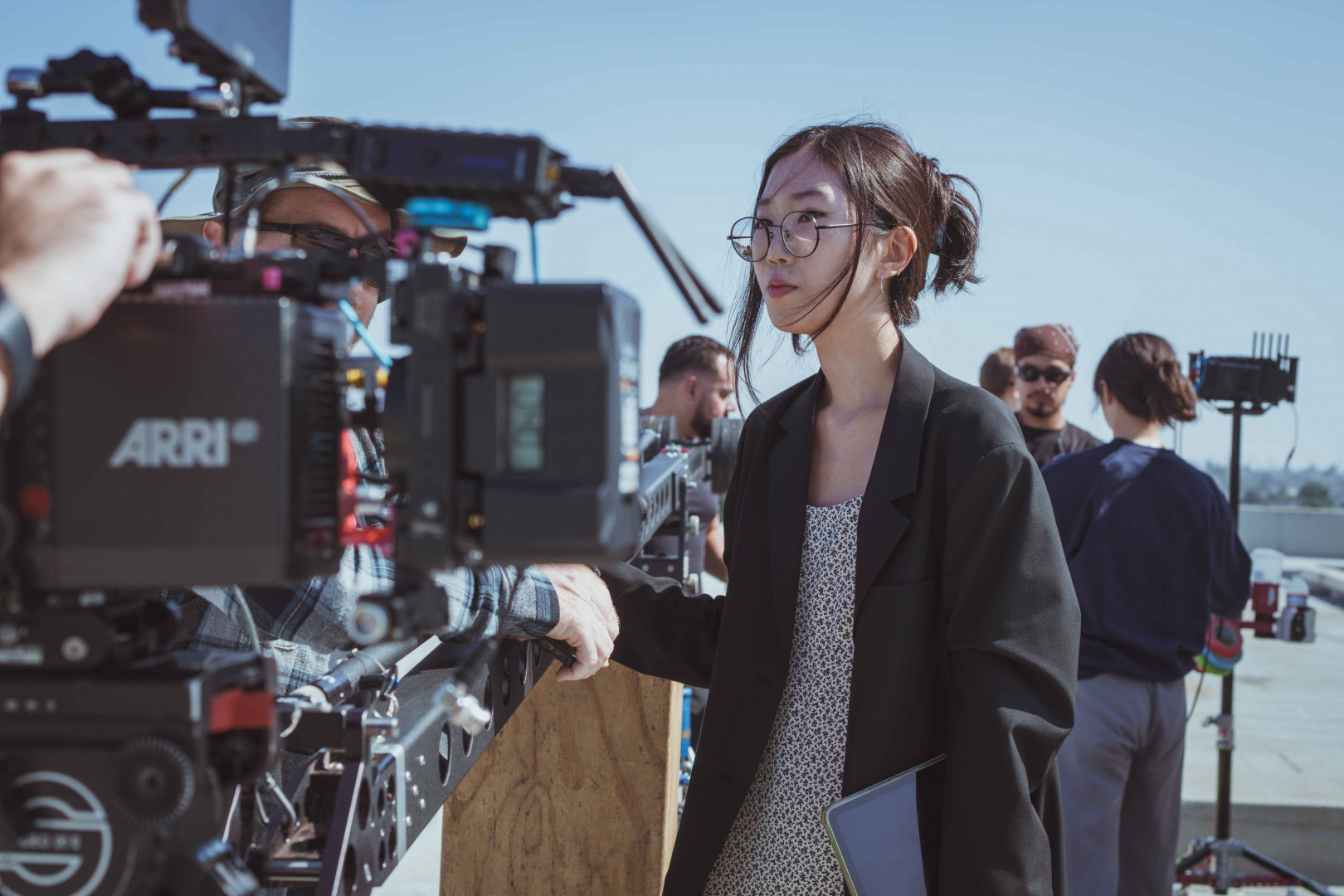
Image Credits
Sean Niu, Ashwin Mitchell, Oscar Torres