Meet Willow Liu | Acupuncturist & Expert in Chinese medicine research and practice
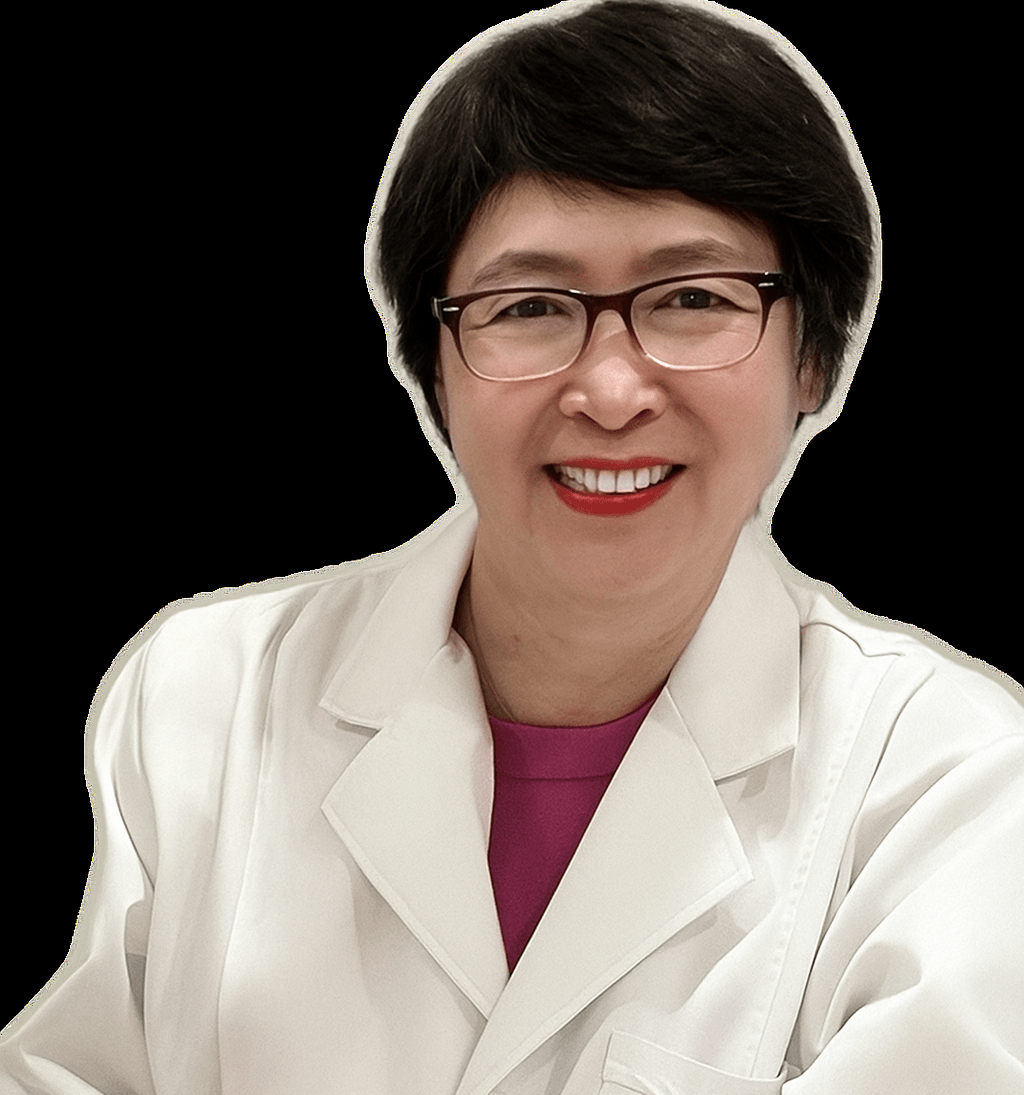


We had the good fortune of connecting with Willow Liu and we’ve shared our conversation below.
Hi Willow, what was your thought process behind starting your own business?
Ever since I was a child, I’ve dreamed of helping patients find relief from illness.
I began my academic journey at Liaoning University of Traditional Chinese Medicine (TCM), where I earned a bachelor’s degree in Chinese Materia Medica and a master’s degree in Medicine.
My early goal was to develop new drugs derived from traditional Chinese herbs. To deepen my scientific foundation, I pursued a Ph.D. in Natural Product Chemistry at Shenyang Pharmaceutical University. My doctoral supervisor is Academician Yao XinSheng, a famous expert of Chinese medicine chemistry known for his rigor and diligence. He is still working at the age of 91 now. I have been deeply inspired by his rigorous attitude and tireless dedication.
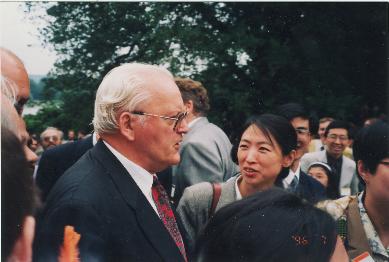
At an international conference in Beijing soon after received my Ph.D. degree, I met Professor Rudolf Bauer from Germany, a leading scholar known for his pioneering research on Echinacea and his deep interest in Chinese medicine. At that time, his work focused on screening anti-inflammatory compounds from Chinese herbs, establishing quality standards, and compiling herbal monographs. He invited me to join his laboratory in Düsseldorf as a research fellow supported by the Alexander von Humboldt Foundation.
During my time in Prof. Bauer’s lab (1996-1997), I published several research papers. However, I came to realize that to conduct more comprehensive studies on Chinese medicine, I needed more extensive knowledge and stronger skills in biology and biochemistry. I told Prof. Bauer that I wished to pursue further studying in the U.S.
After completing my research in Germany, Prof. Bauer referred me to Professor Koji Nakanishi (1925–2019), a world-renowned chemist celebrated for his contributions to research on natural products. From 1998 to 1999, I worked in Prof. Nakanishi’s laboratory as a postdoctoral scientist, alongside talented researchers from leading universities in Asia, Europe, and the U.S. The Chemistry Department frequently invited distinguished professors from the Ivy League and other major universities to present their latest research discoveries, which broadened my scientific vision and gave me access to advanced research technologies.
In 2000, through Prof. Nakanishi’s recommendation, I joined the UIC/NIH Center for Botanical Dietary Supplement Research in Women’s Health at the University of Illinois at Chicago as a Visiting Research Assistant Professor. The center brought together leading experts in diverse fields such as pharmacognosy, phytochemistry, mass spectrometry, biochemistry, pharmacology, and toxicology. The director of the center was Professor Norman Farnsworth (1930–2011), a towering figure in American pharmacognosy.
Prof. Farnsworth was among the National Academy of Sciences delegation to China in 1974, which included leading experts in medicine and pharmacology. They visited universities, pharmaceutical facilities, and hospitals, and met with TCM practitioners. Following their trip, the National Academy published Herbal Pharmacology in the People’s Republic of China. This historic exchange helped spark his lifelong interest in Chinese medicine.
In his office, I noticed a Chinese calligraphy scroll inscribed by Chairman Mao Zedong:
“Traditional Chinese Medicine is a great treasure house; we should strive to explore and improve it.” Those words deeply resonated with me.
At the Center, I supervised a graduate student researching estrogenic and serotonin-active compounds from ten American and Chinese herbs commonly used for menopausal women. The extracts from red clover and chaste berry showed significant estrogenic activities. Surprisingly, Angelica (Dang Gui), a well-known Chinese herb for women’s health, did not exhibit strong estrogenic activity when tested through receptor and cell assays. This led me to reflect on the fundamental difference between therapeutic mechanism of Western medicine and TCM.
TCM views the body holistically, and its herbal formulas rely on synergistic effects among multiple herbs. A single compound cannot represent the therapeutic essence of a traditional prescription. Elucidation of the therapeutic mechanism of Chinese medicine requires a broader, integrative scientific approach. Although the professors were interested in Chinese herbs, they were not familiar with TCM theories and clinical application. Furthermore, the center’s work must adhere to the protocol in the NIH grant application.
About a year after moving to Chicago, my own health took a turn for the worse. The joints in my fingers became red, swollen, and painful—I was diagnosed with rheumatoid arthritis, likely caused by long-term exposure to toxic organic solvents that had impaired my immune function. The pain made it difficult even to open a bottle cap, and I had to rely on steroids to control the inflammation. My rheumatologist advised me to move to a warmer climate, so I relocated to California in 2002.
To make a living, I worked as a chemist at the Los Angeles County Sanitation District, developing analytical methods for detecting pharmaceutical discharges in wastewater. Although the job was stable, it felt far removed from my passion and purpose.
I had been deeply devoted to study and research since my undergraduate years, often neglecting my own health—even after discovering that my white blood cell count was below the normal range. This experience prompted me to reflect on how I could improve my own well-being and help others do the same.
One day, I learned that California allowed licensed acupuncturists to practice Chinese medicine. That discovery rekindled the dream I had carried since childhood. I visited an acupuncture school to inquire about the program, and after learning about my academic and research background, the dean invited me to teach Chinese medicine courses while pursuing my acupuncture studies. For the next three years, I devoted nearly all my spare time to both teaching and learning. In early 2006, I sat for the state licensing examination and passed. That April, I proudly obtained my California acupuncture license.
Despite my husband’s lack of support, I made a bold decision—to leave my secure job with good retirement benefits and open my own clinic of Chinese herbs and acupuncture. I traveled back to China and brought home dozens of classical TCM texts and books written by renowned contemporary master of Chinese medicine and acupuncture.
TCM views the body as a holistic system. In addition to treating pain, patients came to my clinic for a wide range of illnesses, including gynecological, dermatological, circulatory, neurological, endocrine, immune, digestive, respiratory, and urinary disorders. I treated each patient as if conducting a research project—carefully observing, analyzing, and refining treatments. I studied classical formulas and modified them according to each patient’s symptoms, drawing on both modern pharmacological research on individual herbs and contemporary understanding of disease pathology. Before long, patients began calling me “a miracle doctor” or saying, “Chinese medicine is truly a miracle.” Their recovery filled me with profound joy and reaffirmed my purpose.
Meanwhile, I successively taught at three universities of TCM in Southern California, where I lectured on Chinese Herbal Pharmacology, Modern Pharmacology, Chinese Nutrition, Modern Nutrition, and Research Methodology. I stopped teaching when I became pregnant in 2008.
To promote the safe and effective application of Chinese herbal medicine, I delivered presentations at churches, to physicians and students at the UCLA Medical Center, and to various acupuncture associations, sharing recent research findings on Chinese herbs and my experiences with their clinical applications. Additionally, I published articles in academic journals to present my reviews and perspectives on Chinese medicine.
Through this journey—from laboratory research to clinical practice—I have come to understand that the true beauty of TCM lies in clinical practice. Helping others regain health and hope gives my life its deepest meaning.
Alright, so for those in our community who might not be familiar with your business, can you tell us more?
My clinic focuses on treating patients with Chinese herbs and acupuncture, as well as developing herbal formulas based on clinical experience. I also provide consultations on the development and application of Chinese herbal medicine.
With my research background and knowledge of modern pharmacology, I integrate an understanding of the chemical and pharmacological properties of Chinese herbs into my clinical and acupuncture treatments. This approach has allowed me to help many patients who had previously seen other acupuncturists without improvement. I carefully analyze classical formulas and modify them based on modern disease pathology and the pharmacological activities of the herbs used. Similarly, in acupuncture, I select points not only according to classical theory but also with consideration of modern anatomy and pathology. I always strive to understand—and explain to my patients—the mechanisms of treatment from both Traditional Chinese Medicine (TCM) and modern medical perspectives.
I am particularly proud that, at the beginning of the COVID-19 pandemic, I developed several herbal formulas for the prevention and treatment of COVID-19 infection, as well as for post-infection cough and sore throat. These formulas helped many patients and were recommended by Dr. Zhang, the director of a local isolation center, to his patients.
It gives me great pride and joy to help patients who have not responded to conventional medicine or were told, “You have to live with it.” Some patients even traveled from other states to seek treatment at my clinic.
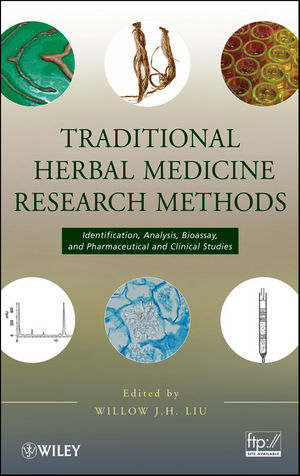
My experience working in various research laboratories has greatly broadened my knowledge and perspective. These experiences also enabled me to write and edit the only book that systematically introduces research methods for traditional herbal medicine.
I hope to help more people discover the remarkable healing power of Chinese medicine and acupuncture. I also wish to obtain financial support to conduct clinical studies on effective herbal and acupuncture treatments so that more people may benefit from them.
Let’s say your best friend was visiting the area and you wanted to show them the best time ever. Where would you take them? Give us a little itinerary – say it was a week long trip, where would you eat, drink, visit, hang out, etc.
Los Angeles is a vibrant international city, rich in diverse cultures and delicious food. I would take my friend to the Getty Museum, the Griffith Observatory, Universal Studios, and Hollywood. We would also hike a trail, stroll along the beach, try cuisine from different countries each day, enjoy tea in my backyard, and maybe even make dumplings at home.

Who else deserves some credit and recognition?
I am fortunate to have had the opportunity to work in the laboratories of several internationally renowned natural product experts. These experiences greatly broadened my knowledge and deepened my understanding of Chinese medicine from both Traditional Chinese Medicine (TCM) and modern medical perspectives. This integration has enabled me to effectively help many patients who had not found relief through conventional medicine.
I was also invited by the prestigious Wiley publishing house to write and edit the book Traditional Herbal Medicine Research Methods: Identification, Analysis, Bioassay, and Pharmaceutical and Clinical Studies. This reference book, intended for graduate students and researchers in universities, research institutes, and pharmaceutical companies, is now available in the libraries of many top universities around the world, including Harvard, Yale, Cambridge, and Oxford. I am currently working on the second edition in collaboration with experts from China.
I am deeply grateful to my husband for his support during my Ph.D. studies, to my mom for taking care of my daughter when I was in Germany, and to my daughter for helping me edit the book. They have accompanied me through many moves and stages of my journey.
Website: www.herbsandhealth21.com; www.willowliu.com
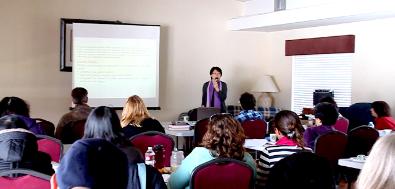
Image Credits
Dr. Willow JH Liu