Meet Chidiebere Ibe | Medical Illustrator
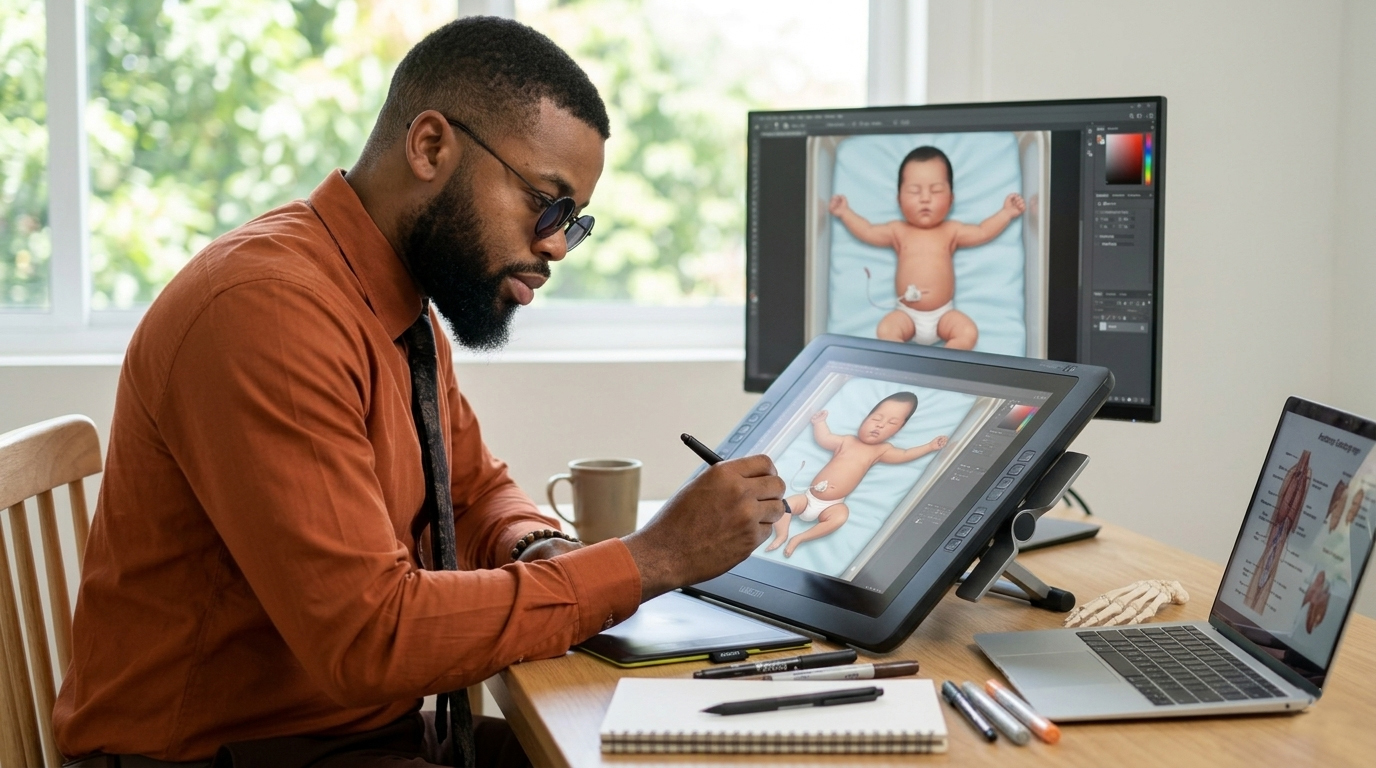


We had the good fortune of connecting with Chidiebere Ibe and we’ve shared our conversation below.
Hi Chidiebere, we’d love to hear more about how you thought about starting your own business?
My decision to start my own business grew out of a realization I had very early in my journey as both a medical student and a medical illustrator. As I studied medicine, I constantly noticed that many of the images used in textbooks and teaching materials did not represent the diversity of patients we see in the real world. Conditions looked different on darker skin tones, yet many of the visuals we learned from showed only a narrow range of representation. That gap stayed with me.
I began illustrating medical concepts initially to help myself understand complex topics. But when I started sharing my work publicly, I realized something much bigger: visual representation in medicine is not just about aesthetics, it directly affects education, diagnosis, and patient trust. When clinicians and students are trained with limited imagery, it can contribute to delayed or missed diagnoses in underrepresented populations.
That realization became the foundation for starting my own initiative. As I wanted to build something that went beyond individual illustrations. My vision was to create a platform and a body of work that could reimagine how medicine is visualized globally, ensuring that medical education reflects the diversity of humanity.
Can you open up a bit about your work and career? We’re big fans and we’d love for our community to learn more about your work.
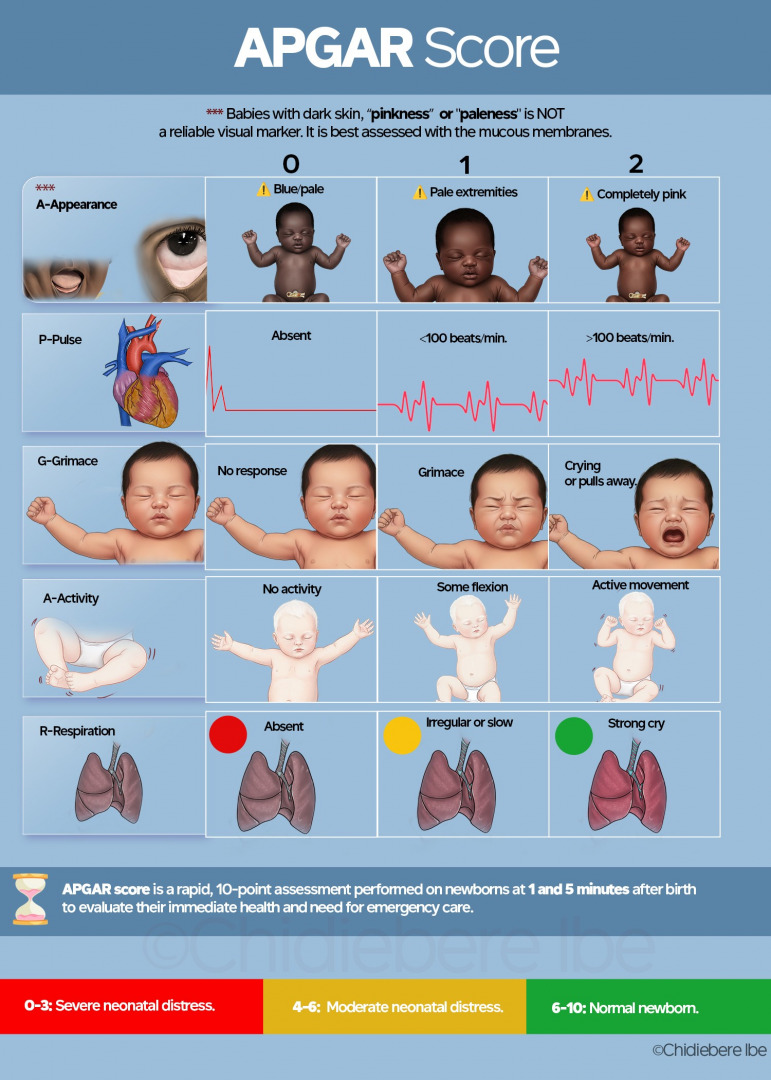
My art lives at the intersection of science, storytelling, and representation. As a medical illustrator, I approach art not simply as something aesthetic but as a tool for education, empathy, and better healthcare outcomes. Every illustration I create is grounded in anatomy, physiology, and clinical reality, but it also carries a deeper purpose, to ensure that people from all backgrounds can see themselves represented in medical knowledge.
What sets my work apart is the intentional focus on diversity in medical imagery. For decades, most medical illustrations have depicted a narrow range of human variation. Yet diseases can present differently across populations, especially across different skin tones. My work aims to challenge that norm by creating medically accurate visuals that reflect the true diversity of humanity. One of the pieces that brought global attention to my work was a fetal illustration that highlighted representation in medical imagery and sparked conversations around equity in healthcare education.
What I’m most proud of is not just a single artwork, but the movement the work has helped inspire. It showed that representation in medical visuals is not a superficial issue; it can influence how quickly conditions are recognized, how students learn, and how patients feel seen in healthcare systems.
That realization eventually led me to build ProjectKreate, an initiative focused on developing one of the largest digital library of diverse medical illustrations and animations. The vision is to create a platform that functions almost like a “Wikipedia for medical visuals,” where students, clinicians, educators, and patients around the world can access accurate, inclusive imagery across many specialties and also build a community.
My professional journey was definitely not easy. When I began, medical illustration was not widely recognized in many parts of the world as a distinct career path. I was navigating two demanding fields simultaneously: medicine and art, and there were moments when it felt like I was trying to build something that didn’t yet exist. There were also challenges related to resources, visibility, and finding opportunities that aligned with the vision I had.
What helped me overcome those challenges was a combination of curiosity, persistence, and purpose. I continued creating and sharing my work publicly, engaging with global communities, and collaborating with organizations that believed in open access to medical knowledge. Over time, those efforts opened doors to international collaborations, speaking opportunities, and recognition from institutions that saw the potential impact of the work.
Along the way, I’ve learned several important lessons. One is that innovation often begins with noticing something others have overlooked. Another is that the most meaningful work usually lies at the intersection of disciplines, in my case, art and medicine. And perhaps most importantly, I’ve learned that purpose-driven work requires patience. Change in fields like medical education doesn’t happen overnight, but every illustration, every conversation, and every collaboration moves things forward.
What I want the world to know about my brand and my story is simple: this work is bigger than me. It is about ensuring that medical education reflects the full diversity of the patients it serves. It is about empowering students and clinicians with better visual tools to understand disease. And it is about reminding people that art can be more than expression, it can be a powerful instrument for equity, education, and transformation in healthcare.
Let’s say your best friend was visiting the area and you wanted to show them the best time ever. Where would you take them? Give us a little itinerary – say it was a week long trip, where would you eat, drink, visit, hang out, etc.
I would take them to the waterfalls, the game parks, the nicest restaurants around, and on a road trip to another province.
The Shoutout series is all about recognizing that our success and where we are in life is at least somewhat thanks to the efforts, support, mentorship, love and encouragement of others. So is there someone that you want to dedicate your shoutout to?
No meaningful story is ever built alone, and mine is no exception.
First, I have to acknowledge my family. They may not have fully understood the path at the beginning; combining medicine with art isn’t always the most conventional route, but their support, sacrifices, and belief in me created the foundation that made everything else possible.
I also owe a great deal to my teachers and mentors in medicine and science. They didn’t just teach me facts; they shaped how I think, how to observe, question, and understand the human body deeply. That clinical mindset is what allows my illustrations to go beyond art and become educational tools.
Website: https://www.chidiebereibe.com
Instagram: https://www.instagram.com/ebereillustrate/
Linkedin: https://www.linkedin.com/in/chidiebere-ibe-206ab81a9/
Twitter: http://x.com/ebereillustrate
Facebook: https://web.facebook.com/Chidiesquire1/
Image Credits
Illustrations by: Chidiebere Ibe


