

We had the good fortune of connecting with Chu-Li CHEN and we’ve shared our conversation below.
Hi Chu-Li, how has your perspective on work-life balance evolved over time?
At different stages of life, the idea of “balance” — and the way we try to achieve it — constantly changes. Being single, getting married, and becoming a parent mark three major turning points. Motherhood in particular demands an immense amount of time, energy, and emotional presence. It often collides with my identity as an artist, especially my need for solitude and sustained personal creation. Each day becomes an ongoing attempt to negotiate balance between family, work, and life.
For me, balance is not a destination but a continuous act of striving. It is a verb rather than a noun. The moment you feel you’ve found it, it slips away again. I don’t believe balance is something we ever fully arrive at — but perhaps it is this persistent effort, this constant recalibration, that keeps me alive and moving forward.
Alright, so let’s move onto what keeps you busy professionally?
For me, making art is a way of searching for purity and balance.
I was trained as an illustrator and graphic designer, and for many years my work revolved around processing large amounts of information—translating complex ideas into clear, accessible, and visually appealing forms for others. It was rewarding, but it was also demanding. After I became a mother, the time I could dedicate to work shrank dramatically. When I realized that I sometimes had only one hour a day for myself, I understood something very clearly: I didn’t want to spend that hour continuing to serve other people’s messages. I wanted to make my own work. At that moment, I was exhausted, and turning toward art felt less like a career decision and more like a way to preserve myself.
Compared to the narrative nature of illustration, my artistic practice moved toward the opposite extreme. I wanted no message—only purity.
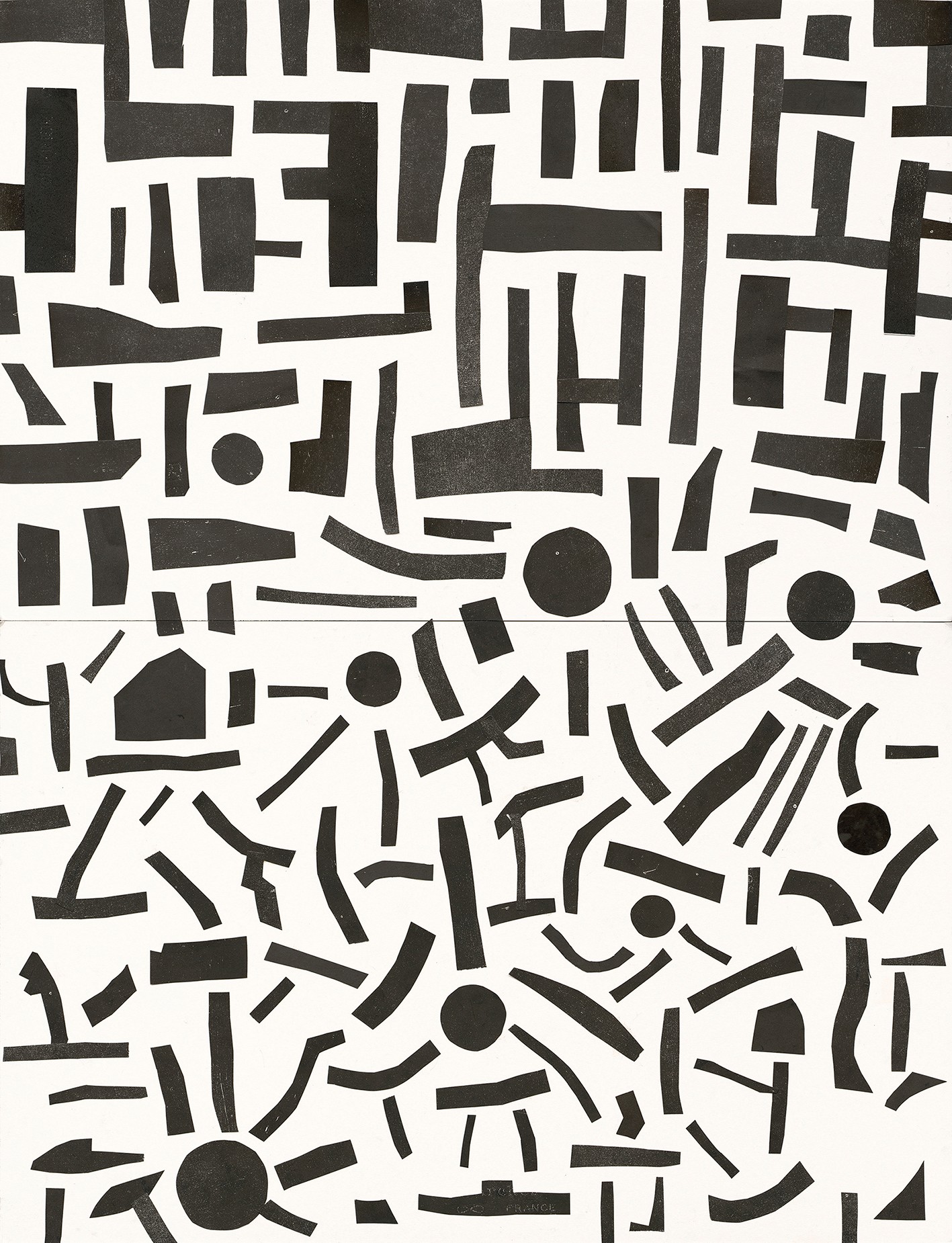
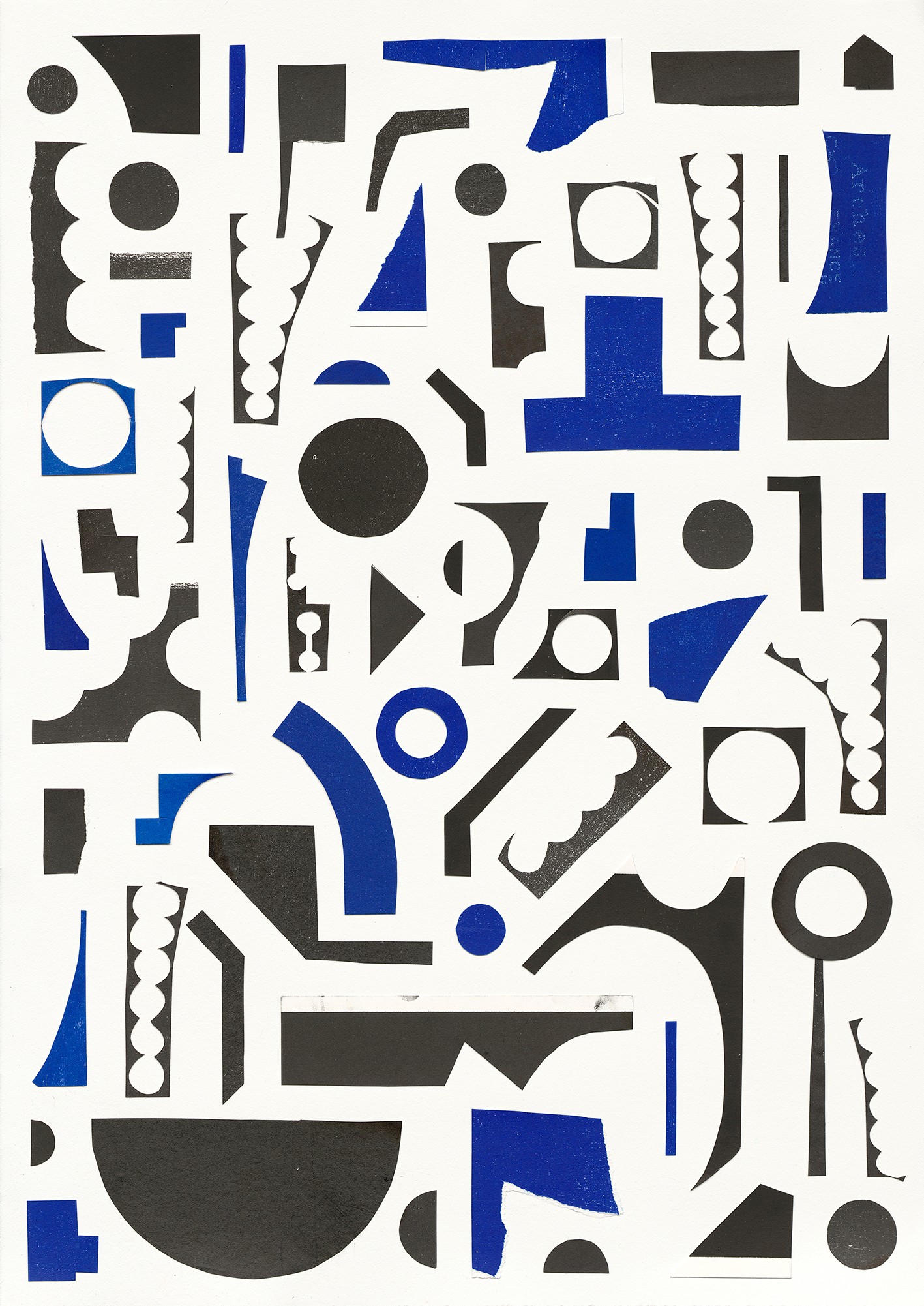
Almost all creative work is intentional and carries meaning. But the paper scraps left behind from my working process are different. They are unconscious byproducts of very specific actions—cutting out a face, a car, a figure. What remains is the other half of the gesture: unplanned, unintended, and free of message. Once stripped of meaning, these fragments return simply to form, color, and the imagination that unfolds through space. I began carefully collecting them in a notebook and titled it Found Objects. This became the starting point of my practice.
The Composition series also grows out of these paper scraps. By arranging and combining them on a single plane, I allow each fragment to coexist without narrative or intention. When I place the first piece on a blank surface, then search for the second, the third, and so on, every addition must find balance with what is already there. This repeated act of adjusting and rebalancing the image eventually turns inward, becoming a quiet way of restoring balance within myself.
Little Sculptures extends from Found Objects. I began imagining these strange fragments as spaces—wondering what kind of environment they might form and what it would feel like to move through them. This curiosity shifted the work from two dimensions into three. I chose clay because it allows both addition and subtraction. Before the form is built, I don’t know what the space will become, so the material must allow for building, dismantling, and reassembling along the way.
The Map Project series continues this search for balance. These works do not depict real roads or physical locations, but rather states of being and abstract emotions. Paths become metaphors: different ways of walking, choosing, or pausing reflect different ways of living.
I’m deeply drawn to the physical labor of making things by hand and to the subconscious pursuit of balance that runs through the act of construction. Whether working in two or three dimensions, assembling and building are how I find equilibrium.
The transition from illustrator to artist has brought uncertainty, especially financial instability, and I continue to take on commissioned work while searching for balance. I’ve been fortunate to collaborate on projects that allow creative freedom alongside practical support. Being able to do what I love and sustain a living through it is something I feel genuinely grateful for.
Who else deserves some credit and recognition?
My daughter. Becoming a mother was unexpected, but after she was born, as I encountered the struggles, awkwardness, and exhaustion that came with it (alongside, of course, immeasurable joy — though motherhood may well be the hardest job in the world), I quickly realized: if life demands this many sacrifices, what is the one thing I cannot afford to give up?
It is my practice.
My daughter was the one who brought this into focus. She pushed me to confront my own needs directly — to see myself first and foremost as a human being, before any other role or identity.
I would also like to acknowledge several artists I deeply inspired, whose work has accompanied me through many moments: Antony Gormley, Agnes Martin, Patti Smith, and Květa Pacovská.
Website: https://chenchuli.com
Instagram: https://www.instagram.com/chenchuli/
Facebook: https://www.facebook.com/chulichencreation
Image Credits
Photo courtesy of Little Seed Collection. Photography by DingDong.
Nominate Someone: ShoutoutLA is built on recommendations and shoutouts from the community; it’s how we uncover hidden gems, so if you or someone you know deserves recognition please let us know here.


