Meet Julia Perez | Co-Founder
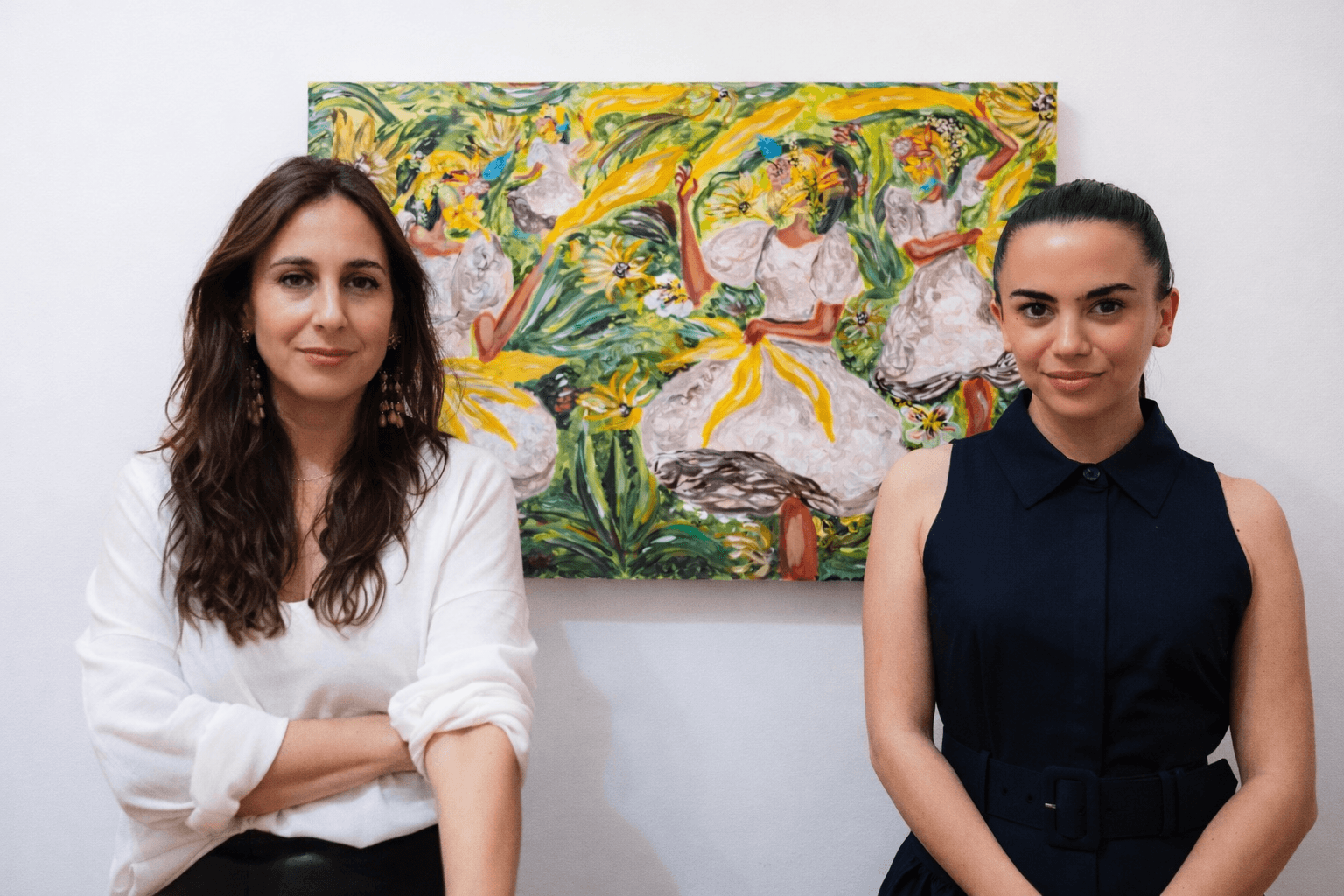


We had the good fortune of connecting with Julia Perez and we’ve shared our conversation below.
Hi Julia, what do you attribute your success to?
The most important factor behind The Pop-Up Project’s success has been refusing to be just one thing.
We sit deliberately at the intersection of a biennial and an art fair — and that’s not a marketing line, it’s the actual operating model. A biennial gives you curatorial depth and a real story, but it’s slow and rooted to one place. A fair gives you commercial energy and urgency, but it can feel transactional, like booths and price tags rather than an experience. We took what works from both and built something that moves: a deeply curated exhibition that only exists for a handful of days, in extraordinary spaces, with a programme around it that makes people want to be in the room.
That urgency is intentional. A six-day exhibition can travel further than a five-month one, because intensity creates attention, and attention creates real connection — between an artist’s work and the person standing in front of it for the first time. We’ve seen that play out from a recycled warehouse in Amsterdam, to a palace in Lisbon, and now in the Arts District in Los Angeles.
The other piece, honestly, is trust — with artists and with the cities we go into. We don’t drop into a place and leave. We partner with local institutions, local talent, local culture, so each edition feels like it belongs where it is rather than being parachuted in. That’s what turns a one-time show into something people actually wait for.
Can you give our readers an introduction to your business? Maybe you can share a bit about what you do and what sets you apart from others?
Sure — let me walk you through what we’re building in Los Angeles, because I think it tells you everything about who we are as a company.
The show is called Voltage of Hope, and that name wasn’t chosen lightly. We’re living through a moment that feels genuinely uncertain — economically, culturally, politically — and we wanted a title that named that honestly rather than dodging it. Voltage is charge, electricity, the thing that moves through a room and makes people feel something real. And hope, paired with that, isn’t naive — it’s a choice. It’s what art has always offered people when everything else feels unstable: a reason to believe something better is still possible. That’s the whole exhibition in two words.
We’re presenting it at Mica Studios in the Arts District, 356 South Mission Road, from September 19th through 24th, 2026. We chose the Arts District deliberately — it’s one of the few neighborhoods in LA that still has real creative texture to it. Working artists, converted warehouses, a sense that culture happens there organically rather than being imported for the occasion. We didn’t want a sterile white box. We wanted a space with a pulse.
Opening night, September 19th, is where we really show people what we mean when we say an exhibition should be an experience and not a transaction. We’re bringing in a live jazz band — because jazz has deep roots in this city, in this neighborhood specifically, and there’s something about live music that makes a room feel alive in a way that a curated playlist never will. We’re leaning into a retro aesthetic for the night — there’s a glamour to that era of art and music culture that I think people are genuinely hungry for again. A food truck, proper drinks, a dance performance moving through the crowd. The idea is simple: you come for the art, and you stay because the room itself is doing something to you.
And the six days that follow aren’t an afterthought — we built a full agenda. We’re hosting a wellness Sunday, because we believe art and stillness belong in the same conversation. Each day has its own rhythm, its own reason to come back, so this isn’t a one-night event with five quiet days of leftover wall space. It’s a week-long cultural moment. We’re already projecting around 3,000 visitors across the run, which tells you people in this city are hungry for exactly this kind of programming.
To your bigger question — what sets us apart — I’d say it’s that we refused to choose between being a fair and being a biennial. We took the curatorial seriousness of a biennial and the commercial urgency of a fair, and built something in between: short, intense, beautifully produced exhibitions that move from city to city. Amsterdam in a recycled industrial warehouse, Lisbon in an actual palace, and now Los Angeles. Each one has its own character because we never wanted to ship the same formula somewhere new and call it a brand.
Was it easy? No. Every edition has come with its own version of chaos — logistics, customs, artists trusting us before we’d proven anything, building relationships with venues and partners from zero in cities where we had no existing network. The lesson, honestly, has been that none of that chaos matters if the experience itself is real. People forgive a lot of operational mess if what they walk into actually moves them.
What I want people to know about us is pretty simple: we don’t think art belongs only in white-walled galleries waiting for the right collector to wander in. We think it belongs in rooms full of jazz and dancing and difficult conversations and people falling in love with a painter they’d never heard of an hour earlier. That’s the brand. That’s the whole bet we’re making.
And I’d be doing this story a disservice if I didn’t talk about who’s actually in the show, because that’s where you really see what we believe in.
We are intentional about diversity — not as a checkbox, but because we genuinely believe the most interesting conversations happen when very different ways of seeing the world end up in the same room. Our artists for Voltage of Hope come from different corners of the globe, and each one is working in a completely different language.
There’s Ezgi Akcinar, a Turkish-American visual artist who works almost entirely in blue — these deep, contemplative hues she uses to explore awe, femininity, and spiritual realities that are genuinely hard to put into words. She’s using ancient materials but with this very contemporary spatial clarity, so the work feels both ancient and immediate at the same time.
There’s OMOO, based in Seoul, South Korea, whose practice comes out of motherhood — quiet, private moments that most people would never think to put into a gallery. The whale keeps recurring in her work as a symbol of protection, vulnerability, healing. It’s an incredibly personal visual language, rooted in memory and care, and you feel that the moment you stand in front of it.
There’s Mark Jeffrey Weiss, born and raised in Newport News, Virginia — an experimental artist and geographer, which tells you everything about how he approaches space. His work isn’t really about objects, it’s about creating an experience for the viewer, teasing the senses, inviting you into this imaginative realm where form is still being figured out in the void.
There’s Mariko Kumon, a Japanese artist based in Barcelona who actually started in applied mathematics before completely changing her life about twenty years ago to study sculpture. Her work moves across sculpture, installation, conceptual art, painting — and it’s deeply shaped by her own journey between Japan and Europe, this constant negotiation of cultural gaps and identity. Minimalist, organic, with this real respect for the transience of life. She’s shown everywhere — New York, London, Venice, Paris, Dubai, Madrid — and we’re honored to have her with us in LA. And many more fantastic artists will be present in Voltage of Hope.
When you put those artists in the same room — a Turkish-American working in blue, a Korean mother working through whales and memory, an American geographer playing with space and void, a Japanese-Spanish sculptor working through mathematics and migration — you start to understand what we mean when we say art doesn’t need translation.
Each of them is speaking from a completely different place, literally and emotionally, and somehow it all lands as the same human question: how do we make sense of where we come from, and where we’re going.
That’s the whole point of Voltage of Hope. That’s the whole point of what we’re building.
If you had a friend visiting you, what are some of the local spots you’d want to take them around to?
Honestly, this is one of my favorite questions because Los Angeles gets reduced to a few clichés — the sign, the beach, the freeways — and that completely misses what makes the city actually special. Here’s what I’d do with a friend for a full week, and honestly, it’s the same itinerary I’d suggest to anyone coming to Voltage of Hope this September.
Day one, I’d start right where we are — the Arts District. Wander the murals, stop into the smaller galleries tucked into the warehouses, grab coffee at one of the roasters that have taken over the old industrial buildings. This is the neighborhood that tells you LA’s creative scene is real and lived-in, not manufactured. Then I’d take them to dinner somewhere unpretentious but excellent — this part of town does that well.
Day two is gallery day, properly. Hauser & Wirth in the Arts District is non-negotiable — that space alone, the converted flour mill, is worth the visit even before you look at the art. Then I’d head to Culver City, which has quietly become one of the most serious gallery districts in the city — a lot of people don’t realize how much is concentrated there. And if there’s time, LACMA, just to ground the day in something more institutional before going back out into the contemporary scene.
Day three, I’d go up. Griffith Observatory at golden hour, no question. The view over the city as the light changes is one of those moments that actually earns the hype. Hike up if you’re feeling it, or just drive and watch the sunset from the lawn. Dinner after that somewhere in Los Feliz or Silver Lake — both neighborhoods have this effortless cool to them that you don’t get on the Westside.
Day four, I’d flip the whole mood and head to the ocean. Santa Monica in the morning — walk the pier, but more importantly, walk the bluffs above it, that’s the real view. Then down to Venice for the afternoon — the boardwalk is chaos in the best way, but the canals a few blocks inland are this completely different, quiet, almost European pocket of the city that most tourists never find.
Day five, back into culture, but different texture. The Getty — both the Getty Center and, if there’s time, the Getty Villa in Malibu, which feels like stepping into a different century entirely. Then dinner somewhere on the way back with a view, because LA does sunset-over-the-canyon dinners better than almost anywhere.
Day six, I’d send them shopping and people-watching through Melrose, then into the design district for furniture and object lovers — there’s a reason interior designers and architects love this city, and you feel it walking those blocks. Drinks somewhere on a rooftop in Hollywood as the night comes in.
And day seven — September 19th, obviously — Voltage of Hope opens, and that’s where the whole trip lands. Jazz, dancing, the food truck, the art, this whole week of culture distilled into one night in the Arts District.
What I love about putting an itinerary like that together is that it proves the point we keep making — Los Angeles isn’t one thing. It’s the observatory and the ocean and an industrial gallery and a sculpture garden on a hill, all within forty minutes of each other if the traffic gods are kind. That range, that contrast, is exactly why we wanted to bring The Pop-Up Project here. The city itself already operates the way we want our exhibitions to feel — surprising, layered, never just one note.
The Shoutout series is all about recognizing that our success and where we are in life is at least somewhat thanks to the efforts, support, mentorship, love and encouragement of others. So is there someone that you want to dedicate your shoutout to?
That’s a great question, and honestly, I don’t think I get to answer it without talking about the artists first.
If I’m being completely real, the shoutout goes to the artists who said yes before The Pop-Up Project had proven anything. The ones who trusted us with their work before they had any reason to. Handing someone your art for an exhibition is an act of faith — you’re trusting a curator to understand what you’re trying to say and put it in front of the right people. Some of our artists have been doing this for decades. Some are just starting out, still figuring out how to talk about their own work in a room full of strangers. Both groups taught me something different, and honestly, I owe both of them.
I think about Elena Lo Giudice — an Italian artist based in Singapore who paints portraits and self-portraits with a kind of honesty that’s almost uncomfortable to look at, in the best way. There’s no performance in her work, no distance. Or David Bartlett, whose practice is inseparable from his Buddhist philosophy — there’s a stillness in his paintings that you can actually feel standing in front of them, this calm that just settles over you. And Lisa Moley, whose photography doesn’t document places so much as it seduces you into them — a ranch that makes you want to slow down, a landscape that dares you to go further. Three completely different artists, three completely different languages, and somehow they’re all saying the same thing: come closer.
But if you want the real shoutout, the bigger one — it goes to the idea that the old gallery model is finally, mercifully, dying.
For decades the art world operated on this absurd binary: either a blue-chip gallery picked you up and your work was suddenly worth something, or you were rejected because you weren’t selling for millions yet, as if that’s ever been the point of making art. That gatekeeping logic is exhausting and it was never really about quality. It was about real estate and relationships and who got into whose dinner party.
What we’re building is a rejection of that. An exhibition isn’t just a wall to hang work on — it’s a room full of people who matter to your career, having real conversations. It’s learning how to talk about your own process without sounding rehearsed. It’s watching what stops people in their tracks and what they walk past. It’s a collector falling in love with your work and, sometimes, offering you something bigger than a sale — a residency, a relationship, a next chapter. That’s networking in the truest sense, not handing out business cards, but actual human connection happening in front of the art.
So my shoutout is to every artist who shows up to that conversation. The ones who’ve done it a hundred times and the ones doing it for the first time, terrified, in Los Angeles this September. They’re the whole reason any of this exists.
Website: https://popupproject.art/
Instagram: https://www.instagram.com/Shop.ThePopUpProject/
Image Credits
The Pop-Up Project


